


While Moderna’s full-year sales landed in the upper end of its target range, Jefferies analysts said further reductions are needed if the biotech hopes to hit its 2028 break-even target.

Follow along as BioSpace tracks job cuts and restructuring initiatives.

The deal will see Novartis gain global rights over SciNeuro’s potentially disease-modifying anti-amyloid antibody, which leverages the latter’s proprietary shuttle platform to allow delivery into the brain.

FDA Commissioner Marty Makary called these changes “common-sense reforms” that could expedite the development of cell and gene therapies.

Aurora joins the clutch of companies linked to Nobel Prize winner and CRISPR trailblazer Jennifer Doudna.

Hair loss–focused Veradermics and cancer biotech Eikon follow the lead of Aktis Oncology, which last week announced a $318 million IPO target.
FEATURED STORIES

The use of artificial intelligence in the development of cancer vaccines allows for individualized therapy, but the prospect of an ever-changing product poses new challenges for drug developers and regulators.

Both Eli Lilly and the partnered companies Boehringer Ingelheim and Zealand Pharma have mid-stage data readouts this week, fueling the race in metabolic dysfunction-associated steatohepatitis.

There are multiple ways biopharmas create inclusive workplaces for LGBTQ+ employees, and they go beyond employee resource groups and benefits.

In this deep dive BioSpace analyzes the neuropsychedelic therapeutics pipeline, which grabbed headlines in February when the FDA accepted the New Drug Application for Lykos Therapeutics’ MDMA capsules for PTSD.

While San Diego remains a top biotech hub behind Boston and San Francisco, the city—which hosts this week’s BIO International Convention—has seen employment drop amid economic headwinds.

Experts say approval of Lykos Therapeutics’ MDMA capsules for post-traumatic stress disorder would open the door to further research into psychedelic-assisted therapies.


LATEST PODCASTS

In this episode of Denatured, Jennifer C. Smith-Parker speaks to Maha Katabi, general partner at Sofinnova Investments and Andrew Lam, managing director, head of Biotech Private Equity at Ally Bridge Group, about how M &A dynamics, dealmaking and global partnerships are reshaping portfolio valuations and paths to growth in 2026.
Novo Nordisk follows Christmas oral Wegovy approval with quick launch; Eli Lilly is headed for $94.3 billion in annual revenue by 2027, analysts predict; nine more pharmas strike Most Favored Nation deals but half remain unsigned; experts call for stability and rare disease action at FDA, and all eyes are on M&A ahead of the J.P. Morgan Healthcare conference next week.

In this episode of Denatured, Jennifer Smith-Parker speaks to Kenneth Galbraith, CEO of Zymeworks and Josh Smiley, president and COO of Zai Lab, about how renewed confidence is driving biotech entering 2026.




Subscribe to GenePool
Subscribe to BioSpace’s flagship publication including top headlines, special editions and life sciences’ most important breaking news
SPECIAL EDITIONS

Recent breakthroughs and three decades of progress in treating Huntington’s disease

In this deep dive, BioSpace investigates China’s rise as a biotech powerhouse.

In this deep dive, BioSpace explores the next big thing in obesity.
DEALS

-
 Heightened diligence standards and longer decision timelines for early-stage startups slowed venture activity last year, J.P. Morgan found in a report published ahead of the bank’s annual healthcare conference in San Francisco.
 -
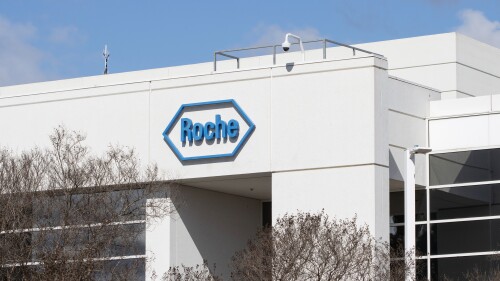 Roche first partnered with MediLink in January 2024, likewise for an antibody-drug conjugate for solid tumors.
 -
 In this episode of Denatured, Jennifer C. Smith-Parker speaks to Maha Katabi, general partner at Sofinnova Investments and Andrew Lam, managing director, head of Biotech Private Equity at Ally Bridge Group, about how M &A dynamics, dealmaking and global partnerships are reshaping portfolio valuations and paths to growth in 2026.
 -
 The deals will help Lilly diversify its portfolio that is heavily weighted on the obesity juggernaut tirzepatide, marketed as Mounjaro for diabetes and Zepbound for weight loss.
 -
 Cartography will hunt for novel tumor antigens, which Pfizer can opt into and advance into clinical development.


WEIGHT LOSS

-
 After greenlighting 56 novel therapeutics in 2025, four notable applications continue to await the agency’s action after being delayed from the fourth quarter last year.
 -
 Novo Nordisk follows Christmas oral Wegovy approval with quick launch; Eli Lilly is headed for $94.3 billion in annual revenue by 2027, analysts predict; nine more pharmas strike Most Favored Nation deals but half remain unsigned; experts call for stability and rare disease action at FDA, and all eyes are on M&A ahead of the J.P. Morgan Healthcare conference next week.
 -
 Arrowhead heralded the results as proof of concept that inhibiting the Activin E pathway can improve body composition and enhance weight loss as compared to tirzepatide alone, particularly in patients with type 2 diabetes.
 -
 Eli Lilly kicked off a pivotal 2026 campaign with a multi-year collaboration with current partner Nimbus Therapeutics worth a potential $1.3 billion for a preclinical obesity therapeutic. The deal follows a 2022 partnership struck by the companies to target the AMPK protein in cardiometabolic diseases.
 -
The agreement, which BMO Capital Markets called a “mild positive” for Structure, appears to address Roche’s concerns about the composition of investigational weight loss drug CT-996.



POLICY

-
 In his annual letter, Flagship Pioneering’s Noubar Afeyan lays out a choice between near-term “human-made miracles” and a reversion to the pain and suffering of past diseases due to “growing contempt” in the U.S. for the scientific method.
 -
 The US dramatically altered its recommendations for a series of vaccines, which drive billion-dollar earnings for giants like Merck and Pfizer.
 -
 Only a handful of the top pharmas have signed Most Favored Nation drug pricing deals with the White House, while smaller biotechs continue to hang in limbo.
 -
 Leerink analysts hailed the deals as a sign that President Trump “is unlikely to attack the industry in 2026.”
 -
 The biologics center director reportedly became personally involved after the team reviewing the rare blood disorder filing asked for an extension to the CNPV-accelerated timeline.


Communication must be viewed as more than the last step of the research process. It is the structure that makes scientific work clear, trusted and remembered.

What should you do when belief in the mission remains, but the career path doesn’t?

Employees rarely leave companies for one reason alone. In this column, Kaye/Bassman’s Michael Pietrack shares a framework that helps leaders identify when their team members are thinking about heading for the exit—and how to address it.

Biopharma professionals aren’t typically hired right away, based on a BioSpace LinkedIn poll. In the past year, only about one-third of respondents found employment in three months or less. Several who did share their keys to success.

In a volatile industry, staying put might seem like a smart bet, but job hugging can quietly erode your visibility, growth and future opportunities.

Transparency doesn’t drive people away. It attracts the right ones and keeps them committed. Leadership coach Angela Justice discusses the problem with leaders only selling the upside and the value of setting accurate expectations from the start.
HOTBEDS


REPORTS

In this Employment Outlook report, BioSpace explores current workforce sentiment, job activity trends and the prospective job and hiring outlook for 2025, particularly as it compares to the previous year.


BioSpace’s third report on diversity, equity, inclusion and belonging in life sciences examines dramatic shifts in attitude around diversity initiatives.
CANCER

-
 Rumors of a Revolution buyout come as the industry gears up for one of its biggest trade conferences, where observers expect many such deals to be announced.
 -
 Jazz’s Ziihera and BeOne’s Tevimbra plus chemotherapy led to what Truist Securities dubbed one of the strongest overall survival signals ever reported in a type of gastroesophageal cancer.
 -
 The acquisition is centered on Dark Blue Therapeutics’ small-molecule degrader of the MLLT1 and MLLT3 proteins, which is being tested for acute myeloid leukemia.
 -
 OncoNano’s platform, called ON-BOARD, packages drugs in pH-sensitive micelles that ensure their specific delivery near tumors, while also preventing systemic exposure.
 -
 After a strong open to the year, the public markets suffered a six-month drought that led to biotech’s tightest IPO window in years.


NEUROSCIENCE

-
 The DC-based biopharma disputed the FDA’s conclusions regarding the data provided in its supplemental application for Hetlioz and promised to keep pushing for an approval.
 -
 Last month, the FDA declined to approve Sanofi’s tolebrutinib for a specific form of multiple sclerosis. In a recently published complete response letter, the agency detailed its reasoning behind the rejection.
 -
 As 2026 begins, a slate of high-stakes clinical readouts—from a pivotal study of Novartis’ cardiovascular candidate pelacarsen to a Phase III test of Eli Lilly’s next-gen Alzheimer’s drug—are poised to reshape therapeutic landscapes.
 -
 The major depressive disorder failure for BHV-7000 is the drug’s second, after Biohaven’s spinocerebellar ataxia treatment troriluzole was rejected by the FDA in November 2025.
 -
 Despite the definitive failure of Novo Nordisk’s semaglutide in Alzheimer’s, biotech executives, analysts and other industry experts see potential in more testing of GLP-1s for the neurodegenerative disease, particularly in a combination approach.


CELL AND GENE THERAPY

-
 The prevalence of serious inflammatory safety issues such as cytokine release syndrome and immune effector cell–associated neurotoxicity syndrome limits the reach of these transformative cancer therapies.
 -
 Next-generation automation is closing the gap between curative science and real-world demand, enabling faster development, global consistency and broader patient access to CAR T therapies.
 -
 Industry leaders are focused on the resilience of key starting material supply and the knock-on effects of automation in the new year.
 -
 With a pair of Phase III trial flops, Ultragenyx will explore cost reductions as analysts turn attention to an upcoming Angelman syndrome readout.
 -
 A push to reshore some drug production and progress in advanced manufacturing technologies have been prominent trends this year, industry leaders say.


