

In this episode of Denatured, you’ll be hearing from Dr. Sarah Howell, CEO at Arecor Therapeutics and Dr. Wendy S. Lane, clinical endocrinologist and diabetologist. We examine how increasingly connected and tailored diabetes technologies are reframing the field’s central opportunity around minimizing the day-to-day demands of managing the condition.


While life sciences employment was down 0.3% nationally in 2024, it rose 1.9% in Washington, according to a new Life Science Washington report. The association’s CEO discusses the latest findings and how the state’s job market looks this year.

New Life told FDA inspectors that they lacked the authority to enter parts of a facility where it made the GLP-1 receptor agonists semaglutide and tirzepatide.

Follow along as BioSpace tracks job cuts and restructuring initiatives.

The pivotal study of zilganersen in Alexander disease missed a secondary endpoint, but analysts expect the FDA to approve the asset given the unmet need and overall data.

Eli Lilly and Rigel Pharmaceuticals partnered in February 2021 to advance a pair of RIPK1 blockers, but the pharma in October last year pulled the plug on one of these programs for central nervous system indications.

The deals keep rolling in, with Lilly penning a $7 billion pact for gene delivery biotech Kelonia Therapeutics and UCB taking over cell therapy-focused Neurona Therapeutics; President Trump signed a new executive order supporting the development of psychedelic therapies, sparking fanfare and concern alike; and the FDA’s recent Replimune decision has triggered broader debate about the agency’s flexibility.
FEATURED STORIES

Longeveron and Lexeo Therapeutics are working on CGT therapies to treat Alzheimer’s disease, but it’s not clear whether they have a better chance of success than traditional approaches.

Active immune therapies hold promise for preventing or slowing disease onset, but some experts warn of potential safety risks.

Ultracompact CRISPR systems, which are in some cases one-third the size of Cas9, are being designed to be more specific and enable in vivo gene editing in difficult to reach tissues.

The BIOSECURE Act’s prohibition on doing business with China-based companies may have implications for biotech and biopharma markets on both sides of the Pacific.

After a long and challenging journey for its stem cell therapy NurOwn, BrainStorm Cell Therapeutics has aligned with the FDA on the parameters of a Phase IIIb ALS trial that is expected to begin by the end of 2024.

With GLP-1 receptor agonists expected to dominate the weight loss market in the near term, several young companies are building on this mechanism, while others are taking a completely different approach.


LATEST PODCASTS
In this episode of Denatured, you’ll be hearing from Dr. Sarah Howell, CEO at Arecor Therapeutics and Dr. Wendy S. Lane, clinical endocrinologist and diabetologist. We examine how increasingly connected and tailored diabetes technologies are reframing the field’s central opportunity around minimizing the day-to-day demands of managing the condition.

The deals keep rolling in, with Lilly penning a $7 billion pact for gene delivery biotech Kelonia Therapeutics and UCB taking over cell therapy-focused Neurona Therapeutics; President Trump signed a new executive order supporting the development of psychedelic therapies, sparking fanfare and concern alike; and the FDA’s recent Replimune decision has triggered broader debate about the agency’s flexibility.

In this episode of Denatured, you’ll be hearing from Edoardo Negroni, co-founder & managing partner at AurorA-TT and Naveed Siddiqi, senior partner, Venture Investments at Novo Holdings. We debate whether Europe’s world-class science can be matched by a truly integrated venture ecosystem—and what it would take, in practice, to get there.



Subscribe to GenePool
Subscribe to BioSpace’s flagship publication including top headlines, special editions and life sciences’ most important breaking news
SPECIAL EDITIONS

BioSpace looks back at 2025 and where the FDA is going in 2026.

The BioSpace team hit the ground running at the J.P. Morgan Healthcare Conference earlier this month to bring you the news from the streets of San Francisco.

BioSpace data show job postings live increased quarter over quarter, while layoffs fell year over year.
DEALS

-
 With programs from Eisai and Hansoh Pharmaceutical in hand, Tortugas Neuroscience has emerged with hopes of delivering daily oral treatments to patients with central nervous system conditions.
 -
 After entering the CAR T space in February, Eli Lilly is “jumping into in vivo CAR-T with both feet” with the acquisition of Kelonia Therapeutics and its gene delivery technology.
 -
 The acquisition of Neurona will put UCB in both the epilepsy and cell therapy space, even as many of its fellow pharmas move away from the latter modality.
 -
 J&J will hand over the rights to bota-vec for $25 million upfront, clearing MeiraGTx to seek regulatory approvals in the U.S. and EU in 2027.
 -
 Commitments in obesity- and diabetes-focused deals reached $22 billion in the first quarter of 2026—already eclipsing last year’s total of $20.3 billion, according to a new J.P. Morgan report.


WEIGHT LOSS

-
 Two of the biggest insurance providers have expressed reluctance to participate in the government’s BALANCE program that would have made GLP-1 drugs more affordable to patients.
 -
 While Novo Nordisk’s Wegovy pill reached more than 3,000 patients in its first week on the market, analysts at RBC Capital Markets said a direct comparison of the two figures could be misleading given the shorter data collection time for Foundayo.
 -
 Obesity-focused Kailera Therapeutics debuted on the Nasdaq Friday after raising a record $625 million, beating Moderna’s $600 million from 2018.
 -
 More patients on Eli Lilly’s tirzepatide lost over 5% of their lean mass versus those on Novo Nordisk’s semaglutide, according to a study that has yet to be peer reviewed.
 -
 Right after the FDA flagged safety concerns for Eli Lilly’s newly approved obesity pill, the pharma posted diabetes data demonstrating a clean safety profile and revealed plans to seek approval in the indication.


POLICY

-
 A year of significant policy change at the FDA brought momentum and scrutiny into the new year. As 2026 gets underway, biopharma companies are responding to sweeping vaccine changes while concerns surface about the politicization of the agency.
 -
 A new executive order could usher in psychedelics as the “key next wave” of mental health therapies, according to analysts at RBC Capital Markets.
 -
 The pharma industry “own Congress, they own the media,” Health Secretary Robert F. Kennedy, Jr. told lawmakers by way of explaining the bad press against FDA Commissioner Marty Makary following the second rejection of Replimune’s advanced melanoma drug.
 -
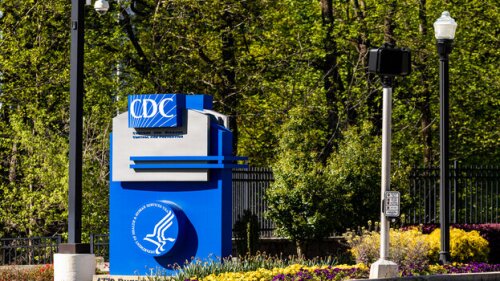 Erica Schwartz, a former deputy surgeon general and member of the U.S. military, will take over from what has amounted to a rapid succession of CDC leaders over the past year.
 -
 Greater transparency in FDA decision-making was possibly the most common theme for stakeholders interviewed by the Institute for Clinical and Economic Review in a new report focused on strengthening the agency’s accelerated approval program.


Looking for a biopharma job? Check out the BioSpace list of 12 top companies hiring life sciences professionals like you.

As AI reshapes deeply specialized scientific work, R&D professionals must learn to navigate the shift to a skills-centered market. The key is knowing which skills to develop and how to leverage AI as scientific modalities evolve, technologies advance and regulatory complexity increases.

Recruiters can play a significant role in biopharma professionals getting hired, especially in an employer-driven job market. However, when working with them, candidates need to avoid making six key mistakes, from waiting too long to ask for help to prematurely contacting hiring companies.

While you should never rely solely on AI tools when applying for jobs, they can greatly benefit the application process. Recruiting expert Bryan Blair discusses how using large language models can set you apart from the competition and includes a prompt framework to get you started.

In a competitive job market, how applicants present themselves in interviews is critical. Asking about promotions and expressing dislike for the work they’d be doing are just a few reasons hiring managers don’t extend job offers.

With leaner teams and tighter budgets, senior leaders can face tremendous strain as they juggle increased workloads and leadership responsibilities. In this column, Kaye/Bassman’s Michael Pietrack discusses how pressure builds and what can ease it.
HOTBEDS


IN CASE YOU MISSED IT

In nuclear medicine, innovation alone isn’t enough. What matters is whether it can be delivered on time, every time, because timing is critical for our patients. And that delivery promise must hold up under real-world pressure – from routine variability to sudden disruptions that can reroute global logistics overnight.


REPORTS

In this Employment Outlook report, BioSpace explores current workforce sentiment, job activity trends and the prospective job and hiring outlook for 2025, particularly as it compares to the previous year.


BioSpace’s third report on diversity, equity, inclusion and belonging in life sciences examines dramatic shifts in attitude around diversity initiatives.
CANCER

-
 A triplet regimen comprising Merck’s Welireg and PD-1 blockbuster Keytruda and Eisai’s Lenvima flopped in a Phase 3 renal cell carcinoma trial.
 -
 Moderna, Revolution Medicines and Zymeworks record wins in melanoma, lung and breast cancers, while BeOne swings and misses at head and neck cancer.
 -
 The Phase 3 failure has prompted Gilead Sciences and Arcus Biosciences to terminate a mid-stage study of their TIGIT asset in lung cancer.
 -
 Doubling survival in pancreatic cancer, a long-fought rare disease approval, a massive IPO and ambitious biotech entrepreneurs have BioSpace Senior Editor Annalee Armstrong feeling upbeat about the biotech scene.
 -
 An investigational cocktail was tied to a 0% overall response rate in patients with gastroesophageal cancer, but developers Agenus and MiNK Therapeutics aren’t giving up on the program just yet.


NEUROSCIENCE

-
 With a greenlight for ibogaine to enter clinical testing and three unnamed products set to receive Commissioner’s National Priority Vouchers this week, it’s full speed ahead for psychedelics. But will sidestepping normal regulatory protocols actually be a net negative for the field?
 -
 After receiving the FDA’s greenlight for Hunter syndrome drug Avlayah, Denali Therapeutics CEO Ryan Watts saw the culmination of 20 years of hard work unraveling the mysteries of the blood-brain barrier.
 -
 GSK discontinued Wellcovorin in 1999, but the FDA in September last year asked the pharma to refile an application, pointing to its potential to treat cerebral folate deficiency with “autistic features.”
 -
 Takeda and Denali Therapeutics first partnered in early 2018 to advance drugs for neurodegenerative diseases. One asset, for Alzheimer’s disease, was previously discontinued after an FDA hold and disappointing early data.
 -
 In the buyout, Eli Lilly picks up Centessa Pharmaceuticals’ lead asset cleminorexton, which could go toe-to-toe with Takeda’s oveporexton, currently under FDA review with a decision expected in the third quarter.


CELL AND GENE THERAPY

-
 At Sarepta Therapeutics, we’ve seen it all. Here are the questions I believe we should be asking to move forward in Duchenne muscular dystrophy.
 -
 The draft guidance supports the agency’s new pathway designed to speed up the development of custom gene therapies.
 -
 In this episode of Denatured, you’ll hear from Jason Jones, head of global business development at Cellular Origins and Alexander Seyf, founder & CEO of Autolomous. They discuss how the push to scale cell and gene therapy manufacturing is accelerating interest in automation, digitization, robotics and deeper collaboration across the ecosystem.
 -
 Gilead Sciences has inked three deals this year so far totaling $14.77 billion, a marked escalation of the company’s usual M&A pace. Executives detailed the rationale for buying Arcellx, Ouro Medicine and Tubulis GmbH and whether they are interested in further deals.
 -
 As cell and gene therapy developers face rising pressure to produce therapies faster and at lower cost, the industry is leaning on robotics, digital systems and partnerships to bridge the gap between innovation and delivery.


