



Follow along as BioSpace tracks job cuts and restructuring initiatives.

Despite an overall survival miss, Leerink Partners said Pfizer’s antibody-drug conjugate showed “promising” signals of efficacy in a subgroup of patients who had undergone only one prior line of treatment.

Having stuck with local production in the years when offshoring to lower-cost locations was in fashion, Aquestive’s CEO is well placed to explain what the recent reshoring drive means for manufacturers.

Anticipated to be one of fastest-growing jobs in manufacturing, pharmaceutical jobs offer a salary 32% higher than the average U.S. manufacturing role.

China’s Haisco Pharmaceutical continues to wield deals, this time out-licensing rights to two late-stage programs to New Jersey biotech Nuvectis.

Among the health department’s efforts is an expedited investigational new drug pilot program that would leverage collaborations with U.S. research institutions to reduce early trial timelines by as much as 12 months.
FEATURED STORIES

ADARx Pharmaceuticals CEO Zhen Li found her way to biopharma through Merck, where she was inspired by the application of powerful science to human medicine.

When talking to some of the most impressive women in biopharma, the conversation inevitably turned to what these women wanted other entrepreneurs to know. Here’s the best of the best of that advice.

Sarepta Therapeutics’ stock has dropped precipitously as questions swirl around the safety of its gene therapies. Meanwhile, the Duchenne patient community fears losing access to Elevidys while the regulator considers more drastic action.

What will Boston Pharmaceuticals CEO Sophie Kornowski do now that the company is selling off its pipeline and winding down operations? Whatever it is, data will take her there.

Amid a season of regulatory and scientific advances, experts reveal a culture of data hoarding among cell and gene therapy developers that is reinforcing fragmentation, stalling innovation and delaying access to treatments.

Earlier this summer the FDA asked Moderna for more efficacy data on its flu vaccine before it could review an mRNA-based combination shot that targets both influenza and COVID-19. Now, the entire vaccine sector is sizing up a new regulatory world, companies’ next steps uncertain.


LATEST PODCASTS

In this episode of Denatured, you’ll hear from Mark Lowdell, CSO & co-founder at INmuneBio Inc. and Vishwas Seshadri, CEO & director at Abeona Therapeutics. We explore how recessive dystrophic epidermolysis bullosa has become a defining case study for gene and cell therapy and what this ultra‑rare disease reveals about the future scalability of advanced therapies.
Moderna appears to have aligned with the FDA ahead of an advisory committee meeting for its mRNA-based flu vaccine, which the regulator initially turned away in February; biotech IPOs are going gangbusters, including two new records raises in as many weeks; layoffs continue across biopharma; plus much more.
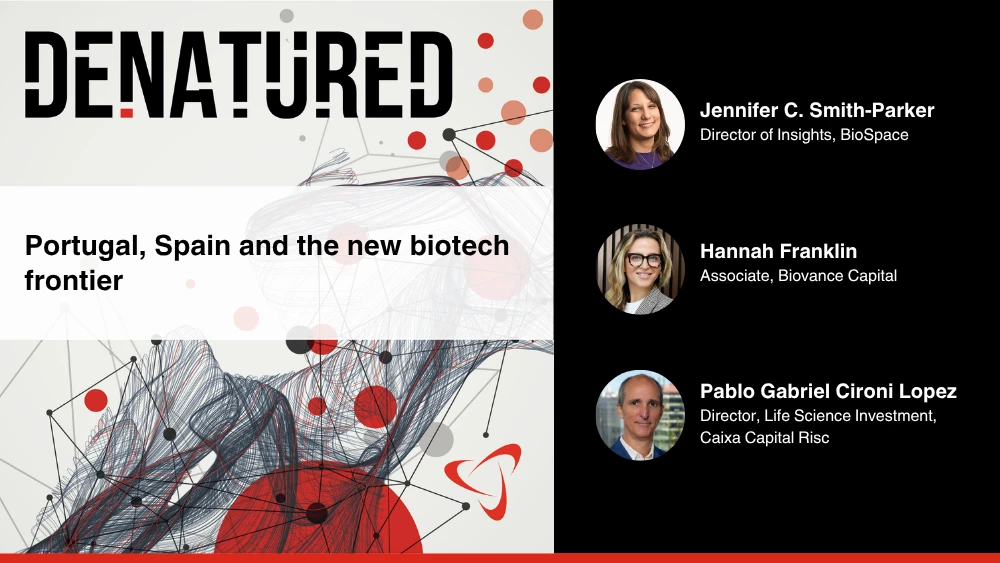
In this episode of Denatured, you’ll be hearing from Hannah Franklin, associate at Biovance Capital and Pablo Gabriel Cironi Lopez, director of life science investment at Caixa Capital Risc as they discuss the rise of Southern Europe’s biotech ecosystem.



Subscribe to GenePool
Subscribe to BioSpace’s flagship publication including top headlines, special editions and life sciences’ most important breaking news
SPECIAL EDITIONS

BioSpace examines how the FDA approval of Eli Lilly’s oral obesity drug Foundayo has ignited a key race with Novo Nordisk.

Opportunities increased by the end of the first quarter, according to BioSpace data.

BioSpace looks back at 2025 and where the FDA is going in 2026.
DEALS

-
 With drug pricing now embedded in U.S. policy, business development teams in biotech and pharma are changing the way they strike deals, including acknowledging policy uncertainties with renegotiation clauses.
 -
 Formed by Sofinnova Partners and former Sanofi executive Frédéric Marrache, Bionyra Pharma emerged from stealth Monday with an initial focus in inflammatory bowel disease and atopic dermatitis.
 -
Eli Lilly plans to use BioArctic’s technology to shuttle an undisclosed drug candidate into the brain. The pharma hasn’t specified which neurodegenerative disease it will target.
-
 Insilico Medicine and SK Biopharmaceuticals will use generative AI to develop novel therapies for unspecified neuroimmune disorders.
 -
 Denali Therapeutics is the latest company to sell a priority review fast pass for an elevated price after the program was renewed earlier this year.


WEIGHT LOSS

-
 Rhythm Pharmaceuticals’ Imcivree reduced fat—while boosting muscle—in patients with Prader-Willi syndrome.
 -
 After suffering the market withdrawal of its only product, Amylyx is gearing up for a pivotal Phase 3 readout in post-bariatric hypoglycemia. But the company’s driving ethos is still to treat “debilitating, devastating” neurodegenerative diseases, co-CEO Justin Klee told BioSpace.
 -
 Novo Nordisk said that the information affected by the breach shouldn’t allow third parties to “identify participants in our clinical trials” despite “unauthorized access” to patients’ personal data.
 -
 Eli Lilly and obesity rival Novo Nordisk stole the show at the American Diabetes Association conference, though plenty of other companies also had data to show for their own weight loss assets; GSK strikes the biggest traditional pharma buyout of 2026; and FDA initiatives still lack clarity.
 -
 AstraZeneca is pushing its small molecule GLP-1 drug to Phase 3 development for weight control, diabetes and other cardiometabolic conditions despite the asset failing to best one from Structure Therapeutics.



POLICY

-
 Former FDA, CDC and NIH leaders convene at the BIO International Convention to discuss the dismantling of the Department of Health and Human Services under the Trump administration—and where we go from here.
 -
 The U.S. government has argued that it pays too much of biopharma R&D costs, demanding that other high-income countries contribute fairly to global innovation efforts.
 -
 Weeks after Boehringer Ingelheim and Eli Lilly retracted billions of dollar in German commitments, the nation’s government is reportedly changing a contentious element of its planned healthcare reforms.
 -
 DemeRx is launching the first U.S. clinical trial of an ibogaine-derived drug candidate, marking a pivotal moment for a controversial psychedelic long sidelined by safety concerns.
 -
 The FDA must provide consistent and predictable regulatory frameworks if the U.S. is to maintain its leadership in gene therapy, one of the most consequential therapeutic fields of our generation.


Three experts discuss whether biotech and pharma professionals should try to convince employers to adjust employment offers, mistakes people make during the process and tips for getting it right.

The people most trusted to deliver are not always the ones invited to shape direction. Executive coach Angela Justice examines why the habits that build a career can eventually limit advancement.

Scientists who focus only on generating data risk missing their role in shaping strategy and driving innovation.

Panel interviews can play a major role in getting jobs. Two career coaches discuss what to do before and during the interview, including identifying how to differentiate yourself, engaging in true conversations and not overlooking a key panel member.

Over one-third of BioSpace LinkedIn poll respondents have done free work while interviewing for jobs. A recruiting expert and career coach discuss why employers make work requests and how biopharma professionals should evaluate and respond to them.

Finding the right people for critical open roles can be difficult even for biopharma leaders. In this column, Kaye/Bassman’s Michael Pietrack discusses four pitfalls executives face during the hiring process, starting with confusing scientific brilliance with leadership ability.
HOTBEDS


REPORTS

In this Employment Outlook report, BioSpace explores current workforce sentiment, job activity trends and the prospective job and hiring outlook for 2025, particularly as it compares to the previous year.


BioSpace’s third report on diversity, equity, inclusion and belonging in life sciences examines dramatic shifts in attitude around diversity initiatives.
CANCER

-
 Following the mid-stage readout, Verastem Oncology has decided to move away from its investigational pancreatic cancer drug combo, instead putting resources behind its KRAS inhibitor pill for solid tumors.
 -
 Elicio Therapeutics’ investigational cancer immunotherapy failed to meet the primary endpoint of disease-free survival in a Phase 2 trial—a result the company attributed mostly to a disproportionate number of patients with higher residual disease.
 -
 Eli Lilly’s new JAK2 inhibitor—which it obtained from the recent acquisition of Ajax Therapeutics—reduced spleen volume by more than a third in 70% of patients with myelofibrosis.
 -
 While Merck and Gilead Sciences reported back-to-back late-stage victories for their weekly HIV pill, the partners also discontinued a Phase 3 program for their cancer combo after disappointing lung cancer survival data.
 -
 Nuvalent Bio is GSK’s third big-ticket purchase this year, after the pharma dropped $2.2 billion in January for RAPT Therapeutics and $950 million in February for 35Pharma.


NEUROSCIENCE

-
 Results for Definium Therapeutics psychedelic candidate for major depressive disorder “exceeded expectations,” according to Stifel, while Jefferies called the efficacy data “profound.”
 -
 As uniQure prepares its closely watched Huntington’s disease gene therapy for FDA review, the biotech is also making waves in chronic epilepsy with another gene therapy that Stifel says is off to a “promising start.”
 -
 Nura Bio will use the series B financing to carry two neuroprotective drug candidates through early- to mid-stage clinical studies, one targeting ALS and the other for a broader neurological profile.
 -
 After a regulatory odyssey that delayed a filing for what would be the first genetic medicine for Huntington’s disease, the FDA has agreed that three-year data from uniQure’s Phase 1/2 trial are sufficient to support an accelerated biologics license application.
 -
 Alto Neuroscience is advancing a depression drug based on the dopamine agonist pramipexole, which an independent study has found to help boost feelings of pleasure in patients with mood disorders.


CELL AND GENE THERAPY

-
 If cell and gene therapy makers are going to achieve their mission to improve patients’ lives, the industry must come together to share information across stakeholders, from regulators to manufacturers to payers.
 -
 Be Biopharma’s terminated trial is the latest setback in the hemophilia space, where companies like Pfizer and BioMarin have opted to pull their respective products from the market after weak traction.
 -
 Instead of using viral vectors, SonoThera’s genetic medicines are delivered through an ultrasound-mediated technology that could help sidestep key safety issues with conventional delivery methods.
 -
 All six non-Hodgkin lymphoma patients on Legend Biotech’s CAR T therapy responded to treatment—findings that could make the biotech an attractive takeover target, according to analysts at Oppenheimer.
 -
 For Peter Pitts, a former associate commissioner at the FDA, the appointment to the board of BrainStorm Cell Therapeutics is an opportunity to fulfill a promise he made long ago to a patient with ALS.


