


Sanofi has faced questions about the potential of lunsekimig in eczema, with executives calling the clinical trial a “measured risk.”

Sales of Amgen’s thyroid eye disease drug Tepezza have slowed, dipping 1% to $457 million in the fourth quarter of 2025.

If the Trump administration’s proposal passes, the FDA’s budget will be more than $200 million bigger in 2027, with plans to launch new programs that expedite drug development, boost national security and promote “radical transparency.”

Follow along as BioSpace tracks job cuts and restructuring initiatives.

While an acquisition is a good exit for Soleno Therapeutics, the company’s acceptance of Neurocrine Biosciences’ $53-per-share offer came as a surprise to Stifel analysts given the potential growth of Vykat XR, approved last year for extreme hunger in patients with Prader-Willi syndrome.

Some disease areas bucked the trend of shrinking pipelines, however, with immune and cardiovascular indications seeing an upward trend in investigational assets.
FEATURED STORIES

After two years characterized by layoffs, pipeline reorganizations, FDA delays and clinical holds, Novavax CEO John Jacobs says the company is at a pivot point.

Riding recent momentum in the Duchenne muscular dystrophy space, Capricor Therapeutics, Wave Life Sciences, Regenxbio and more aim to deliver the next wave of progress with near-term data and regulatory milestones.

Achondroplasia, which affects around one in 20,000 babies, has just one approved treatment: BioMarin’s Voxzogo. However, new investigational treatments are vying to compete in the area.

The Japanese pharma had one asset rejected by the FDA and withdrew a regulatory application for another, but already this month the company has secured an approval for AstraZeneca-partnered Dato-DXd, to be marketed as Datroway.

While the last decade has brought considerable progress for patients with DMD, substantial unmet need remains. Several companies including Wave, Dyne and Avidity are looking to answer the call with investigational therapies targeting greater efficacy and broader reach.

Less than a day into his second term, President Donald Trump ordered a freeze on communications at major public health agencies, among other moves that have sent waves through the biopharma industry.


LATEST PODCASTS

In this episode of Denatured, you’ll listen to Dr. Marc Hedrick, President and CEO of Plus Therapeutics and Dr. Phil Kantoff, CEO & Co-founder of Convergent Therapeutics. They discuss breakthroughs like alpha-emitting isotopes, supply chain solutions and why radiotherapeutics is biotech’s next big frontier.

Biogen, Eli Lilly, Merck and Novartis spent more than $20 billion to absorb biotechs with promising or approved drugs; the rare disease space notched approvals for therapies from Denali Therapeutics, Rocket Pharmaceuticals and Biogen; and Wave’s stock lost half its value after its RNA-based obesity candidate failed to impress investors.

In this episode of Denatured, you’ll listen to Sergey Jakimov, managing partner at LongeVC and Artem Trotsyuk, operating partner, US, LongeVC. We speak about how developers in the longevity space should stop chasing aging as an abstract target and concentrate on specific mechanisms that can clearly tackle age-related conditions.




Subscribe to GenePool
Subscribe to BioSpace’s flagship publication including top headlines, special editions and life sciences’ most important breaking news
SPECIAL EDITIONS

The BioSpace team hit the ground running at the J.P. Morgan Healthcare Conference earlier this month to bring you the news from the streets of San Francisco.

BioSpace data show job postings live increased quarter over quarter, while layoffs fell year over year.

Recent breakthroughs and three decades of progress in treating Huntington’s disease
DEALS

-
 Takeda and Denali Therapeutics first partnered in early 2018 to advance drugs for neurodegenerative diseases. One asset, for Alzheimer’s disease, was previously discontinued after an FDA hold and disappointing early data.
 -
 After a flurry of deals over the past week from Eli Lilly, Merck and Biogen, analysts predict more M&A action from other big names, including Novartis, Amgen and AbbVie.
 -
 Biogen, Eli Lilly, Merck and Novartis spent more than $20 billion to absorb biotechs with promising or approved drugs; the rare disease space notched approvals for therapies from Denali Therapeutics, Rocket Pharmaceuticals and Biogen; and Wave’s stock lost half its value after its RNA-based obesity candidate failed to impress investors.
 -
 Deal-hungry Big Pharmas, a long-sought biotech prize, an infrequent buyer and one serial biotech rabblerouser highlight a busy quarter in biopharma M&A.
 -
 In addition to delivering two approved medicines to Biogen’s portfolio, the acquisition of Apellis Pharmaceuticals will support the future launch of the pharma’s own kidney disease asset, currently in multiple Phase 3 trials.


WEIGHT LOSS

-
 After Eli Lilly achieved the milestone approval of the weight loss pill Foundayo, Novo Nordisk launched a full-court press to defend oral Wegovy, which has been enjoying a record-breaking launch since January.
 -
 The FDA approved Eli Lilly’s orforglipron—to be known as Foundayo—on Wednesday, officially igniting what analysts believe will be a fierce rivalry with Novo Nordisk’s oral Wegovy.
 -
 While peptides are currently the dominant approach to GLP-1 agonism, Ambrosia Biosciences is pursuing a small-molecule approach.
 -
 The FDA has some big verdicts lined up in the second quarter, including one for a closely watched obesity drug that many anticipate will further intensify competition in weight loss.
 -
 While participants on a lower dose of Wave Life Sciences’ RNA therapy lost 5.3% total fat at the six-month mark, those receiving the higher dose saw a less than 1% drop at three months.


POLICY

-
 Former ACIP vice chair Robert Malone claimed that Andrew Nixon, spokesperson for the Department of Health and Human Services, “trashed” him with the media, adding that he resigned because “I do not like drama.”
 -
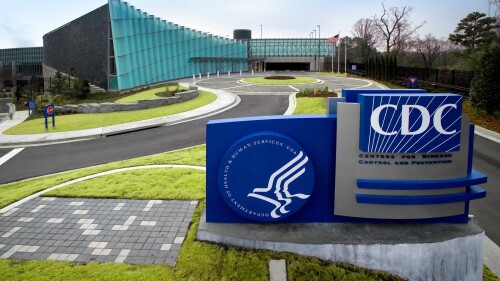 A spokesperson for the Department of Health and Human Services refuted the claim, made Thursday on social media by ACIP Vice Chair Robert Malone, calling it “baseless speculation.”
 -
 A year of significant policy change at the FDA brought momentum and scrutiny into the new year. As 2026 gets underway, biopharma companies are responding to sweeping vaccine changes while concerns surface about the politicization of the agency.
 -
 A Massachusetts judge called Kennedy’s efforts to reform the CDC’s vaccines advisory panel a “procedural failure,” adding that the new committee members do not “comport with governing law.”
 -
 Health Secretary Robert F. Kennedy Jr. has become increasingly unpopular among several government officials, largely as a result of his antivaccine rhetoric and actions. Other contentious issues reportedly include the approval of an abortion pill and other controversial FDA decisions.





While you should never rely solely on AI tools when applying for jobs, they can greatly benefit the application process. Recruiting expert Bryan Blair discusses how using large language models can set you apart from the competition and includes a prompt framework to get you started.

In a competitive job market, how applicants present themselves in interviews is critical. Asking about promotions and expressing dislike for the work they’d be doing are just a few reasons hiring managers don’t extend job offers.

With leaner teams and tighter budgets, senior leaders can face tremendous strain as they juggle increased workloads and leadership responsibilities. In this column, Kaye/Bassman’s Michael Pietrack discusses how pressure builds and what can ease it.

Biopharma professionals need to understand today’s job market and how they can stand out to position themselves for success. Three talent acquisition and recruiting experts discussed these topics in a BioSpace webinar, from the importance of contract work to the value of an advocate.

This webinar provides a clear-eyed assessment of current hiring conditions across biopharma, exploring which roles and skills are in demand, where opportunities are emerging, and how hiring practices are evolving.

If workloads aren’t adjusted as needed, the company’s priorities are already compromised. Executive coach Angela Justice explores what happens when goals move forward without removing unnecessary work and what to do about it.
HOTBEDS


REPORTS

In this Employment Outlook report, BioSpace explores current workforce sentiment, job activity trends and the prospective job and hiring outlook for 2025, particularly as it compares to the previous year.


BioSpace’s third report on diversity, equity, inclusion and belonging in life sciences examines dramatic shifts in attitude around diversity initiatives.
CANCER

-
 The upcoming FDA decision for Replimune’s advanced melanoma drug could be a litmus test for the agency’s future regulatory decision-making, analysts say, with implications stretching well beyond one company.
 -
 Merck’s acquisition of Terns Pharmaceuticals follows other big-ticket purchases, including of Verona Pharma and Cidara Therapeutics, as the pharma prepares for the impending expiration of its blockbuster’s patents.
 -
 Missing one of its co-primary endpoints could make it difficult for Karyopharm Therapeutics to score conventional approval for Xpovio in myelofibrosis, according to Jefferies analysts.
 -
 Aside from the $2 billion upfront payment, Novartis is also putting up to $1 billion on the line in milestones for Synnovation Therapeutics’ pan-mutant-selective PI3Kα blocker.
 -
 Prime biotech buyout targets such as Revolution Medicines and Ascendis Pharma have recently found themselves in the middle of acquisition rumors—though no deals have panned out so far.


NEUROSCIENCE

-
 In the buyout, Eli Lilly picks up Centessa Pharmaceuticals’ lead asset cleminorexton, which could go toe-to-toe with Takeda’s oveporexton, currently under FDA review with a decision expected in the third quarter.
 -
 At the AD/PD annual meeting, Eisai presented real-world data suggesting Leqembi’s long-term safety and efficacy in people homozygous for APOE4, who were identified in trials as being at higher risk of brain bleeds while on the treatment. Alzheon, meanwhile, added further detail to trial results of its candidate in patients with the same genetic profile.
 -
 Trace Neuroscience, a member of BioSpace’s NextGen Class of 2026, has learned from the success of Biogen’s Qalsody and aims to bring more treatment options to the ALS community.
 -
 The FDA detected 14 cases of vitamin B6 deficiency–linked seizures and two deaths in patients with Parkinson’s disease taking carbidopa/levodopa drugs. Both AbbVie and Novartis market levodopa-based products.
 -
 Oryon Cell Therapies’ lead cell therapy is an autologous treatment designed to replace dopaminergic neurons in patients with Parkinson’s disease. Phase 1b/2a data showed that the asset can improve motor function and mobility in patients.


CELL AND GENE THERAPY

-
 While the accelerated approval unlocks only a small market opportunity for Rocket Pharmaceuticals, it will give the biotech a chance to prepare for future product launches, according to Jefferies.
 -
 Biomarker data for Sarepta Therapeutics’ RNA programs, licensed from Arrowhead Pharmaceuticals, are “competitive” and “strong,” according to analysts at Jefferies, which projected over $1 billion in peak sales.
 -
 Following last month’s $7.8 billion purchase of CAR T biotech Arcellx, Gilead’s dealmaking train chugs along with yet another acquisition—this time securing Ouro Medicines’ pipeline of T cell engagers for inflammatory diseases.
 -
 Eli Lilly and Regeneron are leading the push to treat congenital deafness with gene therapies, seeking a piece of a potential billion-dollar market and banking on local delivery and the small amount of drug required to overcome key safety concerns.
 -
 Sana Biotechnology is looking to start clinical development for its type 1 diabetes therapy SC451 this year.


