


In this episode of Denatured, you’ll be listening to Jane Hughes, President of R&D and Co-founder of Verdiva Bio, and Jon Rees, CEO and Co-founder of MitoRx Therapeutics. We’ll discuss next-generation obesity solutions tackling GLP-1’s muscle loss and adherence challenges, through innovative muscle preservation, oral administration and combination therapy.

Once fully operational, the Pennsylvania site will employ more than 500 people and make cell therapies for thousands of patients a year.

Novartis and Unnatural Products did not specify which disease targets they’re going after, only noting that the latter’s macrocyclic platform can generate potentially next-generation therapies that could apply to cardiovascular conditions.

The FDA’s drug review process can often be “unpredictable,” and review teams typically “differ greatly” in what they ask of drug sponsors, Sen. Bill Cassidy said.

Drug sponsors should nevertheless bolster their application with “confirmative evidence,” chief regulators Marty Makary and Vinay Prasad said on Wednesday, including mechanistic data or findings from related indications or animal models.

Looking for a biopharma job in Pennsylvania? Check out the BioSpace list of nine companies hiring life sciences professionals like you.
FEATURED STORIES

Many scientists-turned-CEOs paradoxically abandon scientific principles when it comes to commercializing their innovations. But applying the scientific method to business decisions can help life science entrepreneurs avoid common pitfalls, attract investment and ultimately bring transformative technologies to market.

FDA vouchers are normally a coveted prize for biopharma companies, but a surprise rejection for Disc Medicine’s rare disease drug has biopharma reconsidering.

Through its AI Consortium and global forums, DIA is translating high‑level AI guidance into concrete workflows that match oversight to risk, from low‑stakes automation to decision‑critical regulatory analyses.

PitchBook’s 2025 biopharma VC analysis clocked $33.8 billion in capital dispatched in 2025, mainly to companies with later-stage programs ready to roll into the clinic.

Long an R&D company that partnered off assets, RNAi biotech Ionis Pharmaceuticals shifted in 2025 to bring two medicines to market alone. Analysts are already impressed—and there’s more to come in 2026.

Regulatory uncertainty is no longer background noise. It is a material investment risk that reshapes how capital is deployed and pipelines are prioritized.


FROM BIOSPACE INSIGHTS

Muscle Preservation, Tolerability and Alternative Administration Routes Define Obesity’s Drug Future
In the incredibly hot obesity drug space, with more than 700 clinical trials ongoing, Verdiva Bio and MitoRx leaders discuss how next-generation therapies are targeting lean muscle preservation, extended efficacy and better safety profiles to enable lifelong weight management.


LATEST PODCASTS

In this episode of Denatured, you’ll be listening to Jane Hughes, President of R&D and Co-founder of Verdiva Bio, and Jon Rees, CEO and Co-founder of MitoRx Therapeutics. We’ll discuss next-generation obesity solutions tackling GLP-1’s muscle loss and adherence challenges, through innovative muscle preservation, oral administration and combination therapy.

The FDA outright refuses to review Moderna’s mRNA-based flu vaccine as CBER director Vinay Prasad’s conduct is scrutinized; Disc Medicine receives an unexpected rejection, which Prasad may also have had a hand in; Compass Pathways posts new late-stage data on its psilocybin-based depression drug; CDC is once again leaderless.

Johns Hopkins’ Thomas Hartung discusses how drug discovery and development will change under evolving regulatory policies that embrace AI technology as well as organoid and other non-animal models of human biology.



Subscribe to GenePool
Subscribe to BioSpace’s flagship publication including top headlines, special editions and life sciences’ most important breaking news
SPECIAL EDITIONS

Recent breakthroughs and three decades of progress in treating Huntington’s disease

In this deep dive, BioSpace investigates China’s rise as a biotech powerhouse.

In this deep dive, BioSpace explores the next big thing in obesity.
DEALS

-
 CSL is advancing clazakizumab for the treatment of cardiovascular events in end-stage kidney disease and will retain rights over the asset in this indication. Lilly will explore other conditions.
 -
 The pact between Madrigal Pharmaceuticals and Ruzhou Ribo Life Sciences could complement the former’s Rezdiffra, the first FDA-approved therapy for MASH. That drug made $287.3 million in the third quarter of 2025.
 -
 The deal gets Lilly access to Orna’s in vivo CAR T technology. The biotech’s lead asset, which has yet to start clinical testing, is focused on B cell–driven autoimmune diseases.
 -
 In this episode of Denatured, Jennifer C. Smith-Parker speaks to Erik Digman Wiklund, CEO of Circio and Jacob Becraft, Co-founder and CEO of Strand Therapeutics. They discuss how post-COVID, emerging platforms like circular and logic circuit RNA are expanding the field’s therapeutic horizons.
 -
 The alliance will add to Roche’s RNAi efforts, which include the hypertension candidate zilbesiran, partnered with Alnylam under a July 2023 agreement.


WEIGHT LOSS

-
 Eli Lilly has long been gearing up for the launch of orforglipron, announcing as early as February 2024 that it was ramping up manufacturing investments for the weight-loss pill.
 -
 The oral version of Wegovy has made GLP-1 medicines more accessible and acceptable to many patients who had steered clear of injectable versions, healthcare analytics firm Truveta suggests.
 -
 A lawsuit and FDA warning ensued after Hims & Hers launched a compounded version of Novo Nordisk’s new obesity pill, more Big Pharma report earnings—including from weight loss rivals Novo and Eli Lilly—and the gene therapy space sees another rejection.
 -
 Kailera will launch a global Phase 2 study of ribupatide this year, while Hengrui will push the asset into Phase 3 in China.
 -
 AstraZeneca will push the pill, elecoglipron, into a comprehensive late-stage program that will test the drug as a monotherapy, as part of a combination regimen and for several indications.





POLICY

-
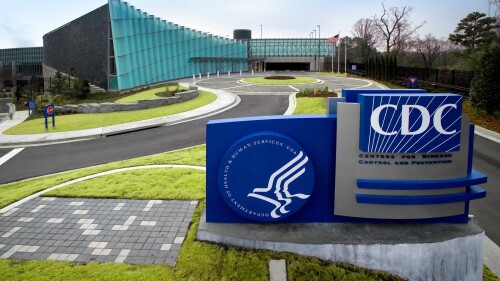 Jay Bhattacharya will become the latest leader of the CDC on an acting basis, days after Jim O’Neill stepped aside.
 -
 Arbutus alleges that Moderna’s COVID-19 vaccine infringes on patents protecting its lipid nanoparticle delivery technology.
 -
 Jim O’Neill was deputy secretary at the Department of Health and Human Services and also acting director of the CDC after the abrupt ouster of Susan Monarez in August 2025.
 -
 The current state of political affairs in the U.S. does not bode well for the direction of that turn. The country is at real risk of losing its long-held lead in biotech innovation.
 -
 An unnamed FDA official also told reporters that it would be good for Moderna to “show some humility” and admit that it didn’t follow the regulator’s recommendations in testing its mRNA flu vaccine.


Looking for a biopharma job? Check out the BioSpace list of 12 top companies hiring life sciences professionals like you.

If workloads aren’t adjusted as needed, the company’s priorities are already compromised. Executive coach Angela Justice explores what happens when goals move forward without removing unnecessary work and what to do about it.

At some point in your research career, you may find yourself transitioning from academia to industry or vice versa. To best set yourself up for success, adapt your approach to the specific scientific culture where you work.

Venture funds attending the J.P. Morgan Healthcare Conference said mounting funding pressures and Chinese competition have sharpened their focus on leadership qualities, from regulatory expertise and industry experience to the ability to scale—or step aside—as companies mature.

Clarity on employment terms is essential to protect careers. In this column, Kaye/Bassman’s Michael Pietrack speaks to employment attorney Howard Matalon, JD, partner at OlenderFeldman, on how to evaluate the fine print of an employment agreement.

Looking for a new opportunity in New Jersey? These nine companies have open roles that could be a great fit for you.
HOTBEDS


REPORTS

In this Employment Outlook report, BioSpace explores current workforce sentiment, job activity trends and the prospective job and hiring outlook for 2025, particularly as it compares to the previous year.


BioSpace’s third report on diversity, equity, inclusion and belonging in life sciences examines dramatic shifts in attitude around diversity initiatives.
CANCER

-
 Suppliers are investing in production to support deals with AstraZeneca, Bayer and other drugmakers that are advancing radioisotope-based cancer therapies.
 -
 In this episode of Denatured, Jennifer C. Smith-Parker speaks with Dr. Rob Monroe and Jennifer Fakish at Danaher Corporation. They discuss how antibody drug conjugates (ADCs) are transforming cancer care. With AI-powered pathology, doctors can now measure HER2 more precisely to match patients with the best treatments.
 -
 Despite the Phase 1 cull, CEO Vas Narasimhan on Wednesday maintained that Novartis continues to invest in its early-stage pipeline, looking for deals in the “sub-$2-billion range.”
 -
 On its fourth quarter earnings call Wednesday, AbbVie CEO Robert Michael called oncology and neuroscience “underappreciated” areas of focus for the pharma.
 -
 In its 2025 full year and fourth-quarter earnings call, Merck executives touted the merits of recent deals and what CEO Robert Davis called “probably the broadest and widest pipeline we’ve had in years.”


NEUROSCIENCE

-
 Korsana’s lead program uses a next-generation shuttling technology to improve delivery into the brain and lower the incidence of amyloid-related imaging abnormalities.
 -
The FDA outright refuses to review Moderna’s mRNA-based flu vaccine as CBER director Vinay Prasad’s conduct is scrutinized; Disc Medicine receives an unexpected rejection, which Prasad may also have had a hand in; Compass Pathways posts new late-stage data on its psilocybin-based depression drug; CDC is once again leaderless.
-
 Analysts, investors and scientists are eager for Biogen’s 2026 BIIB080 readout. Even if successful, executives warn that there are many more steps before the Alzheimer’s therapy could reach the market.
 -
 The FDA in July last year declined to approve UX111 for Sanfilippo syndrome, a rare neurodegenerative disorder, citing manufacturing issues. Ultragenyx Pharmaceutical resubmitted its application ten days ago, expecting a six month review time.
 -
 Sales of Johnson & Johnson’s esketamine-based nasal spray jumped in the fourth quarter last year, priming the pump for a suite of other pharmas, including AbbVie, champing at the bit with their own psychedelics.


CELL AND GENE THERAPY

-
 The FDA’s refusal to review Moderna’s mRNA-based flu vaccine is “part of a disturbing pattern” of moving regulatory goalposts, according to Clay Alspach, executive director of the Alliance for mRNA Medicines. Meanwhile, streamlined communications with regulators in other countries pave the way for rapid uptake of novel modalities.
 -
 Following over a year of slow uptake, Vertex Pharmaceuticals and CRISPR Therapeutics expect Casgevy revenues to nearly triple in 2026, as patient access to the sickle cell disease and beta thalassemia gene therapy grows.
 -
 The FDA’s refusal to review Moderna’s mRNA-based flu vaccine is part of a larger communications crisis unfolding at the agency over the past nine months that has also ensnarled Sarepta, Capricor, uniQure and many more.
 -
 The rare disease drugmaker is facing potential competitors for achondroplasia drug Voxzogo. Is a big M&A deal with two approved assets enough to maintain investor interest?
 -
 A recurring theme Tuesday morning at Phacilitate’s Advanced Therapies Week was the quickly emerging potential of in vivo approaches to cell and gene therapy—a trend also reflected in recent investments by Eli Lilly and Regeneron.


