


Newly appointed Center for Drug Evaluation and Research director Richard Pazdur has filed retirement papers with the agency—three weeks after accepting the role—amid clashes with Commissioner Marty Makary over certain FDA programs.

With no evidence to support the claim that 10 children died due to COVID-19 vaccines, experts unpack the impact of CBER chief Vinay Prasad’s leaked vaccine memo.

While Imvax’s autologous immunotherapy IGV-001 missed the primary endpoint of progression-free survival in a Phase IIb trial, the company will request a meeting with the FDA to discuss next steps for “synergistic” treatment.

Trontinemab lowered amyloid levels below the threshold of positivity in 92% of treated patients.

This week’s meeting of the Advisory Committee on Immunization Practices will be led by Kirk Milhoan, a physician and pastor who recently claimed that COVID-19 vaccines contained a contamination that causes cancer.

Agentic AI can help FDA staff manage meetings, conduct pre-market reviews and validate reports, among other tasks, though the agency emphasized that using this technology is optional for its employees.
FEATURED STORIES

Drug candidates don’t usually move among Big Pharma, but these five biotechs helped facilitate such hand-offs, scooping up assets from one pharma on the cheap before being bought out for billions by another.

A week into his tenure as head of the FDA’s Center for Drug Evaluation and Research, experts agree that Rick Pazdur is the “ideal fit” to stabilize the agency. And, according to one ex-FDA official, if his CBER counterpart Vinay Prasad tries to supersede Pazdur’s authority, “there will be hell to pay.”

The introduction of AbbVie’s hepatitis C drugs in 2014 forced Gilead’s hand in the fight for market dominance in hepatitis C. A similar dynamic is now playing out between Eli Lilly and Novo Nordisk in the obesity space, with some key differences.

The industry’s ability to generate a return on billions of dollars of investment rests on a heavily regulated supply chain defined by time-pressured logistics.

Priority voucher awardees and regulators could feel pressure to “meet the moment” as FDA watchers question the intent and feasibility of the Commissioner’s National Priority Voucher program.

Through substantial leadership turnover and workforce cuts, the FDA has continued to support the advanced therapy sector, actively working to remove obstacles to innovation.


LATEST PODCASTS

In this episode presented by Element Materials Technology, guests Dr. Jihye Jang-Lee and Dr. Khanh Courtney discuss how small biotechs face mounting pressure amid manufacturing uncertainties.
Novo Nordisk’s leadership gets another shake-up as President Trump promises to significantly slash prices for its GLP-1 drugs; Summit/Akeso, Exelixis and more present new data at ESMO 2025; Replimune pops as FDA accepts resubmitted BLA; FDA names first winners of Commissioner’s National Priority Voucher program; and more.

In this episode presented by Element Materials Technology, guests Dr. Jihye Jang-Lee and Dr. Khanh Courtney will explore how healthcare and pharmaceutical players are rethinking their strategies amid global supply chain disruption.
Job Trends

Four Los Angeles County life sciences projects are receiving funding to support goals that include adding jobs, creating multitenant facilities for graduation-stage companies, financially supporting emerging businesses and attracting large employers to the area.


Subscribe to GenePool
Subscribe to BioSpace’s flagship publication including top headlines, special editions and life sciences’ most important breaking news
SPECIAL EDITIONS

Year-over-year BioSpace data show there were fewer job postings live on the website in the fourth quarter of 2024, and the decrease was higher than the third quarter’s drop.

The J.P. Morgan Healthcare Conference started off with a flurry of deals that reinvigorated excitement across the biopharma industry. Johnson & Johnson moved to acquire Intra-Cellular Therapies for $14.6 billion, breaking a dealmaking barrier that kept Big Pharma’s 2024 biotech buyouts to under $5 billion.

In this deep dive BioSpace explores the opportunities and challenges presented by the FDA’s accelerated approval program.
DEALS

-
 Due to the litigation Pfizer filed Friday and Monday against Metsera, Novo Nordisk and the biotech’s lead shareholder, CEO Albert Bourla was limited in what he could say. But he said Pfizer was the best fit for Metsera.
 -
 Both companies have submitted revised bids, with Novo’s coming in $1.9 billion higher than Pfizer’s.
 -
 At the center of the licensing deal is an NLRP3 inhibitor that has shown “encouraging efficacy in acute inflammation models,” according to TransThera, indicating its potential in various metabolic and inflammatory diseases.
 -
 Manifold will use its tissue-targeting shuttle technology to help Roche develop new therapeutics for diseases of the central nervous system.
 -
 Pfizer has filed two separate lawsuits in an effort to stop Novo Nordisk’s unsolicited bid to acquire obesity biotech Metsera.


WEIGHT LOSS

-
 During a press conference to announce a drug price deal for GLP-1s, President Donald Trump asked for more details about the ongoing bidding war between Novo Nordisk and Pfizer over obesity biotech Metsera.
 -
 The nausea and other gastrointestinal side effects of weight loss drugs like Novo Nordisk’s Wegovy or Eli Lilly’s Zepbound will limit how much these drugs can help patients and stunt the overall obesity market unless we approach the problem head on.
 -
 The agreement will also secure a $150 price for future weight loss pills from Novo Nordisk and Eli Lilly—at least initially.
 -
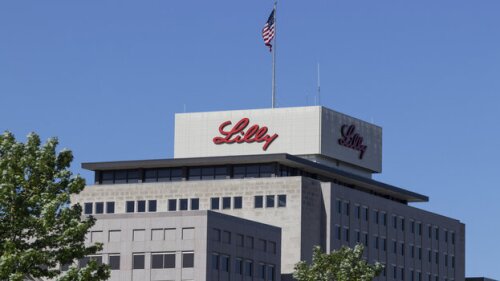 The highest dose of Eli Lilly’s eloralintide led to 20.1% weight loss after 48 weeks in a Phase II trial, exceeding analyst expectations and highlighting a “potentially best in class profile,” according to BMO Capital Markets.
 -
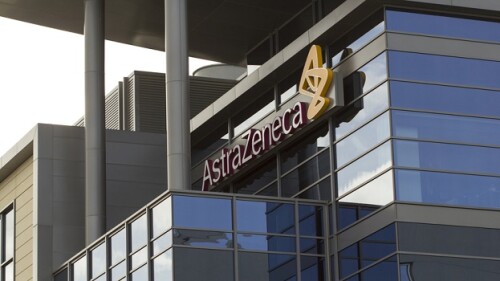 In an investor call Thursday, AstraZeneca CEO Pascal Soriot outlined his company’s approach to obesity drug development based on “the medical aspect” of weight loss, including driving down visceral fat.


POLICY

-
 Industry leaders say uncertainty in funding, clinical development and manufacturing is driving companies to embrace digital transformation, streamlined operations and strategic partnerships to navigate a turbulent market and global tariff pressures.
 -
 While the threat of tariffs dies down for the pharma industry, President Donald Trump is reportedly weighing a new investigation that could result in import taxes against U.S. trading partners that don’t pay enough for drugs.
 -
 EMD Serono will offer its fertility treatments on TrumpRx at a steep discount, and Roche’s direct-to-consumer offering will cover its flu pill Xofluza.
 -
 An unnamed source clarified that Sandra Retzky has not been fired from the FDA, but it remains unclear where she was reassigned.
 -
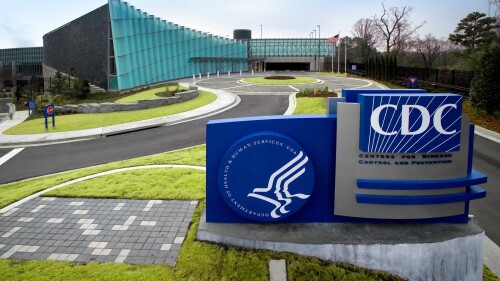 The last few months have been tumultuous for the CDC, which has seen the ouster of Director Susan Monarez and all 17 members of the Advisory Committee on Immunization Practices.


Layoffs leave more than empty desks—they leave uncertainty, guilt and anxiety. Three simple steps will help you regain control of your work, well-being and career.

As they navigate a competitive job market, biopharma professionals are making four key interview mistakes, according to two talent acquisition experts. They discuss those errors and offer tips for how to get those critical conversations right.

Executive coaches can help executives take their game to the next level in four key ways, from improving their self-awareness to reshaping their thinking.

A BioSpace LinkedIn poll found that job ghosting and ghost jobs are the biggest pet peeves for applicants now. Recruitment Manager Greg Clouse offers advice on dealing with them.

Plus, how to use your network effectively and create job opportunities before they exist

Looking for a biopharma job in New Jersey? Check out the BioSpace list of eight companies hiring life sciences professionals like you.
HOTBEDS


REPORTS

Year-over-year BioSpace data shows there are fewer job postings live on the website and far more competition for them.


This report investigates anticipated job search activity and hiring outlook for the remainder of 2024.
CANCER

-
 The deal focuses on ICT01, a monoclonal antibody being tested in acute myeloid leukemia. ImCheck is also developing assets in infectious disease and other oncology indications.
 -
 Pfizer, Merck, AstraZeneca and Bristol Myers Squibb were among the many biopharmas showing off novel cancer modalities at ESMO, with antibody-drug conjugates, bispecific antibodies and kinase inhibitors demonstrating encouraging efficacy and safety for various cancers.
 -
 For $1.2 billion upfront and up to $10.2 billion in milestones, Takeda will gain access to a bispecific antibody fusion protein targeting both the PD-1 and IL-2 pathways, among other assets.
 -
 Novo Nordisk’s leadership gets another shake-up as President Trump promises to significantly slash prices for its GLP-1 drugs; Summit/Akeso, Exelixis and more present new data at ESMO 2025; Replimune pops as FDA accepts resubmitted BLA; FDA names first winners of Commissioner’s National Priority Voucher program; and more.
 -
 With data from the Phase III STELLAR-303 study in the books, Exelixis is plotting a 2025 regulatory application for zanzalintinib.



NEUROSCIENCE

-
 Alixorexton’s Phase II performance sets it up for late-stage success, according to analysts at Truist Securities. Alkermes expects to launch a global late-stage program early next year for narcolepsy type 2.
 -
 After the FDA rejected its spinocerebellar ataxia treatment, Biohaven missed out on a $150 million payment from Oberland Capital. Now the company is reshuffling its pipeline to stay alive.
 -
 The mid-stage failure was unexpected to analysts at BMO Capital Markets, who viewed ‘770 as mostly derisked given its similar mechanism of action to Johnson & Johnson’s Spravato.
 -
 Biohaven is proposing troriluzole for the treatment of spinocerebellar ataxia, a group of rare, genetic diseases that lead to the progressive loss of control over movement.
 -
 A month after sparking optimism for patients with Huntington’s disease with highly positive data for AMT-130, uniQure revealed Monday that the FDA may be changing its tune on the evidence required for an approval application, a change of direction Stifel called “very challenging” for uniQure.


CELL AND GENE THERAPY
-
As third-quarter earnings continue to roll out, Novartis makes headlines with the second biggest acquisition of the year; Novartis’ CEO also downplayed the impact of Big Pharma pricing deals with the Trump administration; Regeneron continued the trend of dropping cell therapy assets; BioSpace takes a look at how the FDA is functioning mid-shutdown.
-
 Intellia earlier this year reported a similar grade 4 liver enzyme elevation associated with the gene therapy nexiguran ziclumeran, though analysts at BMO Capital Markets at the time brushed it off as a “non-concern.”
 -
 The takeover of its competitor, announced Sunday, could also bring some attention to Dyne Therapeutics, which has a similar RNA-based pipeline in rare muscle diseases.
 -
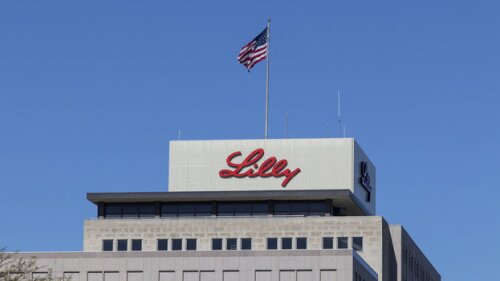 The cornerstone of the deal is Ixo-vec, an intravitreal gene therapy currently in Phase III development for wet age-related macular degeneration. Eli Lilly made another foray into genetic medicine in June, picking up Verve Therapeutics for up to $1.3 billion.
 -
 The discontinued CAR T therapy bbT369 came to Regeneron when the pharma bought all of 2seventy bio’s pipeline assets for $5 million upfront in January 2024.


