In this episode presented by PII, BioSpace’s head of insights discusses decentralized clinical studies and how connected technology can improve patient compliance with guests Oliver Eden and Travis Webb.

The partners have yet to disclose what their priority indications are, though EVOQ’s NanoDisc technology aims to enable the development of potentially curative treatments for autoimmune conditions such as celiac disease and type 1 diabetes.

An unnamed source clarified that Sandra Retzky has not been fired from the FDA, but it remains unclear where she was reassigned.

Veradermics is the second hair regrowth specialist to fundraise this week, after Pelage Pharmaceuticals announced Wednesday it had brought in $120 million for its own therapy.

Due largely to CSL, Merck and Novo Nordisk’s reorganizations that could total about 19,350 people, Q3 cuts rose significantly year over year and quarter over quarter, based on BioSpace tallies.

This webinar, tailored for scientists in academia, biotech, and pharma, explores how intelligent mRNA designs can reduce experimental workloads and improve mRNA performance and efficacy.
FEATURED STORIES

Billions in market cap are being shed as the markets reel over President Donald Trump’s escalating trade war. Eli Lilly’s value has dropped more than $95 billion in just one month.

Long considered resistant to economic downturns, the pharmaceutical industry may face a greater challenge this time around as GLP-1s dominate and the population grows older.

Akero Therapeutics, 89bio, Boston Pharmaceuticals and more are working to bring novel treatment options for metabolic dysfunction-associated steatohepatitis to a market that could reach $16 billion by 2033.

Researchers in pharma and beyond have historically glommed onto a limited number of disease targets, limiting innovation. AI could change that.

While it’s not unusual for certain positions to turn over with a new administration, the number of senior-level FDA staffers who have recently left the agency is unprecedented. The lack of communication, transparency and human decency is as well.

Bo Wang is a renowned AI scientist at the University of Toronto. He’s bringing his open-source culture and computational biology to Xaira Therapeutics in June.


LATEST PODCASTS

This week’s news ranged from BioSpace’s on-the-ground updates from DIA to safety concerns in clinical trials to BIOSECURE Act updates to new projections that the GLP-1 market could top $100 billion within 10 years.

BioSpace’s Lori Ellis and Chantal Dresner bring live updates from the first day of #DIA2024 in San Diego.
This week, an FDA adcomm unanimously voted for the approval of Eli Lilly’s anti-amyloid antibody as thousands of layoffs continue to rattle the industry.
Job Trends
AnaptysBio, Inc. announced positive top-line results from its global GEMINI-1 and GEMINI-2 Phase 3 trials evaluating the safety and efficacy of investigational imsidolimab in patients with generalized pustular psoriasis, a severe orphan disease that is potentially life-threatening if left untreated.
Subscribe to GenePool
Subscribe to BioSpace’s flagship publication including top headlines, special editions and life sciences’ most important breaking news
SPECIAL EDITIONS

In this deep dive, BioSpace investigates China’s rise as a biotech powerhouse.

In this deep dive, BioSpace explores the next big thing in obesity.

BioSpace did a deep dive into biopharma female executives who navigated difficult markets to lead their companies to high-value exits.
DEALS

-
 The Connecticut-based biotech, which emerged from stealth last year, has secured $202 million to date as it looks to move two assets targeting prostate and breast cancer into the clinic.
 -
 Armed with a combined $850 million in cash, the companies said Thursday the resulting biotech will have a pipeline that could deliver 10 clinical readouts over the next 18 months.
 -
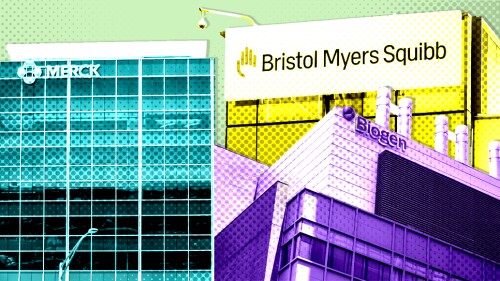 The size of the global immunology market is projected to nearly double by 2032 to a quarter of a trillion dollars. Here are this year’s standout deals in the space.
 -
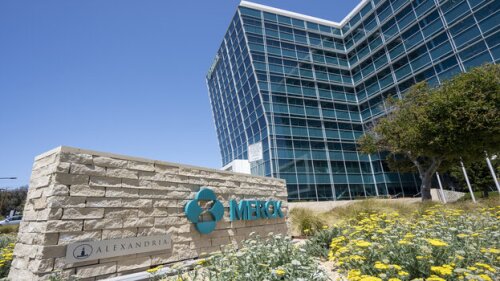 After dropping $4 billion on a deal with the Japanese company last year, Merck is getting back some of its investment as Daiichi Sankyo buys into a Phase I/II T-cell engager therapy acquired from Harpoon Therapeutics.
 -
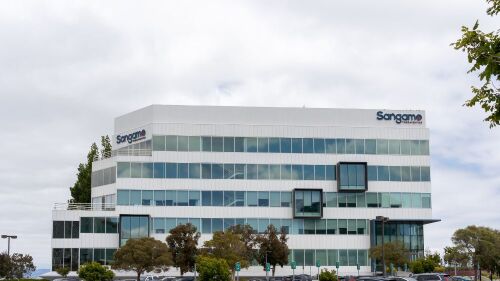 Sangamo Therapeutics announced Tuesday it secured an exclusive licensing agreement with Roche’s Genentech, which is paying $50 million in near-term upfront fees and milestone payments to develop novel genomic medicines for neurodegenerative diseases.


WEIGHT LOSS

-
 After a couple months of uncertainty, the FDA has told compounding pharmacies that they have 60 to 90 days before the agency will enforce rules to stop their production of GLP-1s.
 -
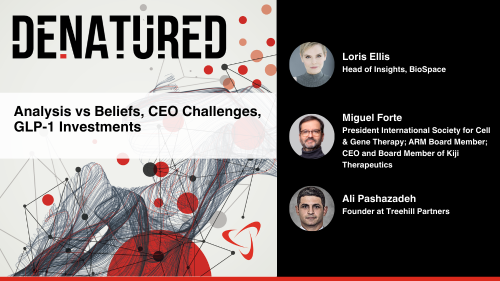 In this episode of Denatured, BioSpace’s Head of Insights Lori Ellis, Miguel Forte and Ali Pashazadeh speculate on the impending Trump administration, discuss current challenges faced by CEOs and weigh investment in GLP-1s.
 -
 According to the World Health Organization, GLP-1 receptor agonists are currently being used in a highly medicalized manner. Healthcare systems need to enact more holistic solutions, focusing on health promotion, disease prevention and policy interventions.
 -
 Following an appeal by the Danish Medicines Agency, the European Union’s drug regulator will review two new studies that have strengthened the link between Novo Nordisk’s blockbuster GLP-1 and a rare eye disease.
 -
 Suddenly the hottest thing in biopharma isn’t a new indication, disease target or modality—it’s manufacturing, and all of pharma is going to be vying for capacity and talent.


POLICY

-
 Despite these cuts, the FDA should be able to stay above a “trigger” level that would prevent it from collecting fees from the pharma industry and deprive it of approximately half of its annual funding, according to The Washington Post.
 -
 In the wake of unprecedented workforce cuts at the FDA, former Commissioner Scott Gottlieb and an unnamed former CBER director spoke to analysts about potential implications for drug review timelines and agency morale.
 -
 Playing both sides of trade war, pharma companies are asking for certain compensations for scientific innovation and a smoother regulatory framework.
 -
 Analysts are “cautiously optimistic” about Trump’s executive order, noting that changes to the IRA drug price negotiation program will still require Congressional action before being implemented.
 -
 Trump could use the findings of the probe to impose certain trade restrictions on pharma products, including tariffs.


What is the culture like at your company? Are employees motivated to do their best work? Is your company using employee engagement strategies to improve productivity?

Discover the pros and cons before you hire an independent contractor (IC). These include freelancers, consultants, seasonal workers, and other temporary professionals.

Getting job-hunting and career advice is hard, especially when you get it from those who have worked for decades. Some advice is still helpful today, like making a good impression, but others are considered counter-productive.

The salary expectation question is one of the most difficult questions asked during a job interview. Here’s how you can answer the question perfectly.

The coronavirus disease (COVID-19) pandemic that has ravaged across the globe has demanded more experts in microbiology, particularly jobs in virology.

BioSpace’s Pharm Country Hotbed ranges from Connecticut, New York, New Jersey, Pennsylvania and Rhode Island.
HOTBEDS


REPORTS

In this Employment Outlook report, BioSpace explores current workforce sentiment, job activity trends and the prospective job and hiring outlook for 2025, particularly as it compares to the previous year.


BioSpace’s third report on diversity, equity, inclusion and belonging in life sciences examines dramatic shifts in attitude around diversity initiatives.
CANCER

-
 Faced with the encroaching threats of patent expirations and generics, biopharma companies in 2024 invested 33% more in licensing deals, on average, than in 2023 with an eye toward enriching their pipelines with novel and potentially more effective therapies.
 -
 Topline data on a combo including Pfizer’s kinase inhibitor Braftovi point to improved progression-free survival and pave the way for its full approval for the treatment of certain colorectal cancers, according to the company.
 -
 Novartis was among the most prolific pharma dealmakers in 2024, a trend that it expects to continue with more bolt-on deals this year to set up for sustainable long-term growth.
 -
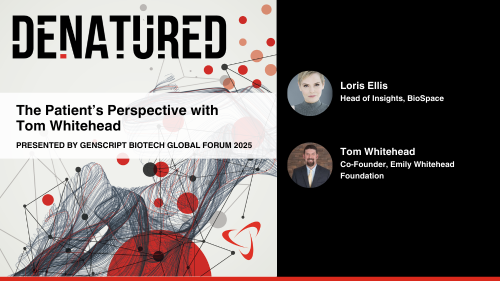 In this episode, presented by the Genscript Biotech Global Forum 2025, BioSpace’s Head of Insights Lori Ellis talks to Tom Whitehead, co-founder of the Emily Whitehead Foundation, about how standard care, cell and gene therapies and their impact on patients.
 -
 The layoffs follow an announcement in early January that I-Mab will re-prioritize resources to focus on advancing a CLDN18.2 and 4-1BB bispecific antibody for gastric cancers.


NEUROSCIENCE

-
 Effectively treating and preventing this common form of dementia will require a cocktail of drugs and a combination of approaches, as well as a drive toward early detection.
 -
 With two earlier trials meeting their primary endpoints, Axsome claimed it has the data to support a filing for FDA approval in the second half of 2025.
 -
 In a highly anticipated readout for the kappa opioid receptor class in major depressive disorder, Neumora’s navacaprant failed to meet the primary and key secondary endpoint in the first of three identical Phase III studies.
 -
 This year saw lofty highs and devastating lows for neuroscience drug developers like Bristol Myers Squibb, Eli Lilly and AbbVie, following the predictable pattern of successes and failures that characterizes this space.
 -
 Already established as cornerstone therapies in diabetes and obesity, GLP-1 receptor agonists also show potential in several other indications, including cancer, addiction and neurodegenerative diseases.


CELL AND GENE THERAPY
-
 In our anniversary episode, we discuss a rare earnings miss for Eli Lilly, a pivotal metabolic dysfunction–associated steatohepatitis victory for Novo Nordisk’s Wegovy, growing excitement about CAR Ts for autoimmune disease and the ongoing controversy over HeLa cells.
 -
 In a tough fundraising space, cell therapy biotechs pursuing autoimmune indications review staffing to ensure the right expertise is in place to tackle the new disease area.
 -
 BEAM-101 seems to be competitive with approved sickle cell treatments, William Blair analysts said in a note to investors, but a patient death underscores the need for less-toxic preconditioning treatments.
 -
 Multiple players are exploring whether modalities designed to combat B cell malignancies can be repurposed against lupus, myasthenia gravis and other conditions traced to misdirected immune response.
 -
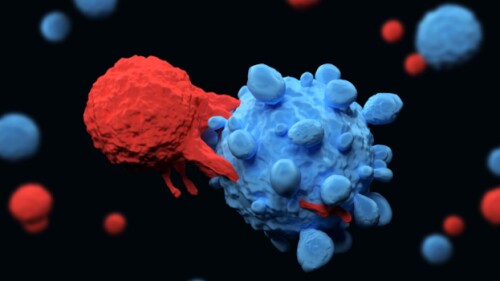 While some of the initial excitement around immunotherapies has waned, companies—particularly smaller biotechs—are developing newer iterations that will take cancer care to the next level.