


Last month, biopharmas let go or projected they would let go of less than 500 people combined, based on BioSpace estimates, down almost 1,000 from January 2025. Still, competition for open jobs remains strong, with employed and unemployed biotech and pharma professionals eyeing their next roles.

The Taiwan-based company is establishing a manufacturing center for the U.S. market.

With 10 launches planned in the coming quarters, Gilead isn’t feeling the same acquisition urgency as its pharma peers—though the prospect of a takeover isn’t off the table.

The percentage of patients achieving total clearance of eczema lesions in a Phase 2b trial increased with prolonged rezpeg treatment.

A lawsuit and FDA warning ensued after Hims & Hers launched a compounded version of Novo Nordisk’s new obesity pill, more Big Pharma report earnings—including from weight loss rivals Novo and Eli Lilly—and the gene therapy space sees another rejection.

Looking for a biopharma job in Boston? Check out the BioSpace list of nine companies hiring life sciences professionals like you.
FEATURED STORIES

The FDA issued a rare Refusal-to-File letter to Moderna over its mRNA-based influenza vaccine application, in an unusual move that sent the biotech’s shares tumbling.

A rapturous response to data published last year for Pelage’s hair loss candidate overwhelmed the biotech. Now, the company is ready to show the world the science behind the breakthrough.

Pfizer, Eli Lilly, Novartis, Bristol Myers Squibb and AstraZeneca are all ramping up the use of AI, but drug discovery is not the primary success story—yet.

Analysts, investors and scientists are eager for Biogen’s 2026 BIIB080 readout. Even if successful, executives warn that there are many more steps before the Alzheimer’s therapy could reach the market.

With a clutch of key data and planned regulatory applications this year from Avidity Biosciences, REGENXBIO and Capricor Therapeutics, CureDuchenne CSO Michael Kelly sees “momentum” in the Duchenne muscular dystrophy pipeline, as Sarepta’s Elevidys leaves the door open.

Analysts parsed the limited data available for Pfizer’s obesity candidate on the pharma’s fourth-quarter earnings call Tuesday, looking for any nugget of additional context.


FROM BIOSPACE INSIGHTS

As next-generation antibody-drug conjugates reshape cancer care, digital pathology and artificial intelligence are transforming how HER2 is measured. The advances aim to help clinicians identify low and ultra-low expressors, match patients to the right therapies and make more precise treatment decisions.


LATEST PODCASTS

A lawsuit and FDA warning ensued after Hims & Hers launched a compounded version of Novo Nordisk’s new obesity pill, more Big Pharma report earnings—including from weight loss rivals Novo and Eli Lilly—and the gene therapy space sees another rejection.

In this episode of Denatured, Jennifer C. Smith-Parker speaks to Erik Digman Wiklund, CEO of Circio and Jacob Becraft, Co-founder and CEO of Strand Therapeutics. They discuss how post-COVID, emerging platforms like circular and logic circuit RNA are expanding the field’s therapeutic horizons.
Pfizer announces the first data from its Metsera-acquired pipeline just ahead of its earnings call, where analysts pressed execs for more details; Merck and Roche also released Q4 and full year earnings, with Eli Lilly, Novo Nordisk and others reporting Wednesday; REGENXBIO hits a regulatory snag ahead of its upcoming PDUFA; more.





Subscribe to GenePool
Subscribe to BioSpace’s flagship publication including top headlines, special editions and life sciences’ most important breaking news
SPECIAL EDITIONS

Recent breakthroughs and three decades of progress in treating Huntington’s disease

In this deep dive, BioSpace investigates China’s rise as a biotech powerhouse.

In this deep dive, BioSpace explores the next big thing in obesity.
DEALS

-
 The deal gets Lilly access to Orna’s in vivo CAR T technology. The biotech’s lead asset, which has yet to start clinical testing, is focused on B cell–driven autoimmune diseases.
 -
 In this episode of Denatured, Jennifer C. Smith-Parker speaks to Erik Digman Wiklund, CEO of Circio and Jacob Becraft, Co-founder and CEO of Strand Therapeutics. They discuss how post-COVID, emerging platforms like circular and logic circuit RNA are expanding the field’s therapeutic horizons.
 -
 The alliance will add to Roche’s RNAi efforts, which include the hypertension candidate zilbesiran, partnered with Alnylam under a July 2023 agreement.
 -
 Moderna will continue to lead clinical development and manufacturing of the asset, while Recordati will handle commercialization of mRNA-3927, which is under development for the rare metabolic disorder propionic acidemia.
 -
 The pact, which could see AstraZeneca ultimately put out $18.5 billion in milestones and sales-based payments, is centered on SYH2082, a long-acting dual agonist of the GLP-1 and GIP receptors.


WEIGHT LOSS

-
 Kailera will launch a global Phase 2 study of ribupatide this year, while Hengrui will push the asset into Phase 3 in China.
 -
 AstraZeneca will push the pill, elecoglipron, into a comprehensive late-stage program that will test the drug as a monotherapy, as part of a combination regimen and for several indications.
 -
 Novo Nordisk has sued Hims for allegedly violating patents protecting semaglutide, seeking potentially “hundreds of millions” in damages, John Kuckelman, the pharma’s general counsel, said. The wellness platform pulled its version of the drug just days after launching it.
 -
 Novo Nordisk has also spoken out strongly against Hims & Hers’ compounded Wegovy pill, with CEO Maziar Mike Doustdar telling investors the knockoff version is a waste of money.
 -
 Biopharma’s obsession with the weight loss sector—projected to exceed $130 billion in revenue by 2035—shows no signs of slowing down as analysts gear up for a year that will test the oral market and provide key data on novel mechanisms.


POLICY

-
 The FDA underwent significant changes during the first year of the second Trump administration, directly affecting business risk and opportunity. Understanding key 2025 trends will be critical to developing regulatory strategies and maximizing opportunities for success.
 -
 A year of significant policy change at the FDA brought momentum and scrutiny into the new year. As 2026 gets underway, biopharma companies are responding to sweeping vaccine changes while concerns surface about the politicization of the agency.
 -
 The administration’s direct-to-consumer pharmaceutical sales platform will offer products from Eli Lilly, Pfizer, Novo Nordisk, Amgen and more at a discount, though the impact of such pricing remains to be seen.
 -
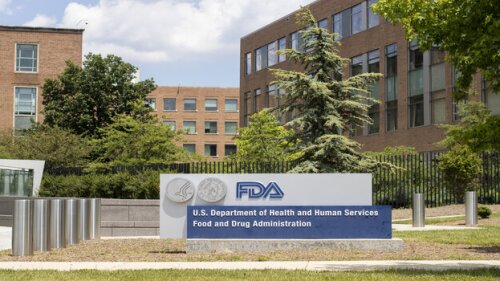 Rep. Jake Auchincloss of Massachusetts said the Commissioner’s National Priority Voucher program did not receive congressional backing. The FDA has also not yet made disclosures for eight senior reviewers, according to Auchincloss.
 -
 U.S. President Donald Trump signed a spending package into law Tuesday that reauthorizes the FDA’s previously stalled rare pediatric disease priority review voucher program, among other initiatives, while ending a three-day partial government shutdown.


At some point in your research career, you may find yourself transitioning from academia to industry or vice versa. To best set yourself up for success, adapt your approach to the specific scientific culture where you work.

Venture funds attending the J.P. Morgan Healthcare Conference said mounting funding pressures and Chinese competition have sharpened their focus on leadership qualities, from regulatory expertise and industry experience to the ability to scale—or step aside—as companies mature.

Clarity on employment terms is essential to protect careers. In this column, Kaye/Bassman’s Michael Pietrack speaks to employment attorney Howard Matalon, JD, partner at OlenderFeldman, on how to evaluate the fine print of an employment agreement.

Looking for a new opportunity in New Jersey? These nine companies have open roles that could be a great fit for you.

The difference between a job and a career is what you walk away with when it ends. Here’s how to evaluate if your role and environment are enabling capability building–and if your title is holding you back.

Communication must be viewed as more than the last step of the research process. It is the structure that makes scientific work clear, trusted and remembered.
HOTBEDS


REPORTS

In this Employment Outlook report, BioSpace explores current workforce sentiment, job activity trends and the prospective job and hiring outlook for 2025, particularly as it compares to the previous year.


BioSpace’s third report on diversity, equity, inclusion and belonging in life sciences examines dramatic shifts in attitude around diversity initiatives.
CANCER

-
 Despite the Phase 1 cull, CEO Vas Narasimhan on Wednesday maintained that Novartis continues to invest in its early-stage pipeline, looking for deals in the “sub-$2-billion range.”
 -
 On its fourth quarter earnings call Wednesday, AbbVie CEO Robert Michael called oncology and neuroscience “underappreciated” areas of focus for the pharma.
 -
 In its 2025 full year and fourth-quarter earnings call, Merck executives touted the merits of recent deals and what CEO Robert Davis called “probably the broadest and widest pipeline we’ve had in years.”
 -
 DS-9606 was supposed to be the first antibody-drug conjugate in Daiichi Sankyo’s line of anti-cancer assets to use a modified pyrrolobenzodiazepine payload.
 -
 After advancing in lockstep through the pandemic, the fortunes of the biotechs have diverged as their use of COVID-19 windfalls has taken shape.


NEUROSCIENCE

-
 The FDA in July last year declined to approve UX111 for Sanfilippo syndrome, a rare neurodegenerative disorder, citing manufacturing issues. Ultragenyx Pharmaceutical resubmitted its application ten days ago, expecting a six month review time.
 -
 Bristol Myers Squibb delivered better than expected fourth quarter earnings, but Eliquis missed expectations while Cobenfy continues to struggle with uptake.
 -
 After a series of deaths in patients taking Sarepta Therapeutics’ gene therapies, doubt has crept into investor sentiments around the long-time Wall Street darling, and patients may soon begin looking elsewhere.
 -
 Pfizer announces the first data from its Metsera-acquired pipeline just ahead of its earnings call, where analysts pressed execs for more details; Merck and Roche also released Q4 and full year earnings, with Eli Lilly, Novo Nordisk and others reporting Wednesday; REGENXBIO hits a regulatory snag ahead of its upcoming PDUFA; more.
 -
 In what is shaping up to be a back-loaded month, the FDA is set to release a slew of regulatory decisions in February, including two that would expand the labels of blockbuster drugs.


CELL AND GENE THERAPY

-
 The FDA recommended that REGENXBIO run a new study, treat more patients and include a placebo arm to support a resubmission for the gene therapy RGX-121.
 -
 The gene therapy uses an AAV vector to restore healthy levels of the alpha-galactosidase enzyme, which is rendered dysfunctional in patients with Fabry disease, leading to the toxic build-up of lipids in cells.
 -
The SPAC agreement values PrimeGen US at $1.5 billion in equity and gives it capital to advance its pre-clinical triple-activated mesenchymal stem cell pipeline into the clinic.
-
 Nearly 100 biotechs went public amid the industry’s IPO frenzy in 2021, driven by an influx of pandemic-driven investments. But many of those companies have little to show investors.
 -
 AstraZeneca has risen as one of pharma’s most prolific investors in China, including a $630 million pledge last week for full rights to AbelZeta’s cell therapy for cancer.


