


In January, AbbVie and Calico’s fosigotifator failed to show significant signs of efficacy in the HEALEY ALS platform trial for amyotrophic lateral sclerosis.

Alixorexton’s Phase II performance sets it up for late-stage success, according to analysts at Truist Securities. Alkermes expects to launch a global late-stage program early next year for narcolepsy type 2.

The plausible mechanism pathway “could accelerate gene therapy/editing development,” analysts at William Blair said Thursday, while adding that additional clarity is needed.

The back-heavy deal includes a $5 million upfront payment for two novel T cell engagers, though the companies have yet to disclose priority indications.

Nearly two dozen life sciences companies that were awarded Massachusetts tax incentives to create and retain about 1,000 combined jobs hit just 13% of that target in 2024. Ten awardees had reported layoffs last year, including Charles River Laboratories and Moderna.

While most BioSpace LinkedIn poll respondents believe the job market won’t improve until at least 2027, two industry experts are optimistic a turnaround could start sooner. They discuss early signals of recovery and challenges that remain.
FEATURED STORIES

Capricor Therapeutics met with the FDA last week for a type A meeting, during which CEO Linda Marbán aimed to explain to the regulator that it got it wrong. Capricor plans to resubmit the application based on deramiocel’s existing dataset.

The Trump administration’s ever-changing tariffs and Most Favored Nation drug pricing are part of a blizzard of unclear, potentially illegal tactics that leave observers throwing their hands in the air.

Drugs are being invented and manufactured right here in the U.S. by Americans, for Americans. So why doesn’t the industry hold the same respect as steelworkers or other all-American pursuits?

The platform strategy of using one molecule to target an underlying biological pathway to address many different diseases can be a goldmine for smaller companies. But it also has a unique set of challenges.

A new study in JAMA contradicts a series of statements made by HHS Secretary Robert F. Kennedy Jr. that paint vaccine advisory committees at the CDC and FDA as hopelessly corrupt.

While the 10-fold increase in dose over injectable Wegovy has raised questions about the launch, Novo Nordisk has assured investors it has the manufacturing capacity to roll out oral semaglutide without restrictions on supply.


LATEST PODCASTS
Sarepta will update Elevidys’ label after a patient died following treatment; the FDA issues flu vaccine recommendations without advisor input; Trump CDC nominee Dave Weldon pulled at last minute; and FDA decisions expected for Alnylam’s Amvuttra in ATTR-CM and Milestone’s etripamil in tachycardia.

In the third podcast in a special series focused on BioSpace’s NextGen Class of 2025, Senior Editor Annalee Armstrong speaks with Mark McKenna, CEO of Mirador Therapeutics.

In this episode of Denatured, BioSpace’s Head of Insights Lori Ellis and Miruna Sasu, CEO of COTA, discuss the challenges of inclusion and exclusion criteria of clinical trial patients, and reflect on current investment approaches around women’s health.
Job Trends
The board of directors of Eli Lilly and Company has declared a dividend for the third quarter of 2024 of $1.30 per share on outstanding common stock.
Subscribe to GenePool
Subscribe to BioSpace’s flagship publication including top headlines, special editions and life sciences’ most important breaking news
SPECIAL EDITIONS

In this deep dive, BioSpace investigates China’s rise as a biotech powerhouse.

In this deep dive, BioSpace explores the next big thing in obesity.

BioSpace did a deep dive into biopharma female executives who navigated difficult markets to lead their companies to high-value exits.
DEALS

-
 The ADARx Pharmaceuticals partnership, which could be worth “several billion dollars” in the end, adds to AbbVie’s existing work in the space after the $1.4 billion acquisition of Aliada Therapeutics in October 2024.
 -
 GSK secures rights to Boston Pharmaceuticals’ efimosfermin alfa, which the pharma plans to develop for fatty liver diseases such as metabolic dysfunction-associated steatohepatitis and alcohol-related liver disease.
 -
 It’s another wild twist in the story of Galapagos, a company that has been around for more than 25 years but has yet to get a therapy approved.
 -
 M&A and IPOs got off to a quick start in 2025 only to crash into a wall of policy challenges. Upfront payment for licensing transactions, however, grew as pharmas looked for less-risky deals.
 -
 The Alchemab deal will further strengthen Lilly’s early-stage pipeline for amyotrophic lateral sclerosis, coming less than a year after the pharma licensed QurAlis’ antisense oligonucleotide to correct a specific protein alteration in ALS.


WEIGHT LOSS

-
 The deal is Lilly’s second obesity tie-up in a week, after sinking up to $870 million into an agreement with Camurus to develop long-acting versions of molecules against GLP-1 and other incretins.
 -
 HHS Secretary Robert F. Kennedy Jr. made waves this week, firing the remaining members of the CDC’s Advisory Committee on Immunization Practices; Metsera’s amylin drug produced weight loss of 8.4% at 36 days; and FDA leaders gathered last week to discuss the future of cell and gene therapy, a sector that has been in turmoil since the ousting of CBER Chief Peter Marks.
 -
 In what Guggenheim Partners called one of Metsera’s “critical program milestones” this year, its ultra-long-acting amylin injection MET-233i showed promising weight-loss after a little more than a month of treatment.
 -
 Given the evidence, the committee has recommended that the labels for Novo Nordisk’s Wegovy and Ozempic be updated to include the “very rare” risk of non-arteritic anterior ischemic optic neuropathy.
 -
 Eli Lilly joins up with Camurus to make long-acting versions of the pharma’s obesity and diabetes drugs, joining the industry’s growing pipeline of programs that are differentiated by the frequency of dosing.



POLICY

-
 Six weeks after HHS Secretary RFK Jr. cited unexplained conflicts of interest in dismissing all 17 members of the CDC’s vaccine advisory committee, Democrats are asking for details.
 -
 While some analysts forecast the tariffs could mean billions in additional industry expenditure, others expect the overall impact to be “manageable.”
 -
 In a post on X, Health Secretary Robert F. Kennedy Jr. alleged that the Vaccine Injury Compensation Program has “devolved into a morass of inefficiency, favoritism, and outright corruption.”
 -
 The swift FDA action removes an overhang from Sarepta and allows Elevidys to return to the market without another safety study, as had been feared, Jefferies analysts said Monday.
 -
 Health Secretary Robert F. Kennedy Jr. wants to remove all members of the USPSTF for being too “woke,” according to reporting by the Wall Street Journal. An HHS spokesperson, however, says no final decision has been made about the panel.


The biopharma industry is moving toward using AI to try to determine how well a given person would perform in a role, with applications that go beyond recruiting.

In a cooling job market, companies often can’t match job seekers’ expectations on factors such as salary and remote work.

My colleagues and I have often been asked, “When is it time to start looking for another role?” This three-level rubric can help.

In this job market report we’re reviewing life sciences job market movement in Q3 and what to expect for Q4 and beyond.

With 88% of life sciences organizations using or planning to use AI in recruitment and/or hiring, AI regulation is a priority for the industry.

Despite a government report showing that hiring slowed over the month of June, job postings on BioSpace’s life sciences-focused job board saw a marked increase.
HOTBEDS


REPORTS

In this Employment Outlook report, BioSpace explores current workforce sentiment, job activity trends and the prospective job and hiring outlook for 2025, particularly as it compares to the previous year.


BioSpace’s third report on diversity, equity, inclusion and belonging in life sciences examines dramatic shifts in attitude around diversity initiatives.
CANCER

-
 Nuvation Bio’s first approved product is Ibtrozi, a CNS-active ROS1 inhibitor that in pivotal studies showed high rates of treatment response in patients with non-small cell lung cancer.
 -
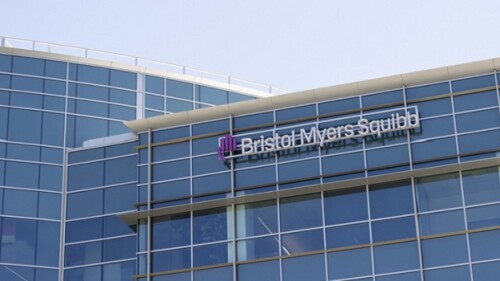 Instead of homing in on PSMA—currently the most validated target in prostate cancer—BMS and Philochem will instead collaborate on an early-stage molecule that binds to a novel marker called ACP3.
 -
 The Seattle-based company came to ASCO25 with new data on its neuroendocrine tumor–treating lead therapy, with big vibes and speedy speech.
 -
 Analysts at Truist Securities called the mid-stage data a “mixed bag,” also flagging gastrointestinal adverse events. However, the readout is unlikely to be “incremental” to Corcept’s overall stock narrative.
 -
Sanofi and BMS paid big money for rare disease and cancer assets, while Regeneron got in the obesity game; AstraZeneca, Gilead and Amgen shone at ASCO; RFK Jr. and the CDC appeared to disagree over COVID-19 vaccine recommendations and several news outlets are questioning the validity of the White House’s Make America Healthy Again report.


NEUROSCIENCE

-
 Jefferies analysts said on Tuesday that Ventyx could leverage its mid-stage data for VTX3232 to position the oral drug candidate as a treatment for other neurodegenerative diseases, including Alzheimer’s.
 -
 Analysts at Jefferies give Roche and Prothena’s Phase III study just a 25% to 40% probability of success.
 -
 Stifel analysts said the deal “feels like an unremarkable outcome for a company that was once one of the hottest stories in CNS.” Supernus’ offer beats Biogen’s unsolicited bid of about $7.22 per share, which arrived with a thud in late January.
 -
 Avidity has been given the go-ahead by the FDA to request accelerated approval of delpacibart braxlosiran—potentially the first disease-modifying treatment for facioscapulohumeral muscular dystrophy—with an application in the second half of 2026.
 -
 After a major shareholder pushed back, Keros is returning half of its capital to investors in a move that Guggenheim analysts called “a positive step forward.”


CELL AND GENE THERAPY

-
 Lilly will use Rznomics’ proprietary ribozyme technology to develop RNA editing therapies for congenital hearing loss.
 -
 After warnings that the dragged-out process was putting the cell therapy company at risk of bankruptcy, bluebird bio now has a new deal to offer shareholders.
 -
 The cell engineering company, co-founded by oncologist and writer Siddhartha Mukherjee, does not see a path forward for its pipeline of early-stage cell therapies for two different types of cancer.
 -
 CRISPR Therapeutics’ partner Vertex reported that more than 65 treatment centers have been activated for the gene therapy Casgevy. While Vertex handles the market, CRISPR has been focused on its clinical program.
 -
A new executive order aims to smooth the path for getting U.S. manufacturing facilities up and running; HHS says it will require placebo-controlled trials for all vaccine approvals; tariff threats hit BioNTech; Novo Nordisk’s FDA application for an oral version of Wegovy is accepted; and more.


