


Artios Pharma is working on a pipeline of oncology assets, led by alnodesertib, currently being tested for second-line pancreatic cancer and third-line colorectal cancer.

Aside from announcing layoffs, Sensei has decided to terminate its R&D work. The biotech has $25 million on hand, and continues to evaluate its strategic alternatives.

Top Trump administration officials have taken issue with Marty Makary’s management style, pointing to infighting between his appointees and the difficulty to get a hold of the FDA commissioner.

Bristol Myers Squibb and Johnson & Johnson will continue to test the asset in stroke and atrial fibrillation.

Bayer has let go of about 13,500 employees, including around 5,000 managers, since implementing a new operating model in early 2024. CEO Bill Anderson said in a recent earnings call that he expects a slower rate of headcount reduction moving forward.

A day after Pfizer closed its hotly contested Metsera deal, Lundbeck has made an unsolicited offer to steal Avadel Pharmaceuticals away from Alkermes.
FEATURED STORIES

Generate:Biomedicines’ Nicole Clouse is one of the key legal minds trying to understand who owns what AI creates. The answers are critical to the future of biotech.

If the trend holds, IQVIA expects 2025 deal volume between Chinese and multinational companies to easily eclipse the 100 agreements signed in 2024.

Companies have claimed improvements to yield, batch consistency and output while acknowledging the risks and challenges created by the technology.

The mad rush for safe and effective obesity drugs has winners—including Eli Lilly’s Zepbound and Novo Nordisk’s Wegovy—and losers. Here are five molecules that never made it to the market.

While it’s impossible to make apples-to-apples comparisons of the many obesity candidates with so many differences across clinical trials, we at BioSpace are giving it our best shot.

With results from highly anticipated trials of Eli Lilly’s orforglipron and Viking Therapeutics’ VK2735 “underwhelming” investors, William Blair’s Andy Hsieh predicts weight loss pills will play a bigger role in low- and middle-income countries than in the U.S.


LATEST PODCASTS
Biopharma leaders react to the forced resignation of CBER Head Peter Marks as RFK Jr.’s promised job cuts begin at the FDA; Novo Nordisk presents mixed results from oral semaglutide in cardiovascular disease; the EU’s Committee for Medicinal Products for Human Use declines to recommend Eli Lilly’s Alzheimer’s drug; and pharma R&D returns grew in 2024.

In this episode presented by DIA, BioSpace’s head of insights Lori Ellis discusses the evolution of women’s inclusion in clinical trials with Martin Hodosi, partner at Kearney and Melissa Laitner, director of strategic initiatives at the National Academy of Medicine.
President Donald Trump continues to warn of tariffs on the pharmaceutical industry; Susan Monarez replaces Dave Weldon as CDC director nominee; Novo Nordisk joins the triple-G race; Alnylam wins approval for Amvuttra in ATTR-CM; and Cassava Sciences ends development of simufilam in Alzheimer’s.
Job Trends

Looking for a biopharma job in or near Washington, D.C.? Check out these five top companies hiring life sciences professionals like you.
Subscribe to GenePool
Subscribe to BioSpace’s flagship publication including top headlines, special editions and life sciences’ most important breaking news
SPECIAL EDITIONS

In this deep dive, BioSpace investigates China’s rise as a biotech powerhouse.

In this deep dive, BioSpace explores the next big thing in obesity.

BioSpace did a deep dive into biopharma female executives who navigated difficult markets to lead their companies to high-value exits.
DEALS

-
 BioSpace’s NextGen companies are rising in one of the most confounding biotech markets ever experienced. Executives sounded off on how to keep your head above water during our webinar, Are We There Yet?
 -
 The largest Chinese licensing deal behind Pfizer’s is Novartis’ partnership with Shanghai Argo Biopharma, worth potentially more than $4 billion.
 -
 The star of the acquisition is the enzyme replacement therapy INZ-701, being developed for the rare disease ENPP1 deficiency.
 -
 After warnings that the dragged-out process was putting the cell therapy company at risk of bankruptcy, bluebird bio now has a new deal to offer shareholders.
 -
 Currently trailing Eli Lilly and Structure Therapeutics in the oral weight loss space, Novo Nordisk strikes a deal with Septerna to put new discovery-stage programs into play.


WEIGHT LOSS

-
 In combination with Eli Lilly’s tirzepatide, marketed as Zepbound for obesity, Scholar Rock’s monolonal antibody helped patients lose the same amount of weight as patients on tirzepatide alone while preserving more muscle mass.
 -
 Another patient has died from acute liver failure after receiving Sarepta’s gene therapy for DMD ; After a quiet start to the year, M&A is back with one deal for a gene editing biotech reinvigorating that sector; and RFK Jr. installs a suite of new vaccine board members who share his skeptical views on vaccines.
 -
 At 12 weeks, weight loss ranged from 2.6% to 11.3%, compared to a gain of 0.2% in the placebo group. Guggenheim analysts were also impressed by the tolerability profile.
 -
 For $812 million, Novo Nordisk will enlist Deep Apple to discover and develop a non-incretin therapy for obesity, months after the Danish pharma’s amylin efforts underwhelmed investors.
 -
 The deal is Lilly’s second obesity tie-up in a week, after sinking up to $870 million into an agreement with Camurus to develop long-acting versions of molecules against GLP-1 and other incretins.



POLICY

-
 George Tidmarsh has only been at the Center for Drug Evaluation and Research for nine days, but will now add supervision of a second FDA division to his portfolio after Vinay Prasad’s sudden departure.
 -
 As analysts parsed news of Vinay Prasad’s ouster, worries over drug approval delays, cell and gene therapy impacts and more were top of mind.
 -
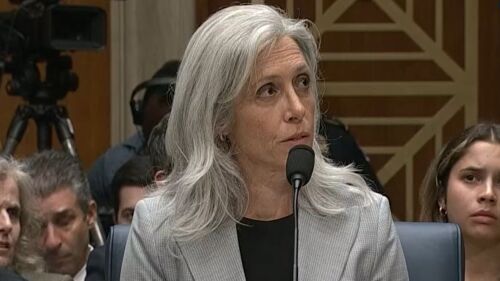 Monarez is the first CDC director to be confirmed by the Senate under a new 2023 law and will be the first person without a medical degree to assume leadership of the agency in more than 70 years.
 -
 Under the Inflation Reduction Act, medications with the same active ingredient will be treated as the same drug for price negotiation purposes—even if approved by the FDA under a separate application—disincentivizing companies from investing time and money in gaining approval for new formulations and indications.
 -
 The FDA’s dramatic summer continues to unfold as news broke late Tuesday evening that Vinay Prasad will depart the agency, where he had been the head of the Center for Biologics Evaluation and Research for less than three months.


Carina Clingman, founder of The Collaboratory Career Hub, answers questions about the ins and outs of finding, landing and succeeding in openings in biotech.

Despite recent layoffs and closures in the state, there are still many companies actively recruiting for roles in California.

Consider each company using three different criteria: its match with the candidate’s “why,” its financial health and its employee reviews.

Carina Clingman, founder of The Collaboratory Career Hub, answers questions about the ins and outs of finding, landing and succeeding in biotech jobs.

Research associates are always in demand. Check out these top companies currently hiring RAs.

Newer hiring models based on skills applicants have learned and their general potential for growth could avoid the drawbacks of relying on degrees and experience.
HOTBEDS


REPORTS

In this Employment Outlook report, BioSpace explores current workforce sentiment, job activity trends and the prospective job and hiring outlook for 2025, particularly as it compares to the previous year.


BioSpace’s third report on diversity, equity, inclusion and belonging in life sciences examines dramatic shifts in attitude around diversity initiatives.
CANCER

-
 The deal gets NextCure the rights to Simcere’s novel ADC for solid tumors outside of China.
 -
 Analysts at Truist Securities called J&J’s CAR T readout “compelling,” noting that the efficacy figures could position the cell therapy as a formidable competitor to the current standard of care, Gilead’s Yescarta.
 -
 The FDA’s Oncologic Drugs Advisory Committee narrowly voted against the approval of Zusduri, citing the lack of a completely randomized study to back up the application.
 -
 BioNTech will get CureVac’s early-stage cancer assets, including its mRNA-based glioblastoma therapy currently in Phase I development. CureVac had previously sued BioNTech for copyright infringement related to mRNA vaccine technology.
 -
 Nuvation Bio’s first approved product is Ibtrozi, a CNS-active ROS1 inhibitor that in pivotal studies showed high rates of treatment response in patients with non-small cell lung cancer.


NEUROSCIENCE
-
The high court sides with HHS on HIV PrEP drugs; Health Secretary RFK Jr.’s newly appointed CDC vaccine advisors discuss thimerosal in flu vaccines, skip vote on Moderna’s mRNA-based RSV vaccine; FDA removes CAR T guardrails; AbbVie snaps up Capstan for $1.2B to end first half; and psychedelics take off again with data from Compass and Beckley.
-
 BPL-003 showed “robust” efficacy data in treatment-resistant depression, according to analysts from Jefferies, who noted that the asset could hit peak market sales of $1 billion. The results clear the way for the asset’s late-stage development and for the completion of a proposed merger with atai Life Sciences.
 -
 The rise of monoclonal antibodies brought back hope for stalling or reversing the devastating neurodegenerative disease. Big Pharma has taken notice with a handful of high-value deals, GlobalData reports.
 -
 Digging into a prespecified analysis for the mid-stage study, INmune Bio identified some clinical and biological benefits of its TNF inhibitor in patients with early Alzheimer’s disease who have at least two biomarkers of inflammation.
 -
 The FDA found that data from a single Phase II study were “insufficient” to justify an accelerated approval review for sevasemten in Becker muscular dystrophy.


CELL AND GENE THERAPY

-
 J&J has a multi-year head start, but Gilead believes it can win market share by delivering a drug with better safety and at least as good efficacy.
 -
 While an adverse event reported in Intellia’s gene therapy trial was a “non-concern” for analysts, it follows a handful of patient deaths in other trials for the modality and sent the company’s stock tumbling in pre-market trading.
 -
 Acute systemic infection caused the patient to develop fatal capillary leak syndrome, highlighting the unpredictability of gene therapies and potentially challenging investment in the space, analysts say.
 -
 Taking center stage at the American Society of Gene and Cell Therapy meeting was the first-ever reported case of a personalized in vivo CRISPR editing therapy, which substantially eased the symptom burden in an infant.
 -
 Since Elevidys’ accelerated approval in 2023, experts have been clamoring for more data, particularly in older and non-ambulatory children. New results, presented Friday, show mobility improvements in 8- to 9-year-old patients after one year of follow-up.


