


Sarepta nevertheless plans to push for full FDA approval of Vyondys 53 and Amondys 45 based on what it said are “encouraging trends” in efficacy.

Kygevvi is indicated for patients with thymidine kinase 2 deficiency whose symptoms arise by 12 years of age. The disease manifests as muscle weakness and can become life-threatening in severe instances.

BioSpace has named 50 life sciences companies to its 2026 Best Places to Work list. AbbVie, Amneal Pharmaceuticals and BridgeBio executives share what makes their organizations special.

Less than 24 hours after resigning his post as the FDA’s head drug regulator, George Tidmarsh is reportedly reconsidering his decision and vowing to fight for his name and credibility amid a probe into his “personal conduct” at the agency.

At the center of the licensing deal is an NLRP3 inhibitor that has shown “encouraging efficacy in acute inflammation models,” according to TransThera, indicating its potential in various metabolic and inflammatory diseases.

Manifold will use its tissue-targeting shuttle technology to help Roche develop new therapeutics for diseases of the central nervous system.
FEATURED STORIES

Market reaction to recent readouts from Compass Pathways and Beckley Psytech/atai in treatment-resistant depression speaks to the hurdles psychedelic therapies must clear to quell concerns about commercial viability.

Only with the adoption of digital imaging and AI-powered analysis will next-generation precision oncology therapies reach their full potential and ensure no eligible patient is overlooked.

Armed with the latest biological knowledge and cutting-edge computational techniques—and, of course, investor dollars—these six biotechs are playing in the largely underappreciated longevity space, developing therapies that may improve the quality of aging.

Analysts said the deal with Novo was likely giving Hims “‘credibility’ or increased consumer traffic,” adding that the “litigation risk is back on the table” now that the Danish pharma has stepped away.

The industry sector focused on aging is only about 10 years old, but acting on what scientists already know, a new crop of biotechs, backed by investors, are taking a disease-centric approach to extending the human lifespan.

TIGIT-targeting therapies have largely disappointed in recent months, with failed studies, terminated partnerships and shuttered businesses. Here are five biopharma players staying alive with differentiated candidates against the once promising immuno-oncology target.


LATEST PODCASTS

In this short teaser, BioSpace’s Head of Insights Lori Ellis talks to CBER Director Peter Marks and Tom Whitehead, Co-Founder of the Emily Whitehead Foundation about anticipated discussions at the upcoming GenScript Biotech Forum.
BioSpace presents 25 noteworthy biopharma startups in ’25; analysts forecast stronger M&A as the J.P. Morgan Healthcare Conference kicks off next week; GLP-1s continue to expand their reach as Novo, Lilly fight against compounders; and a look ahead to five key FDA decisions in Q1.

In this episode of Denatured, BioSpace’s Head of Insights Lori Ellis, Miguel Forte and Ali Pashazadeh discuss the industry’s need to catch up with women’s health issues and the innovative lead the APAC region has taken in clinical trials.
Job Trends
Moderna, Inc. announced that its Phase 3 trial of mRNA-1083, an investigational combination vaccine against influenza and COVID-19, has met its primary endpoints, eliciting a higher immune response than the licensed comparator vaccines used in the trial.
Subscribe to GenePool
Subscribe to BioSpace’s flagship publication including top headlines, special editions and life sciences’ most important breaking news
SPECIAL EDITIONS

In this deep dive, BioSpace investigates China’s rise as a biotech powerhouse.

In this deep dive, BioSpace explores the next big thing in obesity.

BioSpace did a deep dive into biopharma female executives who navigated difficult markets to lead their companies to high-value exits.
DEALS

-
 Protein degradation–focused Neomorph nabs its third Big Pharma deal of around $1.5 billion in less than a year.
 -
 The deal follows a $1.06 billion U.S. contract in July 2024 and a $1.24 billion agreement with an Asia-based pharma a few months later.
 -
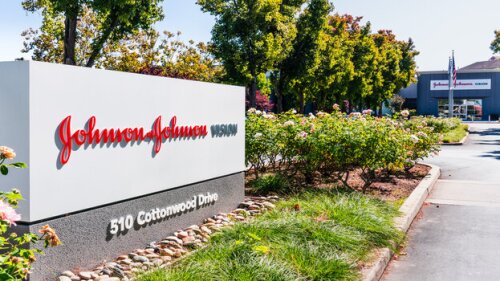 On the company’s Q4 earnings call where an eyepopping $88.8 billion in full-year sales were revealed, leaders shifted focus away from enormous takeovers to single-digit billion buy outs.
 -
 With an eye toward advancing a novel antibody-drug conjugate for gastrointestinal cancers, ArriVent is the latest biopharma player to ink a deal with a Chinese biotech.
 -
 Five years ago, Gilead signed a massive deal with Galapagos. After a restructuring, the pharma is still hunting for the potential it saw at the original signing.


WEIGHT LOSS
-
 A consumer-driven weight loss market could put pharma at greater risk if a recession hits; the continued turmoil at FDA and other HHS agencies magnifies the uncertainty facing the industry; Lilly files a lawsuit against a med spa selling its drugs; and more.
 -
 Wegovy and Zepbound are just the latest drug dyads to face-off in the competitive pharma market, continuing a legacy of rivalry that includes blockbuster drugs Keytruda, Humira and Eliquis.
 -
 Long considered resistant to economic downturns, the pharmaceutical industry may face a greater challenge this time around as GLP-1s dominate and the population grows older.
 -
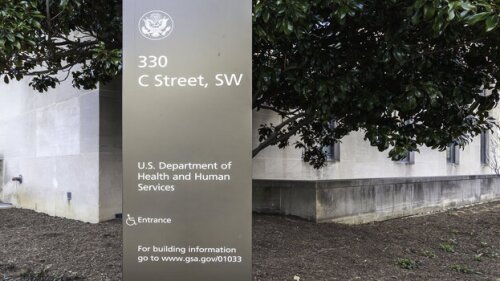 Last week, The Trump administration reversed a Biden-era proposal for Medicare coverage of anti-obesity treatments. But on Monday, HHS suggested it is open to future policy considerations toward this end.
 -
 Stifel analysts were bullish on the data, which showed a 16.5% drop in body-mass index among patients with damage to the hypothalamus taking Rhythm Pharmaceuticals’ Imcivree.


POLICY

-
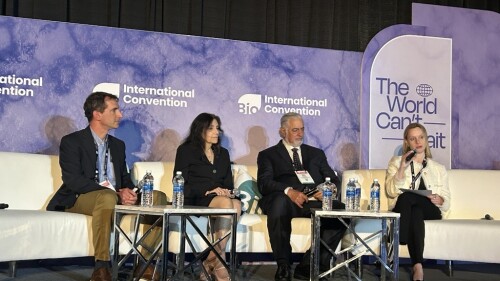 Speaking at BIO2025, rare disease leaders from Ultragenyx, Amylyx and Yale questioned the need for the new regulatory pathway proposed by FDA Commissioner Marty Makary. They acknowledged, however, that creative thinking is required to enable more treatments for patients with ultrarare diseases.
 -
 The Inflation Reduction Act includes an exemption for orphan drugs for a single indication, but experts say this is far from sufficient to maintain momentum in the rare disease space.
 -
 In advance of this week’s CDC vaccine advisory meeting, HHS Secretary Robert F. Kennedy Jr. restacked the committee, claiming problematic industry ties within the previous group. Experts say ACIP had long navigated COIs appropriately and that the new appointees risk the apolitical nature of membership.
 -
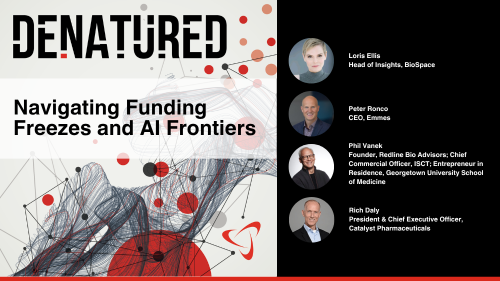 In this episode of Denatured, BioSpace’s Head of Insights Lori Ellis discusses key themes from BIO and DIA, including the funding environment, with Rich Daly, CEO of Catalyst Pharmaceuticals, Peter Ronco, CEO of Emmes Corporation, and Phil Vanek, founder of Redline Bio Advisors.
 -
 Industry watchers responded mostly positively to the commissioner’s new voucher program, but worries remain over staffing cuts at the agency.


Becoming a chemist in the biopharma industry takes hard work, dedication and a willingness to continuously learn. Here’s what you need to know to become a biochemist.

As automation ramps up in the coming years, many jobs will be lost to machines. Here are a few life science sectors that are expected to maintain steady growth in the coming years.

Landing your first internship can be a major milestone in your career journey. Here’s what you can do to set yourself up for success and make the most of your life science internship.

The best thing a professional can do when considering a position at the FDA is weigh the pros and cons. To help, we’ve created a guide to working at the FDA, with benefits, challenges and tips.

The life science field offers a wealth of opportunities, even for those working outside of the field. Here are six life science jobs that don’t require industry experience.

With so many differences in research and regulation, it’s more important now than ever for job seekers considering moving outside of the U.S. to educate themselves before they make the leap.
HOTBEDS


IN CASE YOU MISSED IT

Perfecting microbial manufacturing processes means taming its greatest asset: speed. This rapid process for creating biologics also means a race against time, where success hinges on conquering three key challenges: designing a robust microbial strain, optimizing fermentation for industrial scale, and ensuring consistent high-yield product yield.


REPORTS

In this Employment Outlook report, BioSpace explores current workforce sentiment, job activity trends and the prospective job and hiring outlook for 2025, particularly as it compares to the previous year.


BioSpace’s third report on diversity, equity, inclusion and belonging in life sciences examines dramatic shifts in attitude around diversity initiatives.
CANCER

-
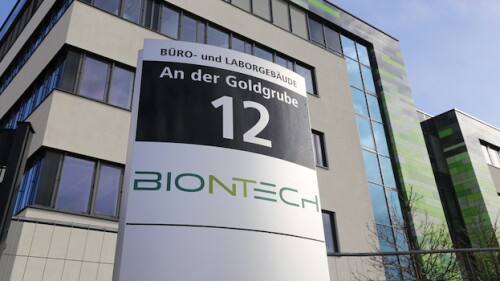 BNT327, a PD-L1/VEGF therapy, is still currently being manufactured in China, but BioNTech is working to establish a diversified supply chain, executives said during the company’s Q1 investor call.
 -
 On the FDA’s docket this month are two expansion bids, one for GSK’s asthma drug Nucala into COPD and another for Merck’s oral cancer drug for a pair of rare tumors.
 -
 Jefferies analysts said Moderna’s first quarter was “in line,” with a miss on revenue offset by a beat on earnings per share.
 -
 The American Association for Cancer Research’s annual conference featured updates from several companies on key candidates and assets, including Merck’s Keytruda and GSK’s Jemperli.
 -
 The drug, a small molecule protein inhibitor, brought in $132 million in the first quarter, missing consensus estimates by 17%.


NEUROSCIENCE

-
 Jazz is being accused of anti-competitive practices regarding its narcolepsy drug, as generic competitors emerge on the market.
 -
 GSK is paying to access ABL Bio’s Grabody-B platform, which potentially enables therapies to cross the blood-brain barrier.
 -
 Analysts at BMO Capital Markets said Centessa’s orexin receptor agonist has “best-in-class” potential for narcolepsy, putting the company in a strong position in the $15 billion market.
 -
 Sangamo, which has been having cash problems, will receive $18 million upfront in licensing fees for its AAV capsid that in preclinical studies has shown the ability to cross the blood-brain barrier.
-
 After some high-profile crashes, the one-time biotech darling is inching toward success with its Hunter syndrome treatment, which today began a rolling BLA for accelerated approval.


CELL AND GENE THERAPY

-
 Johnson & Johnson and Legend Biotech hope to hit blockbuster status for Carvykti this year.
 -
 Facing declining valuations and funding challenges, public biotechs like bluebird bio are going private to restructure, reduce regulatory burdens and refocus on long-term growth.
 -
 Roche acquired Spark Therapeutics in 2019 for $4.8 billion.
 -
 Abecma made $406 million in 2024, of which BMS paid $43 million to 2seventy bio as part of their profit-sharing agreement.
 -
 In this deep dive, BioSpace explores the diverse therapeutic modalities now in development, as well as the opportunities and battles for market dominance in this emerging space.


