


In this episode presented by Element Materials Technology, guests Dr. Jihye Jang-Lee and Dr. Khanh Courtney will explore how healthcare and pharmaceutical players are rethinking their strategies amid global supply chain disruption.

Galapagos at the start of the year had planned to split into two businesses, with one resulting entity focused on cell therapies. The biotech nixed these plans a few months later, instead choosing to put up for sale multiple cell therapy assets.

With data from the Phase III STELLAR-303 study in the books, Exelixis is plotting a 2025 regulatory application for zanzalintinib.

In May, Summit released early data from the Phase III HARMONi study showing that while the PD-1/VEGF inhibitor resulted in significant progression-free survival improvements, it fell short of the overall survival bar.

The death occurred in a patient who had a complex medical background and who was being managed with several drugs, according to RBC Capital.

The anti-CD20 antibody, developed by Roche’s Genentech along with Biogen and already approved for multiple oncology indications, is branching into autoimmune disease. Its B cell–targeting mechanism of action gives it activity in improving kidney conditions in patients with lupus nephritis.
FEATURED STORIES

FDA Commissioner Marty Makary last week announced a directive that would limit industry participation in the agency’s advisory committees. But not only do company reps serve only as non-voting members, a 1997 law actually requires industry involvement.

Disruptive conditions are typical in non-Western markets. The U.S. industry, thrown into a period of significant change as the Trump administration overhauls HHS and considers implementing tariffs, could learn a thing or two by looking overseas.

Like they say about the weather in Iceland, if you don’t like an action taken by the new administration, wait five minutes; it’ll probably change. The markets, it seems, don’t react kindly to that kind of policymaking.

Analysts have had to throw out their assumptions for the biopharma industry’s recovery heading into the first quarter earnings period given the ongoing tariff drama.

Johnson & Johnson’s Joaquin Duato is no longer the highest paid CEO in pharma. Meanwhile, just two women make the top 10.

AI is enabling the development of a next generation of drugs that can more precisely target cancer cells while sparing healthy tissues.


LATEST PODCASTS

Eli Lilly becomes the latest to make a major investment in immunology and inflammation, while antibody-drug conjugate biopharma Myricx Bio nets a large Series A round and new research highlights the potential and possible risks of GLP-1s.
Two CRLs from the FDA last week cited concerns with third-party manufacturers, while Indian CDMOs may make a bid for U.S. business if there is a decoupling from Chinese companies under the BIOSECURE Act.

This week on Denatured, Head of Insights Lori Ellis and guests discuss the implications of not addressing the DE&I data gaps for the future.
Job Trends
Bristol Myers Squibb (NYSE: BMY) today announced the U.S. Food and Drug Administration (FDA) has granted accelerated approval for Breyanzi® (lisocabtagene maraleucel; liso-cel), a CD19-directed chimeric antigen receptor (CAR) T cell therapy, for the treatment of adult patients with relapsed or refractory follicular lymphoma (FL) who have received two or more prior lines of systemic therapy.

Subscribe to GenePool
Subscribe to BioSpace’s flagship publication including top headlines, special editions and life sciences’ most important breaking news
SPECIAL EDITIONS

In this deep dive, BioSpace investigates China’s rise as a biotech powerhouse.

In this deep dive, BioSpace explores the next big thing in obesity.

BioSpace did a deep dive into biopharma female executives who navigated difficult markets to lead their companies to high-value exits.
DEALS

-
 Pfizer’s sudden market withdrawal of sickle cell therapy Oxbryta, which some analysts predicted would reach $750 million in sales by the end of the decade, has left patients and healthcare providers with few options, while investors question the pharma giant’s dealmaking prowess.
 -
 ARCH Venture Partners is the latest venture capital firm to raise a multi-billion-dollar fund. The cash will be used to support new startups working with AI.
 -
 Novo Nordisk and Eli Lilly are expected to rule the obesity market for a few more years without much challenge. To ensure they stay there as competition enters, the companies are spending billions in licensing and M&A deals.
 -
 Flagship Pioneering–backed Generate:Biomedicines has signed its second major Big Pharma partnership, bringing in $65 million upfront to use its AI platform to discover novel protein drug candidates.
 -
 The drop in interest rate is slightly bigger than anticipated and good news for the biotech industry, but little will change in the near term.


WEIGHT LOSS

-
 According to BMO Capital Markets, Medicare coverage of Lilly’s Zepbound opens the door to using secondary indications to secure CMS coverage for obesity drugs.
 -
 The FDA recommended maintaining a minimum of 5% weight-loss for drug developers seeking to establish the efficacy of their investigational obesity candidates.
 -
 BioSpace presents 25 noteworthy biopharma startups in ’25; analysts forecast stronger M&A as the J.P. Morgan Healthcare Conference kicks off next week; GLP-1s continue to expand their reach as Novo, Lilly fight against compounders; and a look ahead to five key FDA decisions in Q1.
 -
 Months after posting weight loss of 7.5% at 36 days for patients taking MET-097i, Metsera releases mid-stage results of just over 11% average body weight reduction at 12 weeks, with no plateau and a promising safety profile.
 -
 From ADCs and radiopharmaceuticals to cell and gene therapies, eager young startups are betting on advances in biopharma’s most competitive therapeutic spaces—and attracting dollars from Big Pharma.




POLICY

-
 Such a change would put the U.S. more in line with guidance in other countries and with the World Health Organization, which recommends one dose for children and adolescents only if they have comorbidities.
 -
 In December 2024, the FDA affirmed that the shortage of tirzepatide, marketed as Zepbound for weight loss, had ended, formally barring compounders from producing their knockoff versions of the drug.
 -
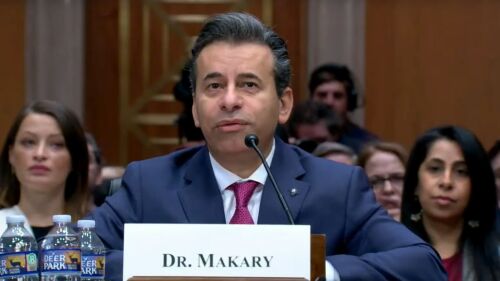 In an interview with former Fox News journalist Megyn Kelly, FDA Commissioner Marty Makary introduced a new mechanism-driven pathway that could be leveraged by rare disease therapies while saying that autism could potentially be driven by certain environmental factors.
 -
 Losing the FDA’s senior negotiators would slow the renewal of the user fee programs “considerably,” according to policy and regulatory expert Steven Grossman.
 -
 Industry representatives will still be allowed at these meetings, but they will no longer have a spot on the advisory committee.


Workplace issues can arise anytime so it is always better to be prepared to seek out the problems directly in a mannered way to avoid any kind of personal rivalry.

Let’s talk about some common mistakes job candidates make during interviews, so you can steer clear of them for your next interview! Here’s how to nail a job interview.

Here are some effective career development tips that can help you stay ahead and accomplish milestones. Don;t miss any of it if you want a successful career.

Project leadership is not an easy task to handle. You become responsible for every action. Therefore, learn some tips to perform your duty effectively.

Here are tips for introverts who are trying to land their dream job.

According to Bloomberg, the Work Trend Index showed that 41% of the survey’s 30,000 respondents planned on leaving their current job.
HOTBEDS


REPORTS

In this Employment Outlook report, BioSpace explores current workforce sentiment, job activity trends and the prospective job and hiring outlook for 2025, particularly as it compares to the previous year.


BioSpace’s third report on diversity, equity, inclusion and belonging in life sciences examines dramatic shifts in attitude around diversity initiatives.
CANCER

-
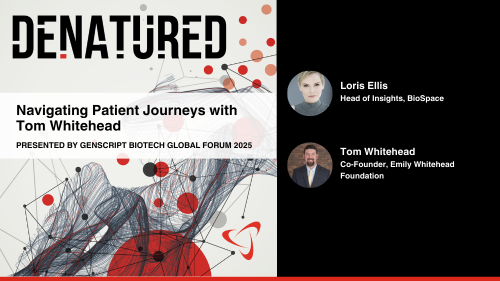 In this episode, presented by the Genscript Biotech Global Forum 2025, BioSpace’s Head of Insights Lori Ellis and Tom Whitehead continue to discuss the patient and caregiver experience, where Tom gives his insights to the future of CGTs.
 -
 Leaked data showed that Pfizer’s mevrometostat has strong therapeutic potential in metastatic castration-resistant prostate cancer, while recent readouts also position the pharma as a strong contender in colorectal cancer and bladder cancer.
 -
 The pharma giant inked its third T cell engager deal of 2025 Wednesday—this time with Xilio Therapeutics for tumor-activated immunotherapies.
 -
 The partnership dates back to 2015, when Incyte paid $60 million upfront for access to four checkpoint programs, including TIM-3, LAG-3, OX40 and GITR.
 -
 Gilead beat consensus estimates in Q4 with $7.6 billion in revenue, driven largely by its HIV drug Biktarvy and CAR T therapies Trodelvy and Yescarta.


NEUROSCIENCE

-
 An OIG report zeroed in on what it said were three particularly problematic accelerated approvals: Biogen’s Aduhelm, Sarepta’s Exondys and Covis’ Makena.
 -
 JPM25 is in full swing as several pharma powerhouses—including Merck, Lilly and Amgen—detail their strategies for growth in the coming year.
 -
 The FDA accepted Biogen and Eisai’s BLA for a subcutaneous administration of the anti-amyloid antibody Monday as the partners await the regulator’s decision on a new intravenous regimen following an underwhelming launch riddled with coverage and accessibility barriers.
 -
 Biogen’s proposed acquisition comes after two difficult years of regulatory and clinical challenges, during which shares of Sage Therapeutics have fallen by more than 90%.
 -
 Among Intra-Cellular’s neuropsychiatric assets is Caplyta, a pill approved for schizophrenia and bipolar depression and proposed for major depressive disorder.


CELL AND GENE THERAPY

-
 Allogene is ceasing enrollment in a Phase I trial of cema-cel for patients with relapsed or refractory chronic lymphocytic leukemia after Bristol Myers Squibb’s Breyanzi was approved in the indication earlier this year.
 -
 Following strong treatment response data for Adaptimmune’s lete-cel, the biotech is planning to initiate a rolling BLA submission to the FDA, set to start by the end of 2025.
 -
 The FDA has followed in the footsteps of its European counterparts and granted accelerated approval to PTC Therapeutics’ gene therapy Kebilidi for AADC deficiency. It is the first approved gene therapy to be delivered directly to the brain.
 -
 BioSpace takes a look at the headlines across a heavy earnings week for biotechs, checking in on Allogene, Rapport and more.
 -
 Analysts did not seem very concerned by the treatment-related serious adverse event, noting that NGN-401 was well-tolerated at a lower dose and showed promising efficacy outcomes.


