


The staffing changes will focus resources on work that creates the highest impact for patients, according to Genentech. The number of employees affected is unknown, but longtime veteran Vishva Dixit is out.

Follow along as BioSpace tracks job cuts and restructuring initiatives.

Analysts are cautiously optimistic about an IPO rebound for biopharma. BioSpace is keeping track of companies that seek to trade on the public markets this year.

Instead of using viral vectors, SonoThera’s genetic medicines are delivered through an ultrasound-mediated technology that could help sidestep key safety issues with conventional delivery methods.

In this episode of Denatured, you’ll be hearing from Hannah Franklin, associate at Biovance Capital and Pablo Gabriel Cironi Lopez, director of life science investment at Caixa Capital Risc as they discuss the rise of Southern Europe’s biotech ecosystem.

Just 23% of respondents to a BioSpace LinkedIn poll expect the biopharma job market will rebound in 2026. Three experts discuss when they see a turnaround happening and how increasing emphasis on cost efficiency is impacting hiring practices.
FEATURED STORIES

As the industry faces policy changes and significant cuts to federal funding, local ecosystems can bolster companies through innovative resources to sustain growth and keep the U.S. at the center of biomedical innovation.

Over the past decade, Eli Lilly has bought out more biotechs than any of the other top 12 pharmas by revenue—with 10 of those acquisitions arriving just this year.

Members of the American Biotech Innovation Alliance (ABIA) want to build a national biotech strategy—just like China did years ago.

The public biotech universe has shrunk by more than 20% since 2021, yet financial stress remains entrenched across the sector, according to a report from EY Tuesday.

Novo Nordisk and Eli Lilly presented data extolling the benefits of their relative weight loss therapies in obesity-linked indications, while analysts at BMO Capital Markets were “encouraged” by the strategy communicated by Novo management.

After a $625 million IPO, the biggest ever in biotech, obesity-focused Kailera Therapeutics is readying a commercial strategy that puts patients at the center.


LATEST PODCASTS
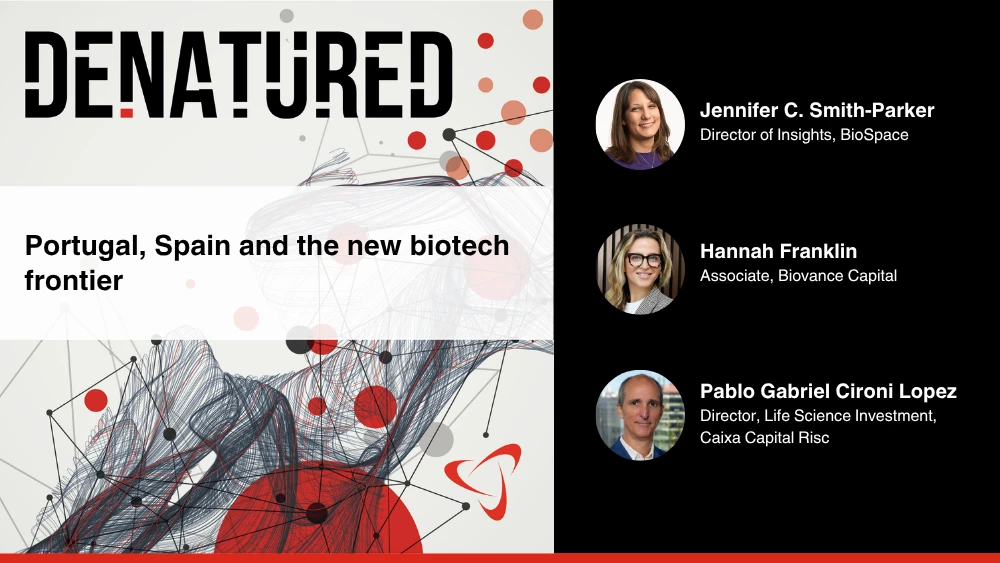
In this episode of Denatured, you’ll be hearing from Hannah Franklin, associate at Biovance Capital and Pablo Gabriel Cironi Lopez, director of life science investment at Caixa Capital Risc as they discuss the rise of Southern Europe’s biotech ecosystem.
Eli Lilly and obesity rival Novo Nordisk stole the show at the American Diabetes Association conference, though plenty of other companies also had data to show for their own weight loss assets; GSK strikes the biggest traditional pharma buyout of 2026; and FDA initiatives still lack clarity.

In this episode of Denatured, you’ll be hearing from Daniel Gil, CEO of Pelage Pharmaceuticals and Francisco Ramírez-Valle, senior vice president of immunology discovery at Eli Lilly. We dive into the long-overlooked hair loss space, exploring why true innovation has lagged, how a regenerative approach aims to reactivate dormant follicles and what early proof-of-concept means for patients.





Subscribe to GenePool
Subscribe to BioSpace’s flagship publication including top headlines, special editions and life sciences’ most important breaking news
SPECIAL EDITIONS

BioSpace examines how the FDA approval of Eli Lilly’s oral obesity drug Foundayo has ignited a key race with Novo Nordisk.

Opportunities increased by the end of the first quarter, according to BioSpace data.

BioSpace looks back at 2025 and where the FDA is going in 2026.
DEALS

-
 Parabilis Medicines is joining the parade of biotechs going public, with one key difference—more money.
 -
The star of the licensing agreement, a small-molecule gamma-secretase modulator, will help buff Eli Lilly’s position in Alzheimer’s disease, currently headlined by its anti-amyloid antibody Kisunla.
-
 Eli Lilly and obesity rival Novo Nordisk stole the show at the American Diabetes Association conference, though plenty of other companies also had data to show for their own weight loss assets; GSK strikes the biggest traditional pharma buyout of 2026; and FDA initiatives still lack clarity.
 -
 Nuvalent Bio is GSK’s third big-ticket purchase this year, after the pharma dropped $2.2 billion in January for RAPT Therapeutics and $950 million in February for 35Pharma.
 -
 The acquisition gives Johnson & Johnson access to Firefly Bio’s next-gen platform designed to create degrader antibody conjugates that can crack the tricky KRAS cancer target.




WEIGHT LOSS

-
 AstraZeneca is pushing its small molecule GLP-1 drug to Phase 3 development for weight control, diabetes and other cardiometabolic conditions despite the asset failing to best one from Structure Therapeutics.
 -
 Newly approved weight loss pill Foundayo reduced blood sugar more than Novo Nordisk’s semaglutide and other comparators in multiple Phase 3 type 2 diabetes trials. Eli Lilly will seek approval in this indication.
 -
 While survodutide’s 16.6% overall weight loss was underwhelming, Boehringer Ingelheim and Zealand Pharma’s drug achieved “impressive” fat loss, according to BMO Capital Markets.
 -
 Much work needs to be done for Pfizer to be able to catch up to the weight-loss frontrunners, according to Guggenheim Partners, but new data from Metsera’s lead asset could set the pharma apart from competitors with a monthly injection.
 -
 Over two years of treatment, Eli Lilly’s triple-G drug cut body weight by more than 30% in certain patients with obesity, cementing the pharma’s position as the frontrunner in the metabolic space.


POLICY

-
 The FDA must provide consistent and predictable regulatory frameworks if the U.S. is to maintain its leadership in gene therapy, one of the most consequential therapeutic fields of our generation.
 -
 A year of significant policy change at the FDA brought momentum and scrutiny into the new year. As 2026 gets underway, biopharma companies are responding to sweeping vaccine changes while concerns surface about the politicization of the agency.
 -
 Robert F. Kennedy Jr.’s health department has consistently touted radical transparency as being key to its mission. Recent instances—the FDA’s decision not to disclose the recipients of three Commissioner’s National Priority Vouchers and FDA and CDC choices not to publish vaccine-related papers—call this intent into question.
 -
 Of the 17 companies that were implored by the White House last July to apply Most Favored Nation pricing to their drugs, Regeneron is the last to agree—the same day the FDA greenlit its gene therapy for hearing loss in kids.
 -
 The FDA in July 2025 made publicly available over 200 complete response letters—an initiative that the investment community sees as “unanimously positive,” analysts told BioSpace.


The people most trusted to deliver are not always the ones invited to shape direction. Executive coach Angela Justice examines why the habits that build a career can eventually limit advancement.

Scientists who focus only on generating data risk missing their role in shaping strategy and driving innovation.

Panel interviews can play a major role in getting jobs. Two career coaches discuss what to do before and during the interview, including identifying how to differentiate yourself, engaging in true conversations and not overlooking a key panel member.

Over one-third of BioSpace LinkedIn poll respondents have done free work while interviewing for jobs. A recruiting expert and career coach discuss why employers make work requests and how biopharma professionals should evaluate and respond to them.

Finding the right people for critical open roles can be difficult even for biopharma leaders. In this column, Kaye/Bassman’s Michael Pietrack discusses four pitfalls executives face during the hiring process, starting with confusing scientific brilliance with leadership ability.

Some bosses stretch you. Others make work more bearable. Both can earn your loyalty. Only one is building your future. Leadership coach Angela Justice explains how to tell the difference.
HOTBEDS


REPORTS

In this Employment Outlook report, BioSpace explores current workforce sentiment, job activity trends and the prospective job and hiring outlook for 2025, particularly as it compares to the previous year.


BioSpace’s third report on diversity, equity, inclusion and belonging in life sciences examines dramatic shifts in attitude around diversity initiatives.
CANCER

-
 While Merck and Gilead Sciences reported back-to-back late-stage victories for their weekly HIV pill, the partners also discontinued a Phase 3 program for their cancer combo after disappointing lung cancer survival data.
 -
 Roche and Nurix Therapeutics will advance their BTK degrader for chronic lymphocytic leukemia, as well as immunology and neurology indications.
 -
 In addition to a high rate of deaths, ADC Therapeutics’ Zynlonta plus rituximab showed no overall survival benefit in patients with diffuse large B cell lymphoma, casting doubt on its value as a second-line treatment in this indication.
 -
 All told, CytomX Therapeutics now stands to receive up to $4 billion over the course of its partnership with Regeneron, if all milestones are met.
 -
 Revolution Medicines stole the show at the 2026 American Society of Clinical Oncology meeting as full data from its pancreatic cancer drug lived up to expectations, while Summit and Akeso proved the PD-(L)1/VEGF mechanism and Eli Lilly showed that its in vivo CAR T bet is paying off.


NEUROSCIENCE
-
Improved survival on display at the American Society of Clinical Oncology (ASCO) in Chicago; Pfizer’s unusual pact with China’s Innovent highlights a new type of collaboration; Eli Lilly continues its nonstop deal streak, including with Chinese biotechs; and looking ahead to this weekend’s American Diabetes Association meeting.
-
 For Peter Pitts, a former associate commissioner at the FDA, the appointment to the board of BrainStorm Cell Therapeutics is an opportunity to fulfill a promise he made long ago to a patient with ALS.
 -
 Edgewise Therapeutics will now focus on a handful of cardiovascular programs including EDG-7500 for hypertrophic cardiomyopathy thanks to the non-dilutive capital from France’s Servier.
 -
 The tragic tale of TIGIT is well known. However, RIPK1, myc, STING and alpha-synuclein have also left a trail of failed clinical trials, canceled partnerships and sunk investments in their wake.
 -
 Biogen and Denali’s Parkinson’s disease drug failed to significantly slow disease progression in a Phase 2b study, missing both primary and secondary endpoints.


CELL AND GENE THERAPY

-
 All six non-Hodgkin lymphoma patients on Legend Biotech’s CAR T therapy responded to treatment—findings that could make the biotech an attractive takeover target, according to analysts at Oppenheimer.
 -
 Analysts homed in on Duchenne muscular dystrophy and myotonic dystrophy type 1 assets during first quarter earnings as major players like REGENXBIO and Novartis as well as Dyne, Wave, Solid and Sarepta near the regulatory finish line.
 -
 Eli Lilly joins hands with Engage Bio, acquiring the DNA delivery platform developer in hopes of bolstering its genetic medicines portfolio.
 -
 The recent approval of Regeneron’s Otarmeni underscores the maturation of gene therapies across a range of diseases. Here, BioSpace reviews genetic medicines in development for the central nervous system, retinal, cardiac and neuromuscular diseases.
 -
 CREATE Medicines is working on a clinical-stage pipeline for cancer, while its autoimmune programs are still in preclinical testing.


