


Analysts are keeping a close eye on Vertex’s kidney disease portfolio, anchored by the IgAN drug povetacicept, as its nonopioid painkiller Journavx is poised for “incremental” growth in the first half 2026, according to BMO Capital Markets.

Follow along as BioSpace tracks job cuts and restructuring initiatives.

Vinay Prasad, the FDA’s Center for Biologics Evaluation and Research head, is accused of interpersonal impropriety as pushback builds against his decision to reject Moderna’s influenza vaccine candidate.

Moderna’s mRNA-1010 was expected to contribute $1 billion to the company’s coffers by 2028. That plan is now out the window after the FDA refused to even look at the application.

Infigratinib topped “even the most optimistic expectations” for efficacy and safety in the late-stage PROPEL 3 study in achondroplasia, Truist Securities analysts said Thursday.

The sudden departure stands in contrast to other EU pharma leaders who have been given much longer transitions in recent months, including GSK’s Emma Walmsley and Novo Nordisk’s Lars Fruergaard Jørgensen.
FEATURED STORIES

The FDA’s refusal to review Moderna’s mRNA-based flu vaccine is part of a larger communications crisis unfolding at the agency over the past nine months that has also ensnarled Sarepta, Capricor, uniQure and many more.

The rare disease drugmaker is facing potential competitors for achondroplasia drug Voxzogo. Is a big M&A deal with two approved assets enough to maintain investor interest?

The FDA issued a rare Refusal-to-File letter to Moderna over its mRNA-based influenza vaccine application, in an unusual move that sent the biotech’s shares tumbling.

A rapturous response to data published last year for Pelage’s hair loss candidate overwhelmed the biotech. Now, the company is ready to show the world the science behind the breakthrough.

Pfizer, Eli Lilly, Novartis, Bristol Myers Squibb and AstraZeneca are all ramping up the use of AI, but drug discovery is not the primary success story—yet.

Analysts, investors and scientists are eager for Biogen’s 2026 BIIB080 readout. Even if successful, executives warn that there are many more steps before the Alzheimer’s therapy could reach the market.


FROM BIOSPACE INSIGHTS

As next-generation antibody-drug conjugates reshape cancer care, digital pathology and artificial intelligence are transforming how HER2 is measured. The advances aim to help clinicians identify low and ultra-low expressors, match patients to the right therapies and make more precise treatment decisions.


LATEST PODCASTS

In this episode of Denatured, Jennifer C. Smith-Parker speaks with Dr. Rob Monroe and Jennifer Fakish at Danaher Corporation. They discuss how antibody drug conjugates (ADCs) are transforming cancer care. With AI-powered pathology, doctors can now measure HER2 more precisely to match patients with the best treatments.

A lawsuit and FDA warning ensued after Hims & Hers launched a compounded version of Novo Nordisk’s new obesity pill, more Big Pharma report earnings—including from weight loss rivals Novo and Eli Lilly—and the gene therapy space sees another rejection.

In this episode of Denatured, Jennifer C. Smith-Parker speaks to Erik Digman Wiklund, CEO of Circio and Jacob Becraft, Co-founder and CEO of Strand Therapeutics. They discuss how post-COVID, emerging platforms like circular and logic circuit RNA are expanding the field’s therapeutic horizons.



Subscribe to GenePool
Subscribe to BioSpace’s flagship publication including top headlines, special editions and life sciences’ most important breaking news
SPECIAL EDITIONS

Recent breakthroughs and three decades of progress in treating Huntington’s disease

In this deep dive, BioSpace investigates China’s rise as a biotech powerhouse.

In this deep dive, BioSpace explores the next big thing in obesity.
DEALS

-
 The pact between Madrigal Pharmaceuticals and Ruzhou Ribo Life Sciences could complement the former’s Rezdiffra, the first FDA-approved therapy for MASH. That drug made $287.3 million in the third quarter of 2025.
 -
 The deal gets Lilly access to Orna’s in vivo CAR T technology. The biotech’s lead asset, which has yet to start clinical testing, is focused on B cell–driven autoimmune diseases.
 -
 In this episode of Denatured, Jennifer C. Smith-Parker speaks to Erik Digman Wiklund, CEO of Circio and Jacob Becraft, Co-founder and CEO of Strand Therapeutics. They discuss how post-COVID, emerging platforms like circular and logic circuit RNA are expanding the field’s therapeutic horizons.
 -
 The alliance will add to Roche’s RNAi efforts, which include the hypertension candidate zilbesiran, partnered with Alnylam under a July 2023 agreement.
 -
 Moderna will continue to lead clinical development and manufacturing of the asset, while Recordati will handle commercialization of mRNA-3927, which is under development for the rare metabolic disorder propionic acidemia.


WEIGHT LOSS

-
 The oral version of Wegovy has made GLP-1 medicines more accessible and acceptable to many patients who had steered clear of injectable versions, healthcare analytics firm Truveta suggests.
 -
 A lawsuit and FDA warning ensued after Hims & Hers launched a compounded version of Novo Nordisk’s new obesity pill, more Big Pharma report earnings—including from weight loss rivals Novo and Eli Lilly—and the gene therapy space sees another rejection.
 -
 Kailera will launch a global Phase 2 study of ribupatide this year, while Hengrui will push the asset into Phase 3 in China.
 -
 AstraZeneca will push the pill, elecoglipron, into a comprehensive late-stage program that will test the drug as a monotherapy, as part of a combination regimen and for several indications.
 -
 Novo Nordisk has sued Hims for allegedly violating patents protecting semaglutide, seeking potentially “hundreds of millions” in damages, John Kuckelman, the pharma’s general counsel, said. The wellness platform pulled its version of the drug just days after launching it.




POLICY

-
 An unnamed FDA official also told reporters that it would be good for Moderna to “show some humility” and admit that it didn’t follow the regulator’s recommendations in testing its mRNA flu vaccine.
 -
 AbbVie contends that Botox should have been excluded from the IRA drug price negotiation program because it is a plasma-derived product.
 -
 The FDA underwent significant changes during the first year of the second Trump administration, directly affecting business risk and opportunity. Understanding key 2025 trends will be critical to developing regulatory strategies and maximizing opportunities for success.
 -
 A year of significant policy change at the FDA brought momentum and scrutiny into the new year. As 2026 gets underway, biopharma companies are responding to sweeping vaccine changes while concerns surface about the politicization of the agency.
 -
 The administration’s direct-to-consumer pharmaceutical sales platform will offer products from Eli Lilly, Pfizer, Novo Nordisk, Amgen and more at a discount, though the impact of such pricing remains to be seen.





If workloads aren’t adjusted as needed, the company’s priorities are already compromised. Executive coach Angela Justice explores what happens when goals move forward without removing unnecessary work and what to do about it.

At some point in your research career, you may find yourself transitioning from academia to industry or vice versa. To best set yourself up for success, adapt your approach to the specific scientific culture where you work.

Venture funds attending the J.P. Morgan Healthcare Conference said mounting funding pressures and Chinese competition have sharpened their focus on leadership qualities, from regulatory expertise and industry experience to the ability to scale—or step aside—as companies mature.

Clarity on employment terms is essential to protect careers. In this column, Kaye/Bassman’s Michael Pietrack speaks to employment attorney Howard Matalon, JD, partner at OlenderFeldman, on how to evaluate the fine print of an employment agreement.

Looking for a new opportunity in New Jersey? These nine companies have open roles that could be a great fit for you.

The difference between a job and a career is what you walk away with when it ends. Here’s how to evaluate if your role and environment are enabling capability building–and if your title is holding you back.
HOTBEDS


REPORTS

In this Employment Outlook report, BioSpace explores current workforce sentiment, job activity trends and the prospective job and hiring outlook for 2025, particularly as it compares to the previous year.


BioSpace’s third report on diversity, equity, inclusion and belonging in life sciences examines dramatic shifts in attitude around diversity initiatives.
CANCER
-
 In this episode of Denatured, Jennifer C. Smith-Parker speaks with Dr. Rob Monroe and Jennifer Fakish at Danaher Corporation. They discuss how antibody drug conjugates (ADCs) are transforming cancer care. With AI-powered pathology, doctors can now measure HER2 more precisely to match patients with the best treatments.
 -
 Despite the Phase 1 cull, CEO Vas Narasimhan on Wednesday maintained that Novartis continues to invest in its early-stage pipeline, looking for deals in the “sub-$2-billion range.”
 -
 On its fourth quarter earnings call Wednesday, AbbVie CEO Robert Michael called oncology and neuroscience “underappreciated” areas of focus for the pharma.
 -
 In its 2025 full year and fourth-quarter earnings call, Merck executives touted the merits of recent deals and what CEO Robert Davis called “probably the broadest and widest pipeline we’ve had in years.”
 -
 DS-9606 was supposed to be the first antibody-drug conjugate in Daiichi Sankyo’s line of anti-cancer assets to use a modified pyrrolobenzodiazepine payload.


NEUROSCIENCE

-
 The FDA in July last year declined to approve UX111 for Sanfilippo syndrome, a rare neurodegenerative disorder, citing manufacturing issues. Ultragenyx Pharmaceutical resubmitted its application ten days ago, expecting a six month review time.
 -
 Sales of Johnson & Johnson’s esketamine-based nasal spray jumped in the fourth quarter last year, priming the pump for a suite of other pharmas, including AbbVie, champing at the bit with their own psychedelics.
 -
 With Biogen’s multiple sclerosis portfolio facing more generic pressure than ever, the company is eyeing a busy late-stage pipeline and hunting for deals to build its return to growth.
 -
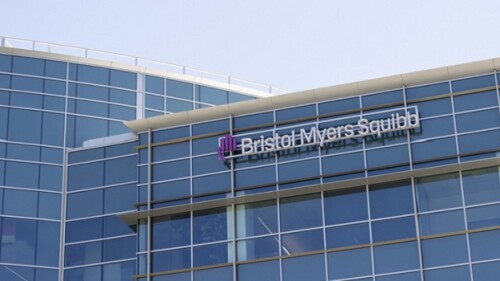 Bristol Myers Squibb delivered better than expected fourth quarter earnings, but Eliquis missed expectations while Cobenfy continues to struggle with uptake.
 -
 After a series of deaths in patients taking Sarepta Therapeutics’ gene therapies, doubt has crept into investor sentiments around the long-time Wall Street darling, and patients may soon begin looking elsewhere.


CELL AND GENE THERAPY

-
 A recurring theme Tuesday morning at Phacilitate’s Advanced Therapies Week was the quickly emerging potential of in vivo approaches to cell and gene therapy—a trend also reflected in recent investments by Eli Lilly and Regeneron.
 -
 The gene therapy uses an AAV vector to restore healthy levels of the alpha-galactosidase enzyme, which is rendered dysfunctional in patients with Fabry disease, leading to the toxic build-up of lipids in cells.
 -
 The SPAC agreement values PrimeGen US at $1.5 billion in equity and gives it capital to advance its pre-clinical triple-activated mesenchymal stem cell pipeline into the clinic.
 -
 Nearly 100 biotechs went public amid the industry’s IPO frenzy in 2021, driven by an influx of pandemic-driven investments. But many of those companies have little to show investors.
 -
 AstraZeneca has risen as one of pharma’s most prolific investors in China, including a $630 million pledge last week for full rights to AbelZeta’s cell therapy for cancer.


