


Analysts are cautiously optimistic about an IPO rebound for biopharma. BioSpace is keeping track of companies that seek to trade on the public markets this year.

According to Priovant, the Phase 2 BEACON study is the first industry-sponsored placebo-controlled trial in cutaneous sarcoidosis to deliver positive data.

Follow along as BioSpace tracks job cuts and restructuring initiatives.

Biopharma’s obsession with the weight loss sector—projected to exceed $130 billion in revenue by 2035—shows no signs of slowing down as analysts gear up for a year that will test the oral market and provide key data on novel mechanisms.

The administration’s direct-to-consumer pharmaceutical sales platform will offer products from Eli Lilly, Pfizer, Novo Nordisk, Amgen and more at a discount, though the impact of such pricing remains to be seen.

Novo Nordisk and Eli Lilly have been battling head-to-head in an exploding obesity market. They should never have been compared apples to apples.
FEATURED STORIES

Analysts parsed the limited data available for Pfizer’s obesity candidate on the pharma’s fourth-quarter earnings call Tuesday, looking for any nugget of additional context.

After advancing in lockstep through the pandemic, the fortunes of the biotechs have diverged as their use of COVID-19 windfalls has taken shape.

After suffering in the wake of expired tax incentives for pharmas, the island is trying to take advantage of geopolitics to grow its drug manufacturing sector.

AstraZeneca’s $15 billion pledge to its China operations highlights the country’s advantages. But other regions are also hoping to host more clinical studies.

With Lykos’ regulatory failure now squarely in the rearview mirror, Compass Pathways and Definium are leading what one analyst suspects will be “a very big year for psychedelics.”

The Senate failed to pass a massive spending bill on Thursday—which includes the rare pediatric PRV program but also funding for the Immigration and Customs Enforcement’s large-scale crackdown in Minnesota and other states.


LATEST PODCASTS

In this episode of Denatured, Jennifer C. Smith-Parker speaks to Erik Digman Wiklund, CEO of Circio and Jacob Becraft, Co-founder and CEO of Strand Therapeutics. They discuss how post-COVID, emerging platforms like circular and logic circuit RNA are expanding the field’s therapeutic horizons.
Pfizer announces the first data from its Metsera-acquired pipeline just ahead of its earnings call, where analysts pressed execs for more details; Merck and Roche also released Q4 and full year earnings, with Eli Lilly, Novo Nordisk and others reporting Wednesday; REGENXBIO hits a regulatory snag ahead of its upcoming PDUFA; more.

In this episode of Denatured, Jennifer C. Smith-Parker speaks with RTW’s Rod Wong and Stephanie Sirota how shifting JPM deal timing masks record M&A potential; why oncology, obesity, psychedelics, and neuroscience are attracting fresh capital; and how “alpha stacking” shapes their investment edge in an age of chronic uncertainty. They cover topics discussed in RTW’s new book, “Innovation is the Best Medicine.”





Subscribe to GenePool
Subscribe to BioSpace’s flagship publication including top headlines, special editions and life sciences’ most important breaking news
SPECIAL EDITIONS

Recent breakthroughs and three decades of progress in treating Huntington’s disease

In this deep dive, BioSpace investigates China’s rise as a biotech powerhouse.

In this deep dive, BioSpace explores the next big thing in obesity.
DEALS
-
 In this episode of Denatured, Jennifer C. Smith-Parker speaks to Erik Digman Wiklund, CEO of Circio and Jacob Becraft, Co-founder and CEO of Strand Therapeutics. They discuss how post-COVID, emerging platforms like circular and logic circuit RNA are expanding the field’s therapeutic horizons.
 -
 The alliance will add to Roche’s RNAi efforts, which include the hypertension candidate zilbesiran, partnered with Alnylam under a July 2023 agreement.
 -
 Moderna will continue to lead clinical development and manufacturing of the asset, while Recordati will handle commercialization of mRNA-3927, which is under development for the rare metabolic disorder propionic acidemia.
 -
 The pact, which could see AstraZeneca ultimately put out $18.5 billion in milestones and sales-based payments, is centered on SYH2082, a long-acting dual agonist of the GLP-1 and GIP receptors.
 -
The Repertoire partnership is Lilly’s second immunology play of the year, after the acquistion of Ventyx in early January for a pipeline of NLRP3 assets.


WEIGHT LOSS

-
 In addition to claiming revenue of $19.3 billion for the fourth quarter, Eli Lilly executives offered a glimpse into their strategy to expand their GLP-1 franchise into the immunology and inflammation space, with trials currently underway in asthma, psoriatic arthritis, Crohn’s disease and ulcerative colitis.
 -
 Novo Nordisk and Eli Lilly both think the Wegovy pill is doing well, but the American rival sees the successful launch as a harbinger of good news for its own candidate, orforglipron, which is expected to hit the market in the second quarter.
 -
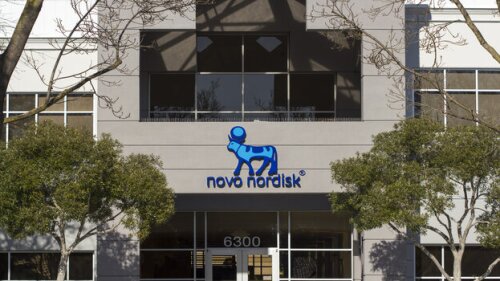 Novo Nordisk CEO Maziar Mike Doustdar acknowledged the market pressure facing the company’s GLP-1 products but sought to assure investors that Novo has the situation under control.
 -
 Amgen believes that it can transcend the expected tradeoff between convenience and efficacy, anticipating that its investigational obesity drug MariTide will continue to provide competitive weight loss even at monthly or longer schedules.
 -
 Instead of joining the increasingly crowded GLP-1 arena, GSK will focus its efforts downstream of obesity—a push currently anchored by its Phase III-ready FGF21 analog efimosfermin alfa for liver fibrosis.


POLICY

-
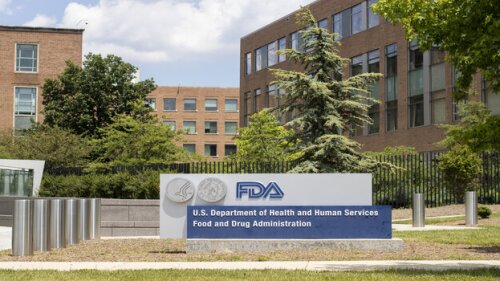 Rep. Jake Auchincloss of Massachusetts said the Commissioner’s National Priority Voucher program did not receive congressional backing. The FDA has also not yet made disclosures for eight senior reviewers, according to Auchincloss.
 -
 U.S. President Donald Trump signed a spending package into law Tuesday that reauthorizes the FDA’s previously stalled rare pediatric disease priority review voucher program, among other initiatives, while ending a three-day partial government shutdown.
 -
 In a Cabinet meeting, Health Secretary Robert F. Kennedy Jr. said the website could go live “probably in the next 10 days,” but an exact launch date remains unclear.
 -
 Nader Pourhassan, who led CytoDyn for nearly 10 years, was convicted in December 2024 of misleading investors regarding the biotech’s investigational COVID-19 and HIV drug, which artificially inflated its share price.
 -
 Bristol Myers Squibb, GSK and Merck are contributing drug ingredients as part of their deals with the White House but are keeping many of the terms of their agreements private.


At some point in your research career, you may find yourself transitioning from academia to industry or vice versa. To best set yourself up for success, adapt your approach to the specific scientific culture where you work.

Venture funds attending the J.P. Morgan Healthcare Conference said mounting funding pressures and Chinese competition have sharpened their focus on leadership qualities, from regulatory expertise and industry experience to the ability to scale—or step aside—as companies mature.

Clarity on employment terms is essential to protect careers. In this column, Kaye/Bassman’s Michael Pietrack speaks to employment attorney Howard Matalon, JD, partner at OlenderFeldman, on how to evaluate the fine print of an employment agreement.

Looking for a new opportunity in New Jersey? These nine companies have open roles that could be a great fit for you.

The difference between a job and a career is what you walk away with when it ends. Here’s how to evaluate if your role and environment are enabling capability building–and if your title is holding you back.

Communication must be viewed as more than the last step of the research process. It is the structure that makes scientific work clear, trusted and remembered.
HOTBEDS


REPORTS

In this Employment Outlook report, BioSpace explores current workforce sentiment, job activity trends and the prospective job and hiring outlook for 2025, particularly as it compares to the previous year.


BioSpace’s third report on diversity, equity, inclusion and belonging in life sciences examines dramatic shifts in attitude around diversity initiatives.
CANCER

-
 On its fourth quarter earnings call Wednesday, AbbVie CEO Robert Michael called oncology and neuroscience “underappreciated” areas of focus for the pharma.
 -
 In its 2025 full year and fourth-quarter earnings call, Merck executives touted the merits of recent deals and what CEO Robert Davis called “probably the broadest and widest pipeline we’ve had in years.”
 -
 DS-9606 was supposed to be the first antibody-drug conjugate in Daiichi Sankyo’s line of anti-cancer assets to use a modified pyrrolobenzodiazepine payload.
 -
 In what is shaping up to be a back-loaded month, the FDA is set to release a slew of regulatory decisions in February, including two that would expand the labels of blockbuster drugs.
 -
 New draft guidance from the FDA on multiple myeloma endpoints reflects the new technology available to assess disease and how patient journeys have changed with better treatments.


NEUROSCIENCE

-
 After a series of deaths in patients taking Sarepta Therapeutics’ gene therapies, doubt has crept into investor sentiments around the long-time Wall Street darling, and patients may soon begin looking elsewhere.
 -
 Pfizer announces the first data from its Metsera-acquired pipeline just ahead of its earnings call, where analysts pressed execs for more details; Merck and Roche also released Q4 and full year earnings, with Eli Lilly, Novo Nordisk and others reporting Wednesday; REGENXBIO hits a regulatory snag ahead of its upcoming PDUFA; more.
 -
Roche’s obesity candidate achieves 22.5% weight loss in Phase II; Moderna pulls the plug on late-stage vaccine trials as Health Secretary Robert F. Kennedy’s anti-vaccine policies and rhetoric continues; and embattled gene therapy maker Sarepta announces new data in Duchenne muscular dystrophy.
-
 After a spate of patient deaths in 2025 linked to the company’s Duchenne gene therapy, Sarepta shared new data showing benefits of the therapy three years after dosing.
 -
 From opening new therapeutic mechanisms to repairing neuronal damage, investigational molecules from Ventyx Therapeutics, AC Immune, Gain Therapeutics and more could shape the future of Parkinson’s disease treatment.



CELL AND GENE THERAPY

-
 Nearly 100 biotechs went public amid the industry’s IPO frenzy in 2021, driven by an influx of pandemic-driven investments. But many of those companies have little to show investors.
 -
 AstraZeneca has risen as one of pharma’s most prolific investors in China, including a $630 million pledge last week for full rights to AbelZeta’s cell therapy for cancer.
 -
 The discovery of a tumor in a patient who received REGENXBIO’s gene therapy for Hurler syndrome prompted the FDA to place a hold on that program along with the company’s Hunter syndrome program, which is awaiting an FDA decision on or before Feb. 8.
 -
 Phacilitate’s annual event dawns as cell and gene therapies reach a new tipping point: the science has hit new heights just as regulatory and government policies spark momentum and frustration.
 -
Novo Nordisk pulled back from cell therapies last October, scrapping development of a type 1 diabetes therapy and laying off most employees working on this modality.


