


The cornerstone of the deal is Ixo-vec, an intravitreal gene therapy currently in Phase III development for wet age-related macular degeneration. Eli Lilly made another foray into genetic medicine in June, picking up Verve Therapeutics for up to $1.3 billion.

Of the 25 companies receiving tax incentives in Massachusetts, 23 will add jobs outside of Boston and Cambridge. Medtronic, which is receiving the largest award, will create 220 roles in Billerica. Other recipients include AbbVie, Dyne Therapeutics and Viridian Therapeutics.

In three draft guidance documents, the FDA has laid out pointers to help companies craft better drug development programs and drug applications.

The discontinued CAR T therapy bbT369 came to Regeneron when the pharma bought all of 2seventy bio’s pipeline assets for $5 million upfront in January 2024.

Sales of Sanofi’s COVID-19 and flu vaccines fell 17% in the third quarter amid declining vaccination rates and pricing pressures in Europe.

The antibody-drug conjugate, withdrawn from the market by GSK in 2022 after failing a confirmatory study, was approved Thursday by the FDA for previously treated patients with multiple myeloma. This is despite a negative advisory committee vote in July.
FEATURED STORIES

The Most Favored Nation order is unlikely to deliver broad, sustained savings without triggering legal challenges, administrative friction and unintended consequences for both the healthcare sector and patient access.

The FDA and NIH recently announced plans to phase out animal testing requirements for some therapies. While organoid and AI providers celebrate, scientists warn that questions over safety, applicability and implementation remain.

While sparking excitement among biopharma companies focused on rare and ultrarare indications, experts say FDA Commissioner Marty Makary’s proposal is light on details and raises potential concerns about safety, access and liability.

While the Trump administration has painted the jettisoning of staff and regulations as good for business, there are multiple reasons it’s unlikely to work out that way.

The number of employees laid off increased year over year during the first quarter. BioSpace recaps the five largest rounds of layoffs, which included BMS and Novartis cuts.

As the Trump administration slashes funding for HIV-related research and infrastructure, Gilead, Immunocore and more are targeting the next goalpost: a cure.


LATEST PODCASTS

In this episode, Lori and guests discuss practical approaches regarding artificial intelligence and investor and industry confidence in its current state.
BioMarin’s new business strategy leaves investors with questions; Lykos CEO steps down; Terns releases compelling data on oral weight loss candidate; and more.
Eli Lilly offers weight loss drug Zepbound directly to consumers while Novo Nordisk continues to struggle with supply challenges for its own GLP-1s. Meanwhile, gene therapies for retinal diseases target competitive market, and layoffs persist.
Job Trends
Johnson & Johnson (NYSE: JNJ) announced today it has entered into a definitive agreement with Numab Therapeutics to acquire from Numab’s shareholders its wholly-owned subsidiary for the global rights to a novel, investigational first-in-class bispecific antibody, NM26, in an all-cash transaction of approximately $1.25 billion.
Subscribe to GenePool
Subscribe to BioSpace’s flagship publication including top headlines, special editions and life sciences’ most important breaking news
SPECIAL EDITIONS

In this deep dive, BioSpace investigates China’s rise as a biotech powerhouse.

In this deep dive, BioSpace explores the next big thing in obesity.

BioSpace did a deep dive into biopharma female executives who navigated difficult markets to lead their companies to high-value exits.
DEALS

-
 With Elevidys expansion in hand, Sarepta commits up to $10 billion to develop short interfering RNA–based drugs to build out its pipeline.
 -
 Novartis has disclosed roughly $19.4 billion in deals in the past five years. CEO Vas Narasimhan says there’s more to come.
 -
 The deal has secured Novartis the chance to work with Ratio Therapeutics on a novel drug candidate that could fortify the Big Pharma against competition from would-be radiopharmaceutical rivals such as BMS and Lilly.
 -
 The acquisition will give BioNTech full ownership of an investigational bispecific antibody targeting the PD-L1/VEGF-A pathways, a hot area in oncology that could potentially replace standard checkpoint inhibitors for cancer treatment.
 -
 Novo Holdings’ acquisition of Catalent has ignited concerns from industry stakeholders, who fear that the consolidation could limit competition, but there is also the possibility that the deal could represent an opportunity for smaller-scale CDMOs to find new partners.


WEIGHT LOSS

-
 As Eli Lilly ends the year with Zepbound in good supply, TD Cowen analyst Steve Scala asked CEO David Ricks if the company has taken the GLP-1 supply chain too far.
 -
 Wegovy sales increased by more than 100% over 2024. But that wasn’t enough to satiate analysts who want to know why Novo Nordisk can’t access more patients, particularly in the U.S.
 -
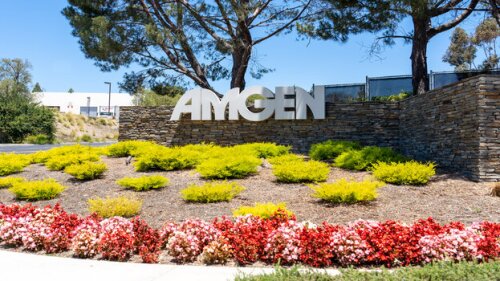 Amgen outperformed expectations in the fourth quarter of 2024, but revealed an FDA hold on early-stage obesity asset AMG 513 and the discontinuation of other programs.
 -
 Just over a year after striking an obesity deal with Novo Nordisk, an SEC filing shows Flagship Pioneering spinout Omega Therapeutics is days away from bankruptcy and will lay off up to 17 employees.
 -
 Amid growing concern of the overuse and misuse of obesity drugs, the UK’s pharmacies regulator rolled out stricter guidelines for online pharmacies selling medicines including Novo Nordisk’s Wegovy and Eli Lilly’s Mounjaro.


POLICY

-
 The third cycle of the drug price negotiations will involve drugs under Medicare Part B. New prices are set to take effect in 2028.
 -
 The Most Favored Nation directive would allow drugmakers to directly sell their products to patients at a lower cost, cutting out what President Donald Trump called “the middlemen.”
 -
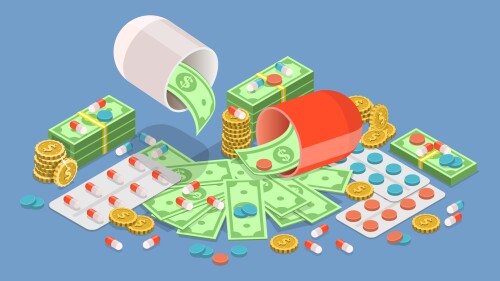 While industry groups decried the Trump administration’s new drug pricing order, analysts say it lacked details and the teeth to make a major impact without an act of Congress.
 -
 The package revives President Donald Trump’s much-maligned Most Favored Nation rule but goes further into the private markets and beyond, leveraging the patent system, drug importation and more.
 -
 The FDA and CDC have also recommended pausing the use of Ixchiq in seniors 60 years and older while safety investigations are ongoing.


A life science degree can provide various academic and professional opportunities to you. Here’s an overview of what you can do with a life science degree.

Understanding the difference between talent acquisition and recruitment is vital not only for your hiring process but for the entire organization.

Discover the most common departments that make up a BioPharma company, learn about the responsibilities of each department and figure out which role is the right fit for you.

Like any field, there are upsides and downsides to working in biotech, and educating yourself can help you make an informed decision if you’re considering a career in this industry.

Learn the best tips, tricks, and practices to help yourself to get the first job after college life sciences industry right out of college in our comprehensive guide.

Discover the most in-demand pharma qualifications and how to use them to score your dream job in our comprehensive guide.
HOTBEDS


REPORTS

In this Employment Outlook report, BioSpace explores current workforce sentiment, job activity trends and the prospective job and hiring outlook for 2025, particularly as it compares to the previous year.


BioSpace’s third report on diversity, equity, inclusion and belonging in life sciences examines dramatic shifts in attitude around diversity initiatives.
CANCER

-
 The FDA’s Oncologic Drugs Advisory Committee recently voted to narrow the label for checkpoint inhibitors Keytruda and Opdivo in stomach and esophageal cancers based on PD-L1 expression levels—but the high unmet need in these patient populations should also be considered.
 -
 On the agenda for the FDA this month are two RNA-based treatments for rare diseases.
 -
 Imfinzi is one of AstraZeneca’s key growth drivers for 2025, with potential approvals in stomach and bladder cancers. The PD-L1 blocker brought in over $4.7 billion in sales last year.
 -
 The new formulation of Keytruda, currently under FDA review, is sparking conflict with Halozyme, which makes enzymes that convert intravenous drugs into injectable versions.
 -
At the heart of the deal is the drug candidate dordaviprone, which is months away from a regulatory verdict for its use in H3 K27M-mutated diffuse glioma.


NEUROSCIENCE

-
 The Phase IIa results continue a surge of momentum in a treatment space that last week saw the approval of Vertex’s Journavx as the first novel mechanism for acute pain in decades.
 -
 In a Phase IIb trial, GH001 elicited significant drops in treatment-resistant depression. The news comes less than two weeks after J&J secured FDA monotherapy approval for its esketamine nasal spray Spravato in the same indication.
 -
 After the Phase II failure of its lead asset from Cerevel, AbbVie is resetting expectations and narrowing the clinical program to an adjunct approach—for now.
 -
 Analysts were unfazed by the news that Takeda will cease development of soticlestat after Phase III failures, while responding positively to the announcement that Julie Kim will take the helm of the Japanese giant in 2026.
 -
 Inhibikase’s setback continues biopharma’s losing streak against Parkinson’s, marked by several clinical failures and abandoned assets in recent months.


CELL AND GENE THERAPY

-
 Sangamo is on course to run out of money within months and has now lost access to up to $220 million in milestone payments from Pfizer.
 -
 The approval concludes what has been a difficult regulatory path for Ryoncil, which suffered FDA rejections in 2020 and 2023.
 -
 Tenaya’s share slump following the TN-201 data drop could be due to its “significantly lower” level of RNA expression in the Phase Ib/II trial than in preclinical models, according to William Blair analysts.
 -
 Bristol Myers Squibb aims to generate around $1.5 billion in savings through 2025—a goal that it hopes to reach by lowering third-party expenditures, focusing only on key growth brands and cutting some 2,200 jobs by year-end.
 -
 When hiring job candidates to work on cell and gene therapies, companies look for more than just technical skills. Talent acquisition executives from Bristol Myers Squibb and Intellia Therapeutics offer an inside look at what they want in an employee.


