


Asundexian’s Phase III win could also bode well for Bristol Myers Squibb, which is also developing a Factor XIa inhibitor called milvexian for stroke prevention, analysts said.

A source familiar with the matter said the White House initially requested the resignation of Sanjula Jain-Nagpal, a policy and research official at the FDA.

The regulator has received reports that a group of patients treated with Adzynma had neutralizing antibodies against the protein the therapy replaces.

After revoking Sarepta’s award in July and awarding one to Krystal last month, the FDA’s platform technology designation program appears to be back on track. These six biotechs could be on the regulator’s radar.

While expressing disappointment, William Blair analysts were unsurprised by the Phase II failure, having assigned the VISTA study a high level of risk given the “mixed” performance of a similar drug in a prior multiple sclerosis study.

After GSK subsidiary Tesaro filed a lawsuit Thursday claiming that AnaptysBio breached “certain requirements” under their 2014 license agreement involving GSK’s Jemperli, Anaptys responded Friday morning.
FEATURED STORIES

Reshoring generic pharmaceutical production is essential in today’s era of geopolitical instability and heightened awareness surrounding national health security. And it is possible—if done right.

The FDA in September issued two rejections for spinal muscular atrophy therapies—both linked to manufacturing problems—and granted approvals in Barth syndrome and for a subcutaneous version of Merck’s Keytruda that could be key to the blockbuster’s future earnings.

By publishing complete response letters as soon as they are issued to drug sponsors, the FDA is expanding transparency in a way that, while positioned as a public health measure, also grants investors greater visibility into regulatory decisions. Experts question whether this is the agency’s proper remit.

In one of the first demonstrations of the impact of last year’s Loper Supreme Court decision on challenges to agency authority, a judge ruled that the FDA does not have authority to regulate tests developed by clinical laboratories.

From more than 30 target action dates in the last three months of the year, BioSpace has narrowed the list to six regulatory decisions that could have far-reaching implications for biopharma and patients.

While last week’s recommended changes by CDC advisors to the MMRV vaccine schedule are unlikely to have a tangible effect on Merck’s business, the company said the removal of choice for healthcare providers is “concerning.”


LATEST PODCASTS

In this episode presented by IQVIA, BioSpace’s head of insights Lori Ellis discusses the FDA’s first draft guidance for AI in drug development, published in January 2025, with Archana Hegde, senior director, pv systems and innovations at IQVIA.
Robert F. Kennedy Jr. testified in front of largely combative congresspeople on vaccine policy, his MAHA report and more; the mass leadership exodus at the FDA continues as CDER and CBER shed key staff; Kennedy’s revamped CDC vaccine advisors convene for their first meeting; Novo and Lilly present new data at the American Diabetes Association’s annual meeting; and BioSpace recaps BIO2025.

In this episode of Denatured, BioSpace’s Head of Insights Lori Ellis discusses key themes from BIO and DIA, including the funding environment, with Rich Daly, CEO of Catalyst Pharmaceuticals, Peter Ronco, CEO of Emmes Corporation, and Phil Vanek, founder of Redline Bio Advisors.
Job Trends

About a year after cutting staff by 29%, Sana Biotechnology will trim its workforce as it increases investment in its type 1 diabetes program and looks to extend its cash runway.


Subscribe to GenePool
Subscribe to BioSpace’s flagship publication including top headlines, special editions and life sciences’ most important breaking news
SPECIAL EDITIONS

In this deep dive, BioSpace investigates China’s rise as a biotech powerhouse.

In this deep dive, BioSpace explores the next big thing in obesity.

BioSpace did a deep dive into biopharma female executives who navigated difficult markets to lead their companies to high-value exits.
DEALS

-
 The deal marks an end for CAR T company Cargo Therapeutics, which has been slashing its workforce and cutting programs since the January decision to halt its lead candidate for a certain type of aggressive large B cell lymphoma.
 -
 After the FDA rejection of Zurzuvae in one type of depression and the triple failure of neuro asset dalzanemdor, Sage was searching for a path forward at the end of December 2024. Biogen CEO Chris Viehbacher spied a possible deal, but the smaller company wasn’t interested.
 -
 Why did two private equity firms with more than $460 billion under management want a little old gene therapy biotech called bluebird bio? We wanted to know.
 -
 Big Pharmas like Eli Lilly, Sanofi and Novartis headed back to the dealmakers table multiple times, with 32 total deals counted across the industry for the first half.
 -
 The rise of monoclonal antibodies brought back hope for stalling or reversing the devastating neurodegenerative disease. Big Pharma has taken notice with a handful of high-value deals, GlobalData reports.


WEIGHT LOSS

-
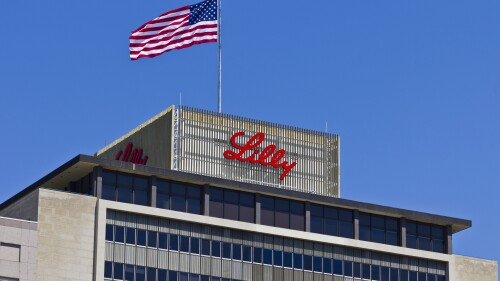 While Truist Securities analysts said the results from the ATTAIN-2 trial leave “room for competition,” they also pointed to a manufacturing advantage that could unlock a “double-digit billion dollar opportunity” for Eli Lilly.
 -
 Closely watched data from Eli Lilly and Viking Therapeutics this month have reignited the discussion around oral weight-loss drugs—and their ultimate place within the anti-obesity medication market.
 -
 The mad rush for safe and effective obesity drugs has winners—including Eli Lilly’s Zepbound and Novo Nordisk’s Wegovy—and losers. Here are five molecules that never made it to the market.
 -
 While it’s impossible to make apples-to-apples comparisons of the many obesity candidates with so many differences across clinical trials, we at BioSpace are giving it our best shot.
 -
 With results from highly anticipated trials of Eli Lilly’s orforglipron and Viking Therapeutics’ VK2735 “underwhelming” investors, William Blair’s Andy Hsieh predicts weight loss pills will play a bigger role in low- and middle-income countries than in the U.S.



POLICY

-
 The White House has denied reports that the government could soon ban COVID-19 vaccines, noting that in the absence of an official announcement, “any discussion about HHS policy should be dismissed as baseless speculation.”
 -
 Thousands of employees across the Department of Health and Human Services are set to lose their collective bargaining rights in a move that American Federation of Government Employees national president Everett Kelley called “illegal and immoral.”
 -
 There’s still much more to come from the White House on tariffs, but the European Union has now reached a trade agreement with the U.S.
 -
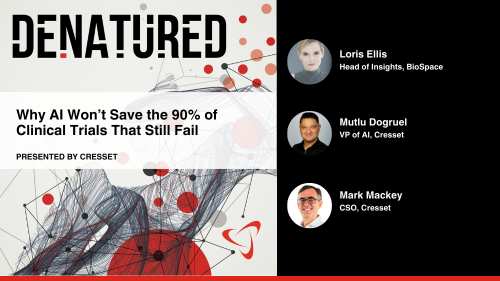 In this episode presented by Cresset, BioSpace’s head of insights Lori Ellis discusses clinical trial fail rates and AI’s potential to reduce preclinical costs with Mutlu Dogruel, VP of AI and Mark Mackey, CSO of Cresset.
 -
 Hundreds of HHS Staffers Accuse RFK Jr. of ‘Sowing Public Mistrust’ Against CDC After Shooting at HQIn an open letter, Health and Human Services employees asked the Secretary to stop and disavow the spread of health misinformation, particularly about vaccines, infectious diseases and federal health agencies.


Interviews can be difficult in any field, but especially in a competitive industry like the life sciences. Read on to discover the best way to answer salary interview questions in our guide.

Plus, what to do if your offer is paused and how to manage work anxiety.

If you overidentify with your job, there are ways to find self-worth outside of work, starting with using your transferable skills somewhere else.

Transitioning from team member to manager has its challenges, including managing ex-peers. There are a few ways you can make the change easier.

Learn how to discuss career gaps and how to be a great hiring manager and interviewer.

Dry promotions include new titles and responsibilities without higher pay. What should you do if you’re offered this type of promotion?
HOTBEDS


REPORTS

In this Employment Outlook report, BioSpace explores current workforce sentiment, job activity trends and the prospective job and hiring outlook for 2025, particularly as it compares to the previous year.


BioSpace’s third report on diversity, equity, inclusion and belonging in life sciences examines dramatic shifts in attitude around diversity initiatives.
CANCER

-
 According to reporting from multiple outlets, Richard Pazdur, head of the Oncology Center of Excellence at CDER, opposed the consensus opinion of CBER staff to approve the drug. Replimune’s stock has dropped precipitously since the rejection.
 -
 The company expects that the U.S. COVID-19 vaccination rate will be “maybe a couple of points lower” than the prior level of around 20% but that pricing and Comirnaty’s market share will hold steady.
 -
 The pivotal Phase II trial is testing Allogene’s CAR T candidate cemacabtagene ansegedleucel for large B-cell lymphoma. ALLO-647 was being used as a preparative lymphodepletion therapy.
 -
 After decades of limited progress—owing to the difficulty of treating the disease and resultant market risk—glioblastoma research is entering a new phase spurred by smarter trials, targeted funding and renewed interest from companies like Merck and Jazz Pharmaceuticals.
 -
Sarepta’s Elevidys is back on the market for ambulatory patients with Duchenne muscular dystrophy, Health Secretary Robert F. Kennedy Jr. reportedly plans to dissolve the U.S. Preventive Services Task Force and “fix” the vaccine injury compensation program, Merck, AstraZeneca and more report Q2 earnings, Novo names a new leader and Roche’s trontinemab impresses at AAIC25.


NEUROSCIENCE

-
 Waltham, Massachusetts–based Skyhawk Therapeutics has been collecting collaborations with larger companies in spades since launching in 2018.
 -
 Arguably the FDA’s most anticipated decision this month is for a subcutaneous induction formulation of Biogen and Eisai’s Alzheimer’s drug Leqembi, which, according to Eisai, could “help reduce the burden on healthcare professionals and patients.”
 -
 Praxis’ vormatrigine reduced seizures by 56.3%, an effect size that, according to analysts at Truist Securities, exceeds that of its closest competitors.
 -
 The FDA greenlit multiple new drugs this month and issued some notable label expansions, including for Eli Lilly’s Kisunla. Meanwhile, the regulator turned away a cell therapy for Duchenne muscular dystrophy and a gene therapy for the rare disease Sanfilippo syndrome.
 -
 Bristol Myers Squibb tested Cobenfy as an adjunctive treatment with atypical antipsychotics for schizophrenia in the Phase III ARISE study, which earlier this year failed to demonstrate significant symptom improvement.


CELL AND GENE THERAPY

-
CBER is unanimously against Elevdiys’ return to the market without additional evidence, according to media reports citing an anonymous senior FDA official. Given Elevidys’ full approval, however, experts told BioSpace this path would set up a length legal battle between the regulator and Sarepta Therapeutics.
-
 Second-quarter earnings come amid many high-level challenges for the biopharma industry. How will these five closely watched biotechs fare?
 -
 Dispatch seeks to address two main challenges of immunotherapies in solid tumors: the lack of a target and the immunosuppressive tumor environment.
 -
 The voluntary pauses follow two patient deaths associated with the Duchenne muscular dystrophy gene therapy.
 -
 Sarepta Therapeutics’ stock has dropped precipitously as questions swirl around the safety of its gene therapies. Meanwhile, the Duchenne patient community fears losing access to Elevidys while the regulator considers more drastic action.


