



Follow along as BioSpace tracks job cuts and restructuring initiatives.

Scribe Therapeutics’ pipeline is immature, with its lead program recently greenlit for first-in-human testing. The biotech is working on CRISPR-based therapies for cardiometabolic diseases.

BridgeBio’s Attruby preserves kidney function in patients with transthyretin amyloidosis cardiomyopathy, an effect that is “distinct” from other drugs in this space, according to Jefferies.

Many of the FDA’s decisions this quarter involve applications that have previously been delayed, declined or outright rejected, including one for an mRNA vaccine that became the center of controversy earlier this year.

AstraZeneca and CSPC Pharmaceutical Group have already inked two other agreements this year, including an obesity-focused deal in January and one focused on chronic diseases in June.

The mid-stage disappointment in Alzheimer’s disease delivers another blow to Neuphoria Therapeutics, which in November last year was forced to launch a strategic business review after a Phase 3 trial in social anxiety disorder failed.
FEATURED STORIES

Contingent value rights are rising in a down market, helping to close the gap between buyer and seller expectations in biotech transactions.

Executives at Novartis have not been shy about a desire to buy more companies, with cardiovascular a big focus. In total, the Swiss pharma has put $17.23 billion on the line in M&A and licensing deals this year.

Ori Biotech’s CEO said the prioritization of review by FDA, coupled to the impact of the technology, could shave up to three years off development timelines.

With two late-stage programs set to read out in the next 48 months, Biogen is translating its wealth of experience in multiple sclerosis to lupus—developing a pipeline BMO Capital Markets analysts called “thoughtful.”

New FDA expert panels, such as recent meetings on SSRI use during pregnancy and on hormone replacement therapy during menopause, are drawing criticism for being one-sided. One leader says such panels are designed to reach a specific conclusion.

Amid an unprecedented turnover in leadership at the FDA and mass layoffs of staff, communication has crumbled and uncertainty runs rampant, leaving small and medium biopharma companies without a clear path forward for their therapies.





UPCOMING EVENTS
-
Wednesday, July 8, 2026 9am–5pm CDT·Singapore, Singapore
-
Friday, July 10, 2026 12–2pm EDT·Cambridge, Mass
-
Developing Efficient Downstream Purification for Bispecific Antibodies: Challenges and BreakthroughsWednesday, July 22, 2026 11am EDT·Virtual
-
Wednesday, July 22, 2026 2–3pm EDT·Virtual
-
Thursday, July 23, 2026 9–10am PDT·Virtual
LATEST PODCASTS
The vibe at BIO 2026 in San Diego last week was overwhelmingly positive, with attendees observing noticeable changes at the FDA and an uptick in dealmaking and IPOs. Plus, a top medical journal this week retracted a pivotal study for Amgen’s rare disease drug Tavneos, which has been in the FDA’s crosshairs since January.
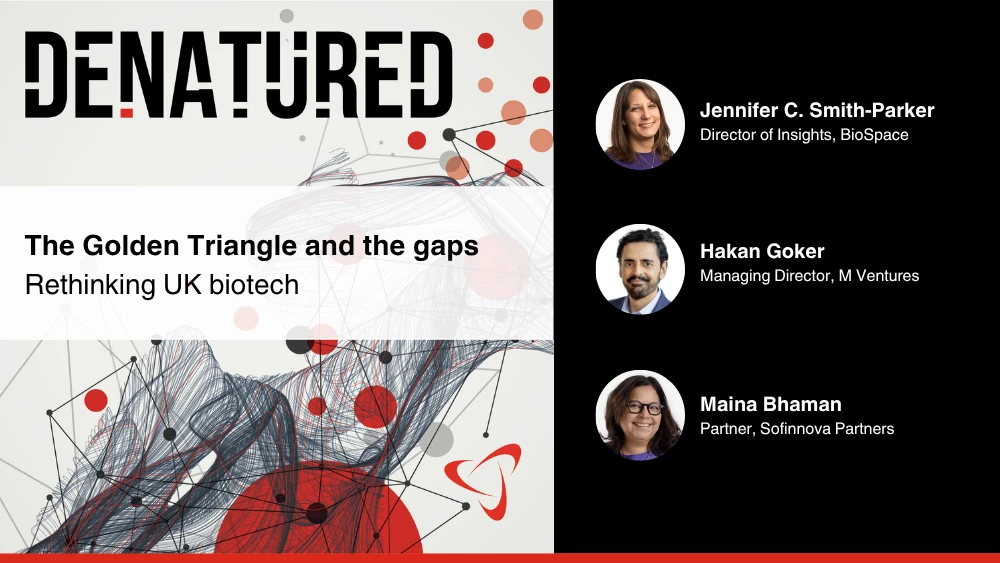
In this episode of Denatured, as part of our series on the European life sciences investment ecosystem, you’ll hear from Hakan Goker, managing director at M Ventures and Maina Bhaman, partner at Sofinnova Partners. We explore the UK biotech ecosystem: from the Golden Triangle’s evolving role to the challenges of scaling companies, unlocking pension capital and staying globally competitive.
AbbVie scooped up immunology player Apogee Therapeutics for nearly $11 billion in one of the year’s top deals to-date, while Sanofi made a big play to survive its upcoming Dupixent patent cliff; FDA uncertainty continues as the agency changes direction on gene therapies by uniQure and REGENXBIO; and Jef Akst and Annalee Armstrong report back from San Diego.





Subscribe to GenePool
Subscribe to BioSpace’s flagship publication including top headlines, special editions and life sciences’ most important breaking news
SPECIAL EDITIONS

Who is the highest paid CEO in all of pharma? In this special edition, BioSpace examines top paid CEOs and their pay packages.

BioSpace examines how the FDA approval of Eli Lilly’s oral obesity drug Foundayo has ignited a key race with Novo Nordisk.

Opportunities increased by the end of the first quarter, according to BioSpace data.
DEALS

-
 Ipsen is penning its second acquisition of the week, this time securing Memo Therapeutics and its midstage monoclonal antibody in a deal that could approach $800 million.
 -
 The vibe at BIO 2026 in San Diego last week was overwhelmingly positive, with attendees observing noticeable changes at the FDA and an uptick in dealmaking and IPOs. Plus, a top medical journal this week retracted a pivotal study for Amgen’s rare disease drug Tavneos, which has been in the FDA’s crosshairs since January.
 -
 The total of 52 mergers and acquisitions for the first half of 2026 reflects what analysts, industry watchers and executives are saying over and over: M&A is back.
 -
 Investment firm Deerfield Management is the latest to find a gem in China, which has been rising as a source of biotech innovation over the past few years.
 -
 Zymeworks announced a new plan to become a royalty-driven company last year, making Theravance a perfect match.



WEIGHT LOSS

-
 Eli Lilly’s weight-loss franchise—including the tirzepatide products Mounjaro and Zepbound, and the weight-loss pill Foundayo—is projected to account for nearly half of the total sales of the top 10 drugs in 2032.
 -
 Rhythm Pharmaceuticals’ Imcivree reduced fat—while boosting muscle—in patients with Prader-Willi syndrome.
 -
 After suffering the market withdrawal of its only product, Amylyx is gearing up for a pivotal Phase 3 readout in post-bariatric hypoglycemia. But the company’s driving ethos is still to treat “debilitating, devastating” neurodegenerative diseases, co-CEO Justin Klee told BioSpace.
 -
 Novo Nordisk said that the information affected by the breach shouldn’t allow third parties to “identify participants in our clinical trials” despite “unauthorized access” to patients’ personal data.
 -
Eli Lilly and obesity rival Novo Nordisk stole the show at the American Diabetes Association conference, though plenty of other companies also had data to show for their own weight loss assets; GSK strikes the biggest traditional pharma buyout of 2026; and FDA initiatives still lack clarity.


POLICY

-
 Congressional letters sent to the CEOs of Eli Lilly, Pfizer, Merck, BMS and AbbVie this week voicing concerns about the pharmas’ clinical trials in China highlight an ongoing discrepancy in how government and industry think about the rise of the Asian country’s biotech industry.
 -
 Teams at facilities being developed by Eli Lilly, Regeneron and other companies will receive early technical guidance and additional perks from the FDA.
 -
 Policymaking at FDA has been anything but business as usual under the Trump administration, but former regulators cite the agency’s new investigational new drug pilot program as a sign of normalcy.
 -
 A few short days after announcing an FDA pivot on a separate asset, REGENXBIO is planning to test the agency’s apparent newfound rare disease outlook on another late-stage gene therapy.
 -
 Former FDA, CDC and NIH leaders convene at the BIO International Convention to discuss the dismantling of the Department of Health and Human Services under the Trump administration—and where we go from here.


Even something as simple as “Tell me about yourself” can trip up biopharma professionals during job interviews. Two recruiting experts discuss what candidates should and shouldn’t say when answering five specific questions.

Rather than getting hung up on what to call DEI in the workplace, leaders should take three specific actions to help their employees embrace and engage with it. Companies and the patients they serve will benefit.

Three experts discuss whether biotech and pharma professionals should try to convince employers to adjust employment offers, mistakes people make during the process and tips for getting it right.

The people most trusted to deliver are not always the ones invited to shape direction. Executive coach Angela Justice examines why the habits that build a career can eventually limit advancement.

Scientists who focus only on generating data risk missing their role in shaping strategy and driving innovation.

Panel interviews can play a major role in getting jobs. Two career coaches discuss what to do before and during the interview, including identifying how to differentiate yourself, engaging in true conversations and not overlooking a key panel member.
HOTBEDS


REPORTS

In this Employment Outlook report, BioSpace explores current workforce sentiment, job activity trends and the prospective job and hiring outlook for 2025, particularly as it compares to the previous year.


BioSpace’s third report on diversity, equity, inclusion and belonging in life sciences examines dramatic shifts in attitude around diversity initiatives.
CANCER

-
 The star of Ipsen’s acquisition is an MDM2 blocker being proposed as an add-on therapy to ruxolitinib for myelofibrosis. The drug could be available to patients “as early as 2028,” according to Ipsen CEO David Loew.
 -
 Recent approvals for Corcept Therapeutics and Merck have injected momentum into the space, where GSK, Allarity Therapeutics, OSE Immunotherapies and others are advancing their own candidates.
 -
 Replimune’s resubmission for RP1 for melanoma comes after the departures of FDA leaders in place at the time of the drug’s first two rejections. The FDA expects to hold an advisory committee meeting in late July.
 -
 Encouraging data for combination regimens of Revolution Medicines’ zoldonrasib “reinforce the path to leadership in PDAC” for the biotech, according to Truist Securities.
 -
 Gilead’s Trodelvy can now be used as a monotherapy and in combination with Merck’s Keytruda to treat certain patients with triple-negative breast cancer.


NEUROSCIENCE

-
 Despite the late-stage fail, Vistagen will nevertheless continue to push its drug candidate forward and meet with the FDA to align on a potential registrational path.
 -
 The delay is largely “benign” for Praxis Precision Medicines, according to Jefferies, which emphasized that the FDA did not flag safety or manufacturing issues.
 -
 A recent FDA reversal sparked new hope for patients with Huntington’s disease. Flying under the radar, Skyhawk Therapeutics revealed 12-month functional data from a midstage trial of its own candidate showing improvements on a key disease measurement scale.
 -
 The positive ADHD data for Otsuka Pharmaceutical’s centanafadine is good news in what has of late been a mixed bag for the neuropsychiatric space.
 -
 Results for Definium Therapeutics psychedelic candidate for major depressive disorder “exceeded expectations,” according to Stifel, while Jefferies called the efficacy data “profound.”


CELL AND GENE THERAPY

-
 If cell and gene therapy makers are going to achieve their mission to improve patients’ lives, the industry must come together to share information across stakeholders, from regulators to manufacturers to payers.
 -
 Be Biopharma’s terminated trial is the latest setback in the hemophilia space, where companies like Pfizer and BioMarin have opted to pull their respective products from the market after weak traction.
 -
 Instead of using viral vectors, SonoThera’s genetic medicines are delivered through an ultrasound-mediated technology that could help sidestep key safety issues with conventional delivery methods.
 -
 All six non-Hodgkin lymphoma patients on Legend Biotech’s CAR T therapy responded to treatment—findings that could make the biotech an attractive takeover target, according to analysts at Oppenheimer.
 -
 For Peter Pitts, a former associate commissioner at the FDA, the appointment to the board of BrainStorm Cell Therapeutics is an opportunity to fulfill a promise he made long ago to a patient with ALS.


