


Ionis is planning a supplemental submission by the end of the year to expand Tryngolza into severe hypertriglyceridemia. If granted, William Blair expects the antisense drug to be “transformational” for this indication.

Eli Lilly has been on a dealmaking spree this year, with a few deals worth $1 billion or more. Aside from SangeneBio, these include SiteOne, Verve and Scorpion.

Multiple analyst firms were impressed by the Phase III data, which showed that Merck’s oral PCSK9 inhibitor can lower low-density lipoprotein cholesterol by more than 55% after 24 weeks.

The deal is done. What happens next for Pfizer and Metsera—and Novo?

After a bidding war erupted between Pfizer and Novo Nordisk over the fledgling obesity drugmaker, Metsera sided with its original suitor in a final agreement announced late Friday evening.

During a press conference to announce a drug price deal for GLP-1s, President Donald Trump asked for more details about the ongoing bidding war between Novo Nordisk and Pfizer over obesity biotech Metsera.
FEATURED STORIES

In the wake of multiple patient deaths from liver injuries related to Sarepta Therapeutics’ AAV gene therapy platform, some in the sector are looking for ways to improve the current technology, while others are eager to move on.

The recent announcement of RFK Jr.’s termination of mRNA vaccine contracts is the latest effort to undermine this promising technology at the federal level. Pharmaceutical companies and private investors must fill the gap and ensure that research into this critical resource continues.

Here are five oral obesity candidates that, according to Mizuho’s Graig Suvannavejh, could change the weight loss game.

Arguably the FDA’s most anticipated decision this month is for a subcutaneous induction formulation of Biogen and Eisai’s Alzheimer’s drug Leqembi, which, according to Eisai, could “help reduce the burden on healthcare professionals and patients.”

Out-licensing drugs to multinational corporations is a natural step for Chinese biotechs, but the recent rise in deals is only scratching at the surface of partnership-ready biotechs in the region.

While a substantial portion of pipeline assets are externally sourced, many Big Pharmas are tapping into incubators and venture funds to uncover cutting-edge scientific trends, determine their future focus points and even carve out a niche in an emerging geographical hotspot.


LATEST PODCASTS
As FDA seeks to rehire some fired employees, Donald Trump threatens to enact tariffs on pharma companies unless they reshore manufacturing; another lawsuit hits the complex GLP-1 compounding space as Eli Lilly offers expanded Zepbound options; and struggling gene therapy biotech bluebird bio goes private in an attempt to stay solvent.

At the 2025 National Biotechnology Conference, gene therapies, bispecific antibodies and other novel modalities—relative newcomers to medicine—will be much discussed. In this curtain raiser, BioSpace speaks with conference chair Prathap Nagaraja Shastri of J&J about these highly anticipated topics.
The FDA is mired in uncertainty with some staffers losing their jobs over the weekend and more potentially to come, vaccines and psychedelic therapies could be facing very different futures under newly confirmed HHS Secretary Robert F. Kennedy, Jr., Moderna continues its downward revenue slide and Merck, Regeneron, BMS and more face strong patent headwinds.
Job Trends

Looking for quality assurance jobs in the biopharma industry? Check out these five top companies hiring life sciences professionals like you.
Subscribe to GenePool
Subscribe to BioSpace’s flagship publication including top headlines, special editions and life sciences’ most important breaking news
SPECIAL EDITIONS

In this deep dive, BioSpace investigates China’s rise as a biotech powerhouse.

In this deep dive, BioSpace explores the next big thing in obesity.

BioSpace did a deep dive into biopharma female executives who navigated difficult markets to lead their companies to high-value exits.
DEALS

-
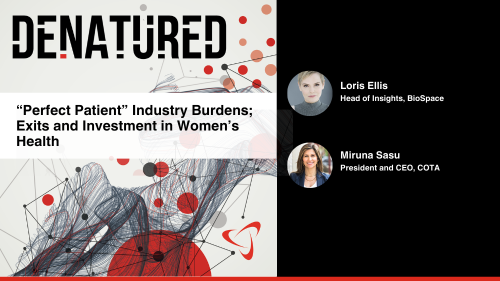 In this episode of Denatured, BioSpace’s Head of Insights Lori Ellis and Miruna Sasu, CEO of COTA, discuss the challenges of inclusion and exclusion criteria of clinical trial patients, and reflect on current investment approaches around women’s health.
 -
 Roche and Zealand plan to study petrelintide as a monotherapy and in combination with CT-388, a dual agonist of the GLP-1 and GIP receptors that Roche picked up in its recent acquisition of Carmot Therapeutics.
 -
 Analysts acknowledged the long-term manufacturing deal could dull Viking’s takeout prospects but hailed it as a smart move to ensure supply.
 -
 While Congress is renewing the priority review voucher program for rare pediatric diseases, the FDA should be required to keep public records of the passes changing hands, too.
 -
 A new Pitchbook report found $4.3 billion in funding to women-fronted biotech companies across 121 deals. The increase comes as sociopolitical headwinds slam into initiatives to support women and minorities.


WEIGHT LOSS

-
 In addition to eliciting greater weight loss than Novo Nordisk’s Wegovy, Eli Lilly’s Zepbound does not come at the expense of safety, according to newly released comprehensive tolerability data—findings that Leerink analysts say confirm the GLP-1 drug’s edge in the closely watched market race.
 -
 Following a similar decision in case the trade group Outsourcing Facilities Association brought against FDA over its decision to declare the end of the shortage of Novo Nordisk’s semaglutide, Judge Mark Pittman agreed that Eli Lilly’s tirzepatide is in sufficient supply, meaning compounding pharmacies can no longer sell the lucrative weight loss drugs.
 -
 The FDA in February formally declared the end of the semaglutide shortage, which Novo Nordisk expects will help improve the market position of Wegovy. But Eli Lilly’s Zepbound is quickly gaining ground, with sales just $300 million behind Wegovy in Q1.
 -
 A new executive order aims to smooth the path for getting U.S. manufacturing facilities up and running; HHS says it will require placebo-controlled trials for all vaccine approvals; tariff threats hit BioNTech; Novo Nordisk’s FDA application for an oral version of Wegovy is accepted; and more.
 -
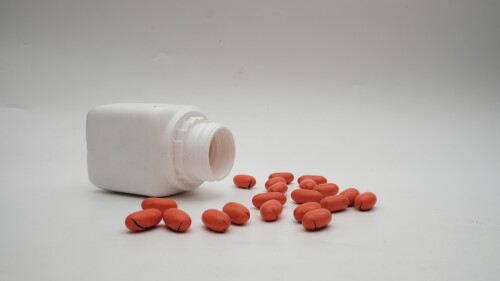 The FDA accepted Novo Nordisk’s NDA for an oral formulation of Wegovy. The agency is expected to release its verdict on the drug in the fourth quarter of this year.



POLICY

-
 Despite the FDA commissioner’s promises of partnership and collaboration, personnel changes and continued federal cuts create uncertainty for an industry already struggling with nearly half a decade of investment scarcity.
-
 A journey through the FDA’s newly released complete response letters gave glimpses into the journeys to market for Eli Lilly’s Alzheimer’s antibody Kisunla, Sarepta’s DMD gene therapy Vyondys 53 and Gilead’s HIV drug Sunlenca.
 -
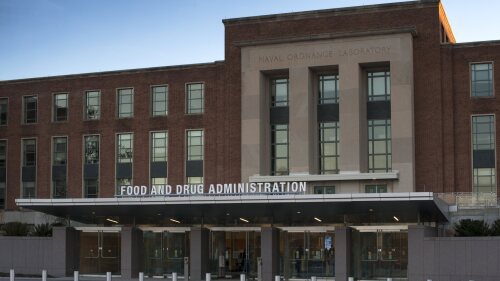 The trove of more than 200 letters is part of a pledge of transparency from the agency, with the intention to increase public insight into the reasons new drug and biologics applications got rejected.
 -
 The move has sparked concern that the U.S. Preventive Services Task Force could soon be dismissed after a decision by the high court affirmed Health Secretary Robert F. Kennedy Jr.'s power to remove its members at will.
 -
 The high court’s order blocks a May decision by a California court that temporarily blocked the efforts of Health Secretary Robert F. Kennedy Jr. to drastically reduce the size of his agency’s workforce.


Job hopping– frequently changing jobs, typically within a short period of time – gained popularity with the onset of COVID-19 and is still popular now. Here’s what recruiters think about job hopping.

Can ChatGPT help you find a new job in an industry as complex as the life sciences? BioSpace’s career editor decided to put it to the test - here’s what she discovered.

Here are some tips to help you nail virtual interviews and networking events so you can be prepared for BioSpace’s Virtual Talent Connect on March 9.

Find out what it takes to become a successful pharma sales rep and discover helpful career advancement tips for pharmaceutical sales representatives.

A variation of rage quitting, rage applying is a method of job searching that occurs when someone applies for many new roles while still employed in their current position.

Some consider a candidate’s alma mater to be the most important factor in the hiring process. But how much does a life science candidate’s alma mater really matter? In short–it depends.
HOTBEDS


REPORTS

In this Employment Outlook report, BioSpace explores current workforce sentiment, job activity trends and the prospective job and hiring outlook for 2025, particularly as it compares to the previous year.


BioSpace’s third report on diversity, equity, inclusion and belonging in life sciences examines dramatic shifts in attitude around diversity initiatives.
CANCER

-
 Here’s how companies can ensure they’re in compliance with new requirements that go into effect in August.
 -
 The medium-sized biopharma is showing off new results from dordaviprone and Zepzelca, both of which were acquired through Jazz Pharmaceuticals’ dealmaking over the last five years.
 -
 Despite mixed results, analysts maintained faith in ivonescimab’s ability to cross over between Eastern and Western patient populations.
 -
 At the heart of the deal is an anti-Claudin18.2 antibody-drug conjugate being developed for solid tumors, including gastric cancer and pancreatic cancer.
 -
 Patritumab deruxtecan was unable to significantly improve overall survival in patients with locally advanced or metastatic non-small cell lung cancer with EGFR mutations.


NEUROSCIENCE

-
 Nearly two years in with Zurzuvae, Biogen tackles an ‘all of the above market’ to find patients and battle stigma in postpartum depression.
 -
 In addition to a $140 million series D, GRIN Therapeutics has signed a global licensing deal for the epilepsy disorder drug radiprodil worth $50 million upfront.
 -
 With $90 million to start, Syndeio has a lead asset in Phase II clinical trials for major depressive disorder, with plans to soon launch a biomarker trial in Alzheimer’s disease.
 -
 The report takes from HHS Secretary Robert F. Kennedy Jr’s playbook, calling out rising autism rates, the vaccine schedule and over medication of children as reasons for chronic diseases.
 -
 The deal helps revitalize the TREM2 target after the high-profile failure of AbbVie and Alector’s candidate last year.


CELL AND GENE THERAPY

-
 As tariffs, HHS workforce cuts and the ouster of CBER Director Peter Marks threaten the “lifeblood” of the cell and gene therapy space, experts express wariness over the unknowns and optimism that Marks’ legacy will carry on.
 -
 The cell and gene therapy company is cutting 47 employees and its entire lupus program to focus resources on two CAR Ts. The move follows a reconfiguration last year to move into immunology.
 -
 Paul Stoffels left his perch as J&J’s chief scientific officer in 2022 to replace Galapagos’ founding CEO Onno van de Stolpe, inheriting a company that had suffered a series of clinical failures since its 1999 creation.
 -
 Despite making an unsolicited bid for gene therapy maker bluebird bio, Ayrmid failed to deliver a binding offer after weeks of due diligence. Bluebird’s board recommended that it go with Carlyle and SK Capital Partner’s original offer to take the company private for $30 million.
 -
 Stifel analysts said that Lexeo’s data showing reduced size and thickness of the heart’s left ventricle are “supportive of a drug effect” for the company’s gene therapy in Friedreich’s ataxia cardiomyopathy.


