


Regeneron’s antibody duos significantly lowered eye itching and redness, as well as pin prick reactivity, in people with cat and birch allergies. Still, BMO Capital Markets expressed uncertainty about the assets’ “commercial potential in a highly generic market.”

The 2025 Bioprocessing Summit revealed knowledge gaps and changing mindsets. As some companies look towards the future, others struggle with the present and past.

Presenting at the World Sleep Congress 2025, the Dublin-based company’s Phase II study bested Takeda drug in both efficacy and safety.

While a win for consumers, the regulatory action did nothing to stem the manufacture of compounded versions of the popular obesity drugs that are made by Novo Nordisk and Eli Lilly. In fact, the FDA seems to be signaling that “some level of compounded product is acceptable,” according to BMO Capital Markets.

Shares of Rapport Therapeutics popped Monday morning after Phase IIa data for RAP-219 exceeded analyst and Wall Street expectations, reducing seizures by almost 78% in patients with drug-resistant focal onset seizures.

Ivonescimab elicited better overall survival in Asian patients with non-small cell lung cancer than in those from North America and European countries, in Western countries narrowly missing the statistical significance threshold the FDA is seeking.
FEATURED STORIES

BMS’ KarXT targets muscarinic receptors and “is at least 2-3 years ahead of the competition” including AbbVie and Neurocrine Biosciences, Truist Securities wrote in a note to investors.

Sen. Bernie Sanders’ aggressive targeting of Danish drugmaker Novo Nordisk’s Ozempic and Wegovy pricing, and not Eli Lilly’s rival drugs, is not fair.

Many Big Pharma companies including Pfizer, Merck and BMS make the drugs that some researchers expect to be selected by CMS for next year’s Medicare price negotiations alongside analysts’ top pick, Novo Nordisk’s Ozempic.
Novo Nordisk and Eli Lilly are expected to rule the obesity market for a few more years without much challenge. To ensure they stay there as competition enters, the companies are spending billions in licensing and M&A deals.

Clinical trial results shared by Boehringer Ingelheim and Insilico Medicine showed improvement in idiopathic pulmonary fibrosis, an intractable lung disease for which current treatment options fail to stop progression, but the data were limited, leaving experts wanting.

Before companies and investors look towards the future, they must first understand the opportunities and challenges AI presents to them. From the benefits included in advancing processes to cybersecurity hazards, AI innovation is a balanced scale of oppportunities and risks.


LATEST PODCASTS

In this episode of Denatured, Jennifer Smith-Parker speaks to Kenneth Galbraith, CEO of Zymeworks and Josh Smiley, president and COO of Zai Lab, about how renewed confidence is driving biotech entering 2026.
Eli Lilly’s retatrutide exceeds expectations in Phase III, capping off a sparkling 2025 for the obesity titan; an internal FDA safety review finds no confirmed pediatric deaths caused by COVID-19 vaccines, and Commissioner Marty Makary says no black box warning will be attached to the shots; and BioSpace looks at six biotechs that could be pharma’s next buy.

In this episode of Denatured presented by AnaptysBio, Jennifer Smith-Parker speaks to Dr. Joe Murray, Mayo Clinic; Marilyn Geller, the Celiac Disease Foundation; and Dr. Paul Lizzul, AnaptysBio, about the challenges and opportunities facing celiac disease treatment.
Job Trends
Bristol Myers Squibb (NYSE: BMY) today announced that the company will participate in the TD Cowen 44th Annual Health Care Conference in Boston, Massachusetts, on Monday, March 4, 2024.
Subscribe to GenePool
Subscribe to BioSpace’s flagship publication including top headlines, special editions and life sciences’ most important breaking news
SPECIAL EDITIONS

In this deep dive, BioSpace investigates China’s rise as a biotech powerhouse.

In this deep dive, BioSpace explores the next big thing in obesity.

BioSpace did a deep dive into biopharma female executives who navigated difficult markets to lead their companies to high-value exits.
DEALS

-
 The buy brings three small molecules in preclinical development for Parkinson’s disease, amyotrophic lateral sclerosis and lysosomal storage diseases into Merck’s pipeline.
 -
 Armed with a pipeline of obesity and diabetes hopefuls, Carmot Therapeutics joins the small group of biotechs to attempt a Nasdaq debut this year.
 -
 Successful drugs from Novo Nordisk and Eli Lilly are just the beginning of what one analyst says could be “the largest therapeutic class of drugs that the biopharma industry has ever seen.”
 -
 The Japanese biotechnology and food company has bought into the gene therapy space with its $620 million acquisition of Ohio-based CDMO and clinical-stage biotech Forge Biologics.
 -
 The cell therapy-focused biotech will use most of the net proceeds from its initial public offering to fund Phase II clinical trials for its lead program, a novel CAR T-cell candidate.


WEIGHT LOSS

-
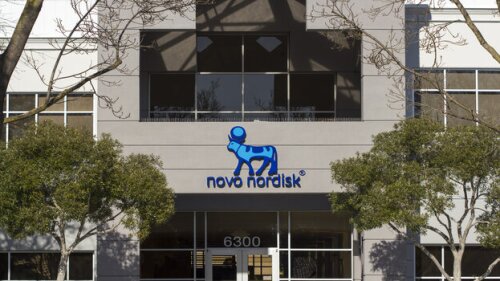 Novo Nordisk on Thursday reported a jump in first-quarter 2024 revenue, driven by a more than 100% increase in sales of weight-loss drug Wegovy and the strong performance of type 2 diabetes medication Ozempic.
 -
 In a bid to improve competition in the industry, the U.S. Federal Trade Commission is challenging the patents of 20 different pharmaceutical products, disputing the accuracy and relevance of their patents.
 -
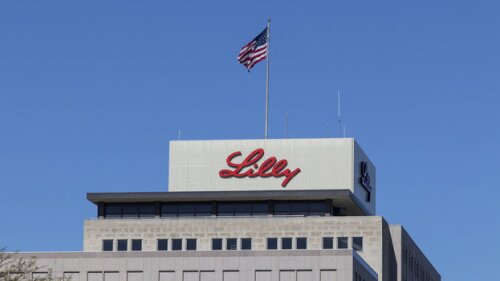 Thanks to strong sales of its blockbuster drugs Mounjaro and Zepbound, Eli Lilly on Tuesday reported nearly $8.77 billion in revenue in the first quarter of 2024, while raising its full-year revenue guidance by $2 billion.
 -
 After a record low in 2022, the pharma industry in 2023 saw a surprise rebound in productivity following one of its slowest years on record, according to a report from audit firm Deloitte.
 -
 With GLP-1 agonists slated to become the best-selling drugs in 2024, the biopharma industry is already pivoting to explore treatments that preserve muscle mass as patients shed pounds.


POLICY
-
 Well-financed startup Tome is winding down operations just as two new companies, Borealis Biosciences and GondolaBio, are launching. Meanwhile, in the midst of already tense relations with China, House lawmakers raise the alarm about U.S. companies working with the country’s military on trials.
 -
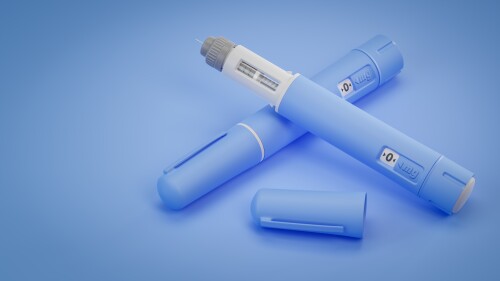 The number of patients who will be eligible for Novo Nordisk’s blockbuster GLP-1 under new Medicare Part D plan guidelines will vary depending on how cardiovascular disease is defined, according to researchers.
 -
 Johnson & Johnson’s proposed changes to the hospital drug discount program are inconsistent with the federal statute, according to the Health Resources and Services Administration.
 -
 Project 2025, a blueprint for a potential second Trump term that highlights the IRA as a potential target, took a starring role in this week’s Democratic National Convention.
 -
 In a letter to FDA Commissioner Robert Califf, a House committee flagged several U.S. companies—including Eli Lilly and Pfizer—that have allegedly worked with the People’s Liberation Army on clinical trials in Xinjiang, raising ethical and intellectual property concerns.


Curious to know how you can tailor your resume? This blog post will give you some tips on tailoring your resume so it stands out from the rest of the pile!

Here are the keys to a smooth long distance job search. Follow these simple guidelines to avoid many of the stresses of job hunting from a distance.

Are you worried about your first phone interview? Don’t worry, everyone gets through that phase. Follow these phone interview tips to nail your telephonic interview.

Why should you research prospective employers as you approach your life sciences job search?

These words are used frequently for a reason. But what are companies really getting at with these job description buzz words?

You made it through the hardest parts of the job-seeking process — you crafted an excellent application, thoroughly researched the company and aced the interviews. Now you just need to decide whether to accept the offer extended to you.
HOTBEDS


REPORTS

In this Employment Outlook report, BioSpace explores current workforce sentiment, job activity trends and the prospective job and hiring outlook for 2025, particularly as it compares to the previous year.


BioSpace’s third report on diversity, equity, inclusion and belonging in life sciences examines dramatic shifts in attitude around diversity initiatives.
CANCER

-
 As part of a pipeline realignment, Bristol Myers Squibb is returning the rights to Agenus for its proprietary TIGIT bispecific antibody program and terminating their 2021 license, development and commercialization agreement.
 -
 BioNTech on Monday reported nearly $885 million in losses in the second quarter of 2024, compared to $208.5 million during the same period last year.
 -
 Despite having an impressive roster of high-profile supporters, including AbbVie, BMS, J&J, Novartis and Pfizer, PARP-focused Ribon has called it quits after nearly a decade in business.
 -
 Approved under the regulator’s accelerated pathway, Tecelra is also the first new synovial sarcoma therapy in more than a decade, according to Adaptimmune Therapeutics.
 -
 In pursuit of Merck’s blockbuster Keytruda, GSK’s Jemperli scored its own broad FDA label expansion, allowing its use in first-line endometrial cancer regardless of biomarker status.


NEUROSCIENCE

-
 Following cases of convulsions in rabbits in a preclinical study, the FDA has placed a clinical hold on Neumora Therapeutics’ Phase I schizophrenia drug candidate NMRA-266.
 -
 Experts are hopeful that objective biomarker measures for amyotrophic lateral sclerosis, such as the ones being developed by EverythingALS, will lead to more targeted, effective treatments.
 -
 For the second time in as many years, the FDA has hit Supernus Pharmaceuticals with a Complete Response Letter, citing undisclosed quality and master filing issues for the drug-device combination.
 -
 Fresh off of its $14 billion acquisition of Karuna Therapeutics, Bristol Myers Squibb on Saturday reported promising late-stage data for Karuna’s antipsychotic KarXT, which elicited significant symptomatic improvement in schizophrenia symptoms.
 -
 Following disappointing late-stage data, Amylyx on Thursday said it is withdrawing the company’s amyotrophic lateral sclerosis drug Relyvrio from the U.S. and Canadian markets and cutting its workforce by approximately 70%.


