
News
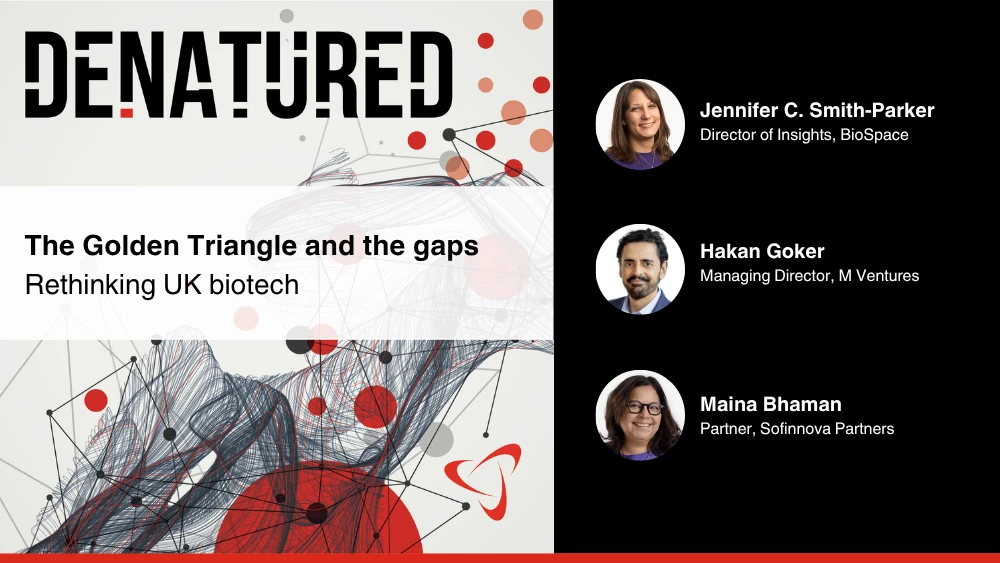
In this episode of Denatured, as part of our series on the European life sciences investment ecosystem, you’ll hear from Hakan Goker, managing director at M Ventures and Maina Bhaman, partner at Sofinnova Partners. We explore the UK biotech ecosystem: from the Golden Triangle’s evolving role to the challenges of scaling companies, unlocking pension capital and staying globally competitive.


FEATURED STORIES

The FDA has so far secured 600 new hires and is looking for 1,600 more as interim leadership at the agency aims to rebuild the workforce and morale after more than a year of intense attrition.

Speaking to media on Tuesday, BIO CEO John Crowley complimented China’s rise as a biotech powerhouse but said U.S. policy needs to protect and maintain America’s lead.

While merger and acquisition activity has been robust of late, frequent changes in guidance and leadership at the regulator add risk to any transaction.



FROM OUR EDITORS
Read our takes on the biggest stories happening in the industry.

If cell and gene therapy makers are going to achieve their mission to improve patients’ lives, the industry must come together to share information across stakeholders, from regulators to manufacturers to payers.
THE LATEST

In this episode of Denatured, you’ll listen to Oxana Iliach, senior director of regulatory strategy at Certara and Vera Pomerantseva, director of product management for risk-based quality management at eClinical Solutions. We speak about how the FDA’s latest decision to have one, rather than two pivotal studies, for new drug applications raises the bar for data collection and risk-based management.

The Los Angeles region is one of California’s fastest-growing life sciences hubs, according to a California Life Sciences sector report. The CEO of BioscienceLA discusses the market’s strengths, challenges and where it might be five years from now.

Last month, for the first time in nearly four years, average job postings live on BioSpace did not decline year over year. In another encouraging sign, the number of biopharmas letting employees go fell.

Looking for a biopharma job in Cambridge? Check out the BioSpace list of six companies hiring life sciences professionals like you.

Orforglipron, Eli Lilly’s oral obesity drug, is under FDA review with a decision expected in April. The pharma has also filed for marketing authorization for the pill in China.

Among the unreported adverse events potentially linked to Ozempic are two deaths and one case of “completed suicide,” according to an FDA inspection report.

Capricor Therapeutics’ deramiocel was rejected in July 2025, potentially caught between Nicole Verdun, a former top biologics regulator at the FDA, and outgoing Vinay Prasad, director of the Center for Biologics Evaluation and Research.

The U.S. Senate has a plan to improve drug development for rare disease patients. The exit of controversial CBER chief Vinay Prasad will help clear the path.

Rare disease biotech stocks pop on the news that Vinay Prasad, the FDA’s chief biologics regulator, will depart the FDA at the end of April; Sen. Ron Johnson launches an investigation into recent rare disease drug rejections; and Roche and Zealand’s amylin analog fails to match investor expectations—and Eli Lilly’s rival candidate—in a mid-stage trial.

Whether happening in public or private, biopharma M&A is fiercer than ever. Experts point to patent pressures, herd mentality and a declining stock of available biotechs with mature assets.