
Late-breaking data from global pivotal study achieved high rates of freedom from major adverse cardiac events and procedural success in patients with severe coronary artery disease
MARLBOROUGH, Mass. and PARIS, May 19, 2026 /PRNewswire/ -- Boston Scientific Corporation (NYSE: BSX) today announced positive results from the pivotal FRACTURE Investigational Device Exemption (IDE) trial evaluating the use of the SEISMIQ™ 4CE Coronary Intravascular Lithotripsy Catheter* to treat patients with severely calcified coronary artery disease (CAD). The study met its primary safety and effectiveness endpoints, demonstrating high rates of freedom from major adverse cardiac events (MACE) at 30 days as well as procedural success. Findings from the trial were presented in a late-breaking trial session at the EuroPCR 2026 congress.
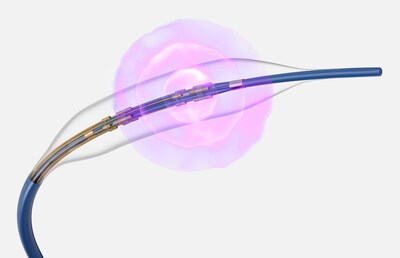
Moderate-to-severe coronary calcification – a hardened build-up of calcium that can narrow coronary arteries – is present in nearly one-third of patients undergoing percutaneous coronary intervention (PCI) to treat CAD, presenting a major challenge that can complicate stent delivery and expansion and increase the risk of procedural complications such as vessel dissection.1 The SEISMIQ 4CE catheter is an intravascular lithotripsy (IVL) device that uses laser energy within a balloon catheter to generate acoustic pressure waves that fracture calcium. The system's visible, directional emitters are designed to provide controlled, consistent energy delivery at low pressure to treat the calcium and prepare the vessel for stent implantation and maximum stent expansion to restore blood flow.
"As the prevalence of coronary artery disease and adoption of IVL therapy to address it continue to grow rapidly, data from this important trial will help advance our understanding of treatment for severely diseased, previously untreated coronary lesions and could help broaden the scope of coronary IVL treatment options over time," said Dr. Margaret McEntegart, M.D., PhD, co-principal investigator of the FRACTURE trial and director of Complex PCI and CTO Programs at Columbia University Irving Medical Center, New York.** "Notably, stents were successfully delivered in all patients treated, no deaths occurred and only one patient underwent target vessel revascularization at the 30-day follow up, underscoring reassuring safety data for the SEISMIQ 4CE device."
The prospective, non-randomized, single-arm FRACTURE trial enrolled 420 patients with severe CAD. Findings from the trial met all pre-specified safety and effectiveness endpoints. Of note:
- The primary safety endpoint was met with a 93.3% rate of freedom from MACE, including cardiovascular death, myocardial infarction or target vessel revascularization at 30 days, exceeding a prespecified performance goal of 86.2% (p < 0.0001).
- A 93.7% rate of procedural success met the primary effectiveness endpoint, defined as successful stent delivery with a final residual stenosis of less than 50% and freedom from in-hospital MACE, exceeding a prespecified performance goal of 85.8% (p 0.0001).
- Treatment with the SEISMIQ 4CE device resulted in 100% successful stent delivery and final in-stent residual stenosis less than 50%.
- A sub-analysis of the data found a 94.2% average stent expansion rate at the most calcified segment of the artery, with favorable stent sizing that exceeded clinically significant thresholds, helping to create space within the vessel and support optimal stent placement.2
"Representing one of the fastest growing medical device segments in both peripheral and coronary care, IVL therapy can help address a critical level of coronary artery narrowing or blockage that poses a threat of heart attack, heart failure and other serious complications," said Janar Sathananthan, M.D., chief medical officer, Interventional Cardiology Therapies, Boston Scientific. "The data presented today serves as pivotal evidence to support our regulatory submission for the SEISMIQ 4CE catheter, which may provide physicians a new, differentiated coronary IVL device option to address severe calcium during the lesion prep phase of complex PCI procedures, potentially improving outcomes for these high-risk patients."
The trial enrolled patients who will be followed for two years after their procedure across 46 sites in the United States and Europe. The investigational SEISMIQ 4CE Coronary IVL Catheter is compatible with the same console used in the SEISMIQ™ IVL System with the SEISMIQ™ IVL Peripheral Catheter, which received U.S. Food and Drug Administration (FDA) clearance in 2025 for the treatment of patients with severely calcified peripheral artery disease.
For more information on the FRACTURE trial, visit bostonscientific.com/fracture.
About Boston Scientific
Boston Scientific transforms lives through innovative medical technologies that improve the health of patients around the world. As a global medical technology leader for more than 45 years, we advance science for life by providing a broad range of high-performance solutions that address unmet patient needs and reduce the cost of healthcare. Our portfolio of devices and therapies helps physicians diagnose and treat complex cardiovascular, respiratory, digestive, oncological, neurological and urological diseases and conditions. Learn more at www.bostonscientific.com and follow us on LinkedIn.
Cautionary Statement Regarding Forward-Looking Statements
This press release contains forward-looking statements within the meaning of Section 27A of the Securities Act of 1933 and Section 21E of the Securities Exchange Act of 1934. Forward-looking statements may be identified by words like "anticipate," "expect," "project," "believe," "plan," "estimate," "intend" and similar words. These forward-looking statements are based on our beliefs, assumptions and estimates using information available to us at the time and are not intended to be guarantees of future events or performance. These forward-looking statements include, among other things, statements regarding our business plans, product approvals and launches, product performance and impact, and clinical trials. If our underlying assumptions turn out to be incorrect, or if certain risks or uncertainties materialize, actual results could vary materially from the expectations and projections expressed or implied by our forward-looking statements. These factors, in some cases, have affected and in the future (together with other factors) could affect our ability to implement our business strategy and may cause actual results to differ materially from those contemplated by the statements expressed in this press release. As a result, readers are cautioned not to place undue reliance on any of our forward-looking statements.
Factors that may cause such differences include, among other things: economic conditions, including the impact of foreign currency fluctuations; future U.S. and global political, competitive, reimbursement and regulatory conditions, including changing trade and tariff policies; geopolitical events, conflicts and tensions; manufacturing, distribution and supply chain disruptions and cost increases; disruptions caused by cybersecurity events; disruptions caused by public health emergencies or extreme weather or other climate change-related events; labor shortages and increases in labor costs; variations in outcomes of ongoing and future clinical trials and market studies; new product introductions; expected procedural volumes; the closing and integration of acquisitions; demographic trends; intellectual property; litigation; financial market conditions; the execution and effect of our business strategy, including our cost-savings and growth initiatives; and future business decisions made by us and our competitors. All of these factors are difficult or impossible to predict accurately and many of them are beyond our control. For a further list and description of these and other important risks and uncertainties that may affect our future operations, see Part I, Item 1A – Risk Factors in our most recent Annual Report on Form 10-K filed with the Securities and Exchange Commission, which we may update in Part II, Item 1A – Risk Factors in Quarterly Reports on Form 10-Q we have filed or will file hereafter. We disclaim any intention or obligation to publicly update or revise any forward-looking statements to reflect any change in our expectations or in events, conditions or circumstances on which those expectations may be based, or that may affect the likelihood that actual results will differ from those contained in the forward-looking statements, except as required by law. This cautionary statement is applicable to all forward-looking statements contained in this document.
CONTACTS:
Angela Mineo
Media Relations
+1 (412) 491-9713
Angela.mineo@bsci.com
Lauren Tengler
Investor Relations
+1 (508) 683-4479
BSXInvestorRelations@bsci.com
*Caution: Investigational Device. Limited by Federal (or US) law to investigational use only. Not available for sale.
**Dr. Margaret McEntegart is a paid consultant of Boston Scientific Corporation. She has not been compensated in connection with this press release.
1 Barbato E, Gallinoro E, Abdel-Wahab M, et al. Management strategies for heavily calcified coronary stenoses: an EAPCI clinical consensus statement in collaboration with the EURO4C-PCR group. Eur Heart J. Nov 1 2023;44(41):4340-4356. doi:10.1093/eurheartj/ehad342
2 Räber L, Mintz GS, Koskinas KC, Johnson TW, Holm NR, Onuma Y, Radu MD, Joner M, Yu B, Jia H, Meneveau N, de la Torre Hernandez JM, Escaned J, Hill J, Prati F, Colombo A, di Mario C, Regar E, Capodanno D, Wijns W, Byrne RA, Guagliumi G; ESC Scientific Document Group. Clinical use of intracoronary imaging. Part 1: guidance and optimization of coronary interventions. An expert consensus document of the European Association of Percutaneous Cardiovascular Interventions. Eur Heart J. 2018 Sep 14;39(35):3281-3300. doi: 10.1093/eurheartj/ehy285. Erratum in: Eur Heart J. 2019 Jan 14;40(3):308. doi: 10.1093/eurheartj/ehy460. PMID: 29790954

 View original content to download multimedia:https://www.prnewswire.com/news-releases/fracture-ide-trial-of-the-boston-scientific-seismiq-4ce-coronary-intravascular-lithotripsy-catheter-meets-primary-safety-and-effectiveness-endpoints-302776040.html
SOURCE Boston Scientific Corporation


