
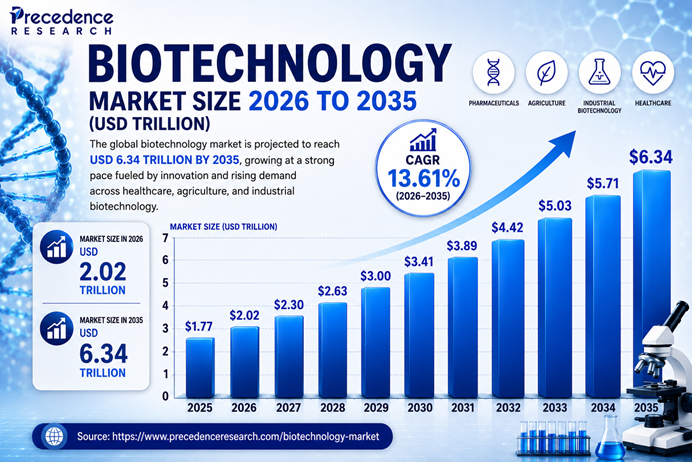
According to Precedence Research, the biotechnology market size is stood at USD 1.77 trillion in 2025 and predicted to increase from USD 2.02 trillion in 2026 to approximately USD 6.34 trillion by 2035, representing a strong CAGR of 13.61% from 2026 to 2035.
The biotechnology industry is entering a transformative phase as artificial intelligence, gene editing, and advanced biologics reshape how therapies are discovered, developed, and commercialized worldwide. Growing demand for precision medicine, regenerative therapies, and next-generation biologics is accelerating innovation across healthcare, agriculture, and industrial biotechnology applications.
From molecular design to patient bedside, AI is transforming biotechnology from slow, traditional research and development into a fast-paced, autonomous digital engine, reducing years of drug discovery to months. By integrating generative AI, automated robotics, and multimodal platforms, companies are streamlining target identification, de novo engineering, and clinical trials. This shift from isolated pilots to mission-critical infrastructure is speeding up the journey from lab to patient, turning biotech firms into intelligent organizations.
Where Data Meets Strategic Clarity 📥 View Sample Pages of the Complete
Report 👉 https://www.precedenceresearch.com/sample/1450
Biotechnology is rapidly evolving into an AI-native industry where automation, predictive analytics, and advanced biologics are fundamentally changing the economics of drug discovery and precision medicine, said a Rohan Patil, Principal Consultant at Precedence Research. The next wave of biotech leaders will be defined not only by scientific innovation, but also by their ability to integrate AI, scalable biomanufacturing, and data-driven clinical development into a unified commercialization strategy.
Biotechnology Market Key Takeaways
🔹North America dominated with the largest market share of 37.42% in 2025.
🔹Asia Pacific is anticipated to have the fastest growth with a notable CAGR of 14.8% between 2026 and 2035.
🔹By application, the bio-pharmacy segment captured the highest market share of 42% in 2025.
🔹By application, the bioinformatics segment is poised to grow at a healthy CAGR of 13.2% between 2026 and 2035.
🔹By technology, the tissue engineering and regeneration segment contributed the highest market share of 19.17% in 2025.
🔹By technology, the chromatography segment is growing at a strong CAGR of 15.1% between 2026 and 2035.
Market Overview: The New Era of Advanced Biologics
The global biotechnology market includes industries developing products using living organisms, cells, and biological systems for healthcare, agriculture, and industrial uses. It is experiencing rapid, innovation-driven growth, leveraging CRISPR, genomics, and advanced biomanufacturing to revolutionize healthcare, agriculture, and industry.
Driven by rising demand for personalized medicines, gene therapies, and sustainable agricultural tools, this high-growth sector attracts significant investment to meet the need for sophisticated, living-system-based solutions.
🔗 Power Your Strategy with Full Market Data 👉 https://www.precedenceresearch.com/biotechnology-market
Why Biotechnology Matters Now?
The rising global burden of chronic diseases, aging populations, increasing cancer prevalence, and demand for personalized medicine are accelerating the adoption of advanced biotechnology solutions worldwide.
Governments and healthcare systems are increasingly prioritizing biologics, gene therapies, and AI-assisted diagnostics to improve treatment outcomes while reducing long-term healthcare costs. Simultaneously, biotechnology is becoming central to food security, environmental sustainability, and bio-based industrial manufacturing.
Growing regulatory support for biologics, gene therapies, and rare disease treatments is further accelerating biotechnology innovation globally. Fast-track approvals, orphan drug designations, and breakthrough therapy pathways offered by regulatory agencies such as the U.S. FDA are enabling faster commercialization of next-generation therapeutics.
Key
Market Drivers 🔹Rising adoption of
AI-driven drug discovery platforms 🔹Increasing demand for
precision and personalized medicine 🔹Growing investments in
biologics and gene therapies 🔹Rapid expansion of genomics
and bioinformatics 🔹Increasing prevalence of
chronic and rare diseases 🔹Growing adoption of
regenerative medicine and cell therapies 🔹Expansion of biosimilars
and mRNA-based therapeutics Key
Market Challenges 🔹High manufacturing costs
for biologics and cell therapies 🔹Complex global regulatory
approval pathways 🔹Cold-chain logistics and
storage limitations 🔹Long commercialization
timelines 🔹Data privacy and
cybersecurity risks in AI-driven biotech 🔹Ethical concerns
surrounding gene-editing technologies Why
Investors Are Closely Monitoring Biotechnology Biotechnology
continues attracting strong venture capital funding, strategic pharmaceutical
partnerships, and institutional investment due to its disruptive potential
across oncology, rare diseases, regenerative medicine, and AI-driven
therapeutic development. The commercialization of gene editing, personalized
therapies, and advanced biologics is creating new long-term revenue
opportunities throughout the global healthcare ecosystem. AI-Driven
Manufacturing and Quality Control: Major Potential AI and
automation are transforming stem cell and biologics manufacturing by replacing manual
processes with real-time, precise bioreactor control to ensure consistent quality
and scalability. By enabling golden profile modeling and predictive
maintenance, these technologies reduce contamination risks, speed up iPSC
differentiation, and support high-throughput, cost-effective production of
personalized therapies. Cost
Reduction in a Complex Environment: Major Limitation Stem cell
therapies face a profitability paradox, where their revolutionary potential is
limited by high costs of goods sold (COGS), complex cold-chain logistics, and
strict regulatory hurdles. Despite advances in AI, high infrastructure costs and
inconsistent reimbursement landscapes hinder widespread adoption, turning
innovative treatments into a high-stakes and high-cost race against
commercialization hurdles. Supply
Chain & Manufacturing Challenges Biotechnology
companies are also facing mounting supply chain pressures related to biologics
manufacturing, cold-chain transportation, specialized raw materials, and
laboratory automation systems. Growing demand for contract development and
manufacturing organizations (CDMOs), bioprocessing infrastructure, and advanced
purification technologies is intensifying competition across global supply
networks. Manufacturers
are increasingly investing in continuous bioprocessing, smart manufacturing
systems, and localized production facilities to reduce operational risks and
improve resilience. ➡️ Become a valued
research partner with us ☎ https://www.precedenceresearch.com/schedule-meeting Biotechnology
Market Report Coverage Market Scope Details Market Size in 2025 USD 1.77 Trillion Market Size in 2026 USD 2.02 Trillion Market Size in 2035 USD 6.34 Trillion Market Growth Rate
(2026–2035) CAGR of 13.61% Largest Regional Market North America Fastest Growing Region Asia Pacific Base Year 2025 Forecast Period 2026 to 2035 Key Growth Driver Rising adoption of
AI-driven drug discovery and precision medicine Major Technology Trend Generative AI, CRISPR,
mRNA platforms, and automated biomanufacturing Key Market Opportunity Personalized therapeutics
and regenerative medicine Major Market Challenge High therapy costs and
complex regulatory approvals Segments Covered By Application, By
Technology, and By Region Regions Covered North America, Europe,
Asia Pacific, Latin America, Middle East & Africa Key Companies Profiled Amgen, Pfizer, Moderna,
BioNTech, Regeneron, Vertex Pharmaceuticals, CRISPR Therapeutics Artificial Intelligence is
Transforming the Future of Biotechnology Artificial intelligence is becoming a
powerful growth engine for the biotechnology industry, helping companies
accelerate drug discovery, improve clinical research, and develop more
personalized therapies. By combining AI with genomics, bioinformatics, and
biologics manufacturing, biotechnology firms are transforming traditional
research processes into faster, smarter, and more data-driven innovation
models. AI-powered
platforms are helping researchers analyze massive biological datasets, predict
molecular interactions, identify promising drug candidates, and optimize
clinical trials with greater speed and accuracy. This is significantly reducing
the time and cost required to bring new therapies from the laboratory to
patients. The
growing convergence between artificial intelligence and biotechnology is also
driving strong market expansion. The global biotechnology market was valued
at USD 1.77 trillion in 2025 and is projected to reach approximately USD 6.34
trillion by 2035. Meanwhile, the global artificial intelligence (AI) in
biotechnology market size was valued at USD 5.6 billion in 2025 and is
projected to grow from USD 6.68 billion in 2026 to nearly USD 31.87 billion by
2035, expanding at a CAGR of 18.99% from 2026 to 2035. This rapid growth
reflects increasing investments by healthcare organizations, pharmaceutical
companies, and biotech startups in AI-native drug discovery, precision
medicine, predictive analytics, and automated bioprocessing technologies. As
demand rises for personalized medicine, regenerative therapies, and advanced
biologics, artificial intelligence is expected to play a central role in
shaping the next generation of biotechnology innovation worldwide. 1.
Research & Development (R&D) This
is the foundation stage of the biotechnology value chain, focused on the
discovery, research, and development of innovative drugs, medical devices,
biologics, and diagnostic solutions. Companies invest heavily in advanced
technologies, genomics, and precision medicine to develop next-generation
therapies. Key
Players: ➢ Pfizer ➢ Johnson & Johnson ➢ Roche ➢ Novartis 2.
Clinical Trials & Regulatory Approvals After
product development, biotech companies conduct extensive clinical trials to
evaluate the safety, efficacy, and performance of therapies and medical
products. Regulatory approvals from authorities such as the U.S. FDA and EMA
are required before commercialization. Key
Players: ➢ IQVIA ➢ ICON plc ➢ Labcorp ➢ Parexel ➢ Syneos Health 3.
Formulation & Final Dosage Preparation In
this stage, active pharmaceutical ingredients are combined with excipients to
create stable and patient-ready dosage forms such as tablets, capsules,
injections, and biologics. The process ensures product quality, stability, and
therapeutic effectiveness. Key
Players: ➢ Pfizer ➢ Novartis ➢ Roche ➢ Merck & Co. 4.
Packaging & Serialization This
stage focuses on secure packaging, labeling, and serialization of biotech
products. Unique identifiers and tracking systems are used to ensure
traceability, authenticity, patient safety, and compliance with international
quality regulations. Key
Players: ➢ Amcor ➢ AptarGroup ➢ Nipro Pharma Packaging 5.
Distribution to Hospitals & Pharmacies Efficient
logistics and cold-chain management are essential for delivering biotechnology
products safely to hospitals, clinics, pharmacies, and healthcare providers
while maintaining product integrity. Key
Players: ➢ McKesson Corporation ➢ AmerisourceBergen 6.
Patient Support & Services Post-commercialization
services help improve patient adherence, treatment outcomes, and healthcare
accessibility. Companies provide patient education, reimbursement support,
digital monitoring, and technical assistance programs. Key
Players: ➢ HealthPlix Technologies ➢ BestDoc For questions or customization
requests, please reach out to us @ sales@precedenceresearch.com | +1
804 441 9344 Biotechnology
Market Regional Analysis North
America Biotechnology Market Leadership Driven by R&D and FDA Support North
America dominated the biotechnology market in 2025, mainly due to substantial research and
development investments, advanced technological infrastructure, supportive
government policies, and a robust startup ecosystem. The U.S. FDA
offers fast-track designations and breakthrough therapy pathways, enabling
quicker approval of innovative products. Leading biotech hubs in Boston, San
Francisco, and San Diego promote collaboration between academic institutions
and companies, converting research into commercial products and driving
innovation in targeted treatments. What is
the U.S. Biotechnology Market Size? The U.S.
biotechnology market size is valued at USD 361.07 billion in 2026
and is expected to be worth around USD 1,142.07 billion by 2035, with a solid
CAGR of 13.7% from 2026 to 2035. 🔸 In February 2026, Eli Lilly partnered with NVIDIA to
develop the pharmaceutical industry’s most powerful AI supercomputer, creating
an AI factory to simulate molecular interactions and revolutionize drug
discovery. (Source: http://nvidianews.nvidia.com) Note: This report is readily
available for immediate delivery. We can review it with you in a meeting to ensure data reliability and quality for
decision-making. Canada is
establishing itself as a global biotech leader, supported by a highly skilled
workforce and robust public backing. As an innovation hub, the country leads in
AI-driven drug discovery and regenerative medicine, from stem cell research to
advanced bioprinted tissue therapeutics in Toronto, Montreal, and Vancouver. 🔸 In March 2025, with 67 biosimilars approved by
Health Canada, the country is advancing a healthcare revolution that offers
proven, high-quality treatments while significantly lowering costs for patients
and systems. (Source: https://www.gabionline.net) India is
strengthening its role as a global biotech hub, supplying over one-third of the
world's vaccines and generic drugs while quickly developing into a biosimilars leader. Backed by a vibrant startup
ecosystem and shifting from cost leadership to capability leadership in
AI-driven drug discovery and CAR T-cell therapy, India is transitioning from a
high-volume manufacturer to an indigenous innovator hub. 🔸 In March 2026, Biopharma SHAKTI will bolster
India’s emergence as a global bio-innovation hub, launching a ₹10,000 crore
initiative over five years to dominate the biologics market. This initiative
aims to strengthen the entire ecosystem, from research to production, by
focusing on advanced and affordable healthcare solutions. (Source:
https://www.pib.gov.in) China has
transformed into a leading global force in biotech innovation, evolving from a
technology importer to a leader in oncology and immunology. The country is home to the highest
number of the top 50 innovative drug developers and accounts for global antibody drug conjugates licensing activity. With faster
clinical trials and cost-effective manufacturing, Chinese firms are forging
partnerships with Western pharmaceutical companies while aggressively targeting
international markets with novel molecules to compete directly with established
global drugs. 🔸 In March 2025, Akeso’s ivonescimab (PD-1/VEGF)
marked a significant milestone for Chinese biopharma, delivering outstanding
Phase 3 trial results that surpassed the global standard of care (Keytruda) in
lung cancer treatment. This landmark success indicates a shift towards
Chinese-developed oncology solutions, leading global innovation. (Source:
https://www.akesobio.com) Regulatory
Landscape for the Biotechnology Market Country Key Regulatory Bodies Regulatory Framework
& Market Impact India GEAC, CDSCO/DCGI, FSSAI,
DBT India follows a multi-agency
biotechnology regulatory framework governing GM crops, biosimilars,
regenerative medicine, and biotech research. Recent reforms have improved
approval pathways for selected gene-edited crops and advanced therapies;
however, regulatory compliance and approval timelines remain relatively
complex. U.S. FDA, USDA, EPA The U.S. biotechnology
market operates under a science-based and product-focused regulatory
system. Flexible approval pathways, strong intellectual property
protection, and support for innovation have accelerated commercialization of
biologics, gene therapies, and agricultural biotechnology products. European Union (EU) EMA, EFSA, European
Commission The EU maintains a precautionary
and highly regulated biotechnology environment. GMO and gene-edited
products undergo rigorous safety evaluations, often resulting in longer
approval timelines. Ongoing regulatory reforms aim to improve innovation
competitiveness and streamline biotech approvals. Brazil ANVISA, CTNBio, MAPA Brazil has developed a structured
and supportive biosafety framework for agricultural biotechnology and
biotech-derived products. Clear GMO approval procedures and expanding
biopharmaceutical regulations have strengthened Brazil’s position as a major
biotechnology market in Latin America.
Have
questions or ready to move forward? Contact our experts today @ sales@precedenceresearch.com | +1 804 441
9344 Biotechnology
Market Segmental Analysis Global
Biotechnology Market Revenue (USD Billion), By Application, 2022-2024 Application 2022 2023 2024 Bio-pharmacy 507.57 575.26 652.56 Bio-industries 298.88 335.41 376.75 Bio-services 91.91 99.30 107.38 Bio-agriculture 253.40 286.43 324.06 Bio-informatics 72.55 82.23 93.04 Biological
drugs are often preferred over traditional chemical-based medications due to
their lower side effects and higher target efficacy. The rapid adoption of
advanced technologies like CRISPR and mRNA-based therapies is also contributing
substantially to market growth. The
bioinformatics segment is projected to experience the fastest growth during the
forecast period,
driven by the increasing demand for data analysis in genomics, personalized
medicine, and drug discovery. The growing volume of
sequencing data from Next-Generation Sequencing, proteomics, and genomics requires advanced
computational tools to interpret complex datasets. Substantial funding from
government and private sectors for genomics projects, along with increased
hiring for specialized bioinformatics roles, is propelling this market forward. By
Technology Analysis Global
Biotechnology Market Revenue, By Technology, 2022-2024 (USD Billion) Technology 2022 2023 2024 Fermentation 103.04 116.39 131.58 Tissue Engineering and
Regeneration 236.90 265.50 297.81 PCR Technology 63.08 70.78 79.49 Nanobiotechnology 120.60 136.14 153.82 Chromatography 43.28 49.24 56.07 Spectroscopy 30.41 33.61 37.18 Cell-Based Assay 157.35 178.64 203.01 DNA Sequencing 203.70 229.01 257.70 Others 265.94 299.31 337.14
The tissue
engineering and regeneration segment led the market in 2025, fueled by a shift from symptom
management to the cure of chronic diseases. Advanced technologies like
3D bioprinting,
biomimetic scaffolds, and stem cell therapies are key drivers. Significant
investments from both government and private sectors in regenerative medicine,
combined with rising clinical trial successes, are facilitating this adoption.
The applications are expanding, with notable growth in tissue-engineered
products for dentistry, neurology, and skin grafts. The
chromatography segment is also experiencing rapid growth, primarily due to the rising demand
for biologics and the need for high-precision purification techniques, specifically
liquid chromatography. The industry is shifting from batch processing to
continuous bioprocessing, increasing demand for multi-column and continuous
chromatography systems to enhance throughput, improve scalability, and reduce
processing times. This shift aims to minimize cross-contamination risks and
lower cleaning validation costs while reducing the use of toxic, flammable
organic solvents in separation processes. Key
Innovations in the Biotechnology Market Innovation Example Significance CRISPR/Cas9 Gene Editing
(Therapeutics) Casgevy (Vertex/CRISPR Tx): Approved
for Sickle Cell Disease. First regulatory approvals of
CRISPR-edited cures for inherited genetic disorders, transforming chronic
disease management. Generative AI in Protein
Design AlphaFold 3 & ESM-3 (Meta):
Predicting/designing protein-ligand interactions. Accelerates drug discovery by
designing novel, functional proteins (enzymes/antibodies) in silico, slashing
R&D timelines. mRNA Therapeutic Platforms mRNA-4157/V940 (Moderna/Merck):
Personalized cancer vaccine for melanoma. mRNA technology moves beyond
COVID-19 to create tailored therapies and vaccines for solid tumors and rare
diseases. Off-the-Shelf Cell Therapy
(Allogeneic) CAR-T/NK Donor Cells (Allogene/Fate
Tx): Universal donor immune cells for cancer. Enables mass-produced,
"universal" cell therapies, reducing the cost and time associated
with patient-specific (autologous) therapies. AI-Driven Automation in
Biomanufacturing Cellares Cell Shuttle: Automated,
closed-system cell production. Automates complex cell therapy
manufacturing, improving consistency, scaling production, and reducing manual
human errors.
Strategic
Trends Among Biotechnology Leaders Leading
biotechnology companies are increasingly focusing on AI-native drug discovery,
scalable biologics manufacturing, and platform-based therapeutic development to
strengthen competitive positioning. Strategic
collaborations between biotechnology firms and pharmaceutical companies are
accelerating innovation in oncology, rare diseases, gene editing, and precision
medicine. Companies are also expanding investments in automated bioprocessing,
bioinformatics infrastructure, and next-generation mRNA platforms to improve
commercialization efficiency and reduce development timelines. Biotechnology
Market Top Companies ➢ Amgen ➢ Pfizer ➢ Merck & Co. ➢ Gilead Sciences ➢ Moderna ➢ Regeneron Pharmaceuticals ➢ Novavax ➢ Vertex Pharmaceuticals ➢ BioNTech ➢ CRISPR Therapeutics Biotechnology
Market Competitive Landscape Analysis Leading
biotechnology companies are increasingly competing through AI integration,
platform-based therapeutics, strategic partnerships, and biologics
manufacturing capabilities. Moderna and
BioNTech continue expanding mRNA applications beyond infectious diseases into
oncology and rare diseases, while CRISPR Therapeutics and Vertex
Pharmaceuticals are accelerating commercialization of gene-editing therapies.
Regeneron Pharmaceuticals is leveraging AI-driven antibody discovery platforms,
and Pfizer continues investing heavily in precision medicine and
next-generation biologics infrastructure. Intellectual
Property and Patent Landscape Strong
intellectual property portfolios are becoming critical competitive
differentiators across the biotechnology industry. Companies developing
CRISPR-based therapies, mRNA platforms, AI-designed biologics, and advanced
cell therapies are increasingly prioritizing patent protection to secure
long-term commercialization advantages. As innovation accelerates, ownership of
proprietary platforms, genomic datasets, and biologics manufacturing
technologies is expected to play a central role in market leadership. Major
shifts in the Biotechnology Market 🔸In October 2025,
Kailera Therapeutics announced a $600 million Series B financing led by Bain
Capital Private Equity to advance its obesity portfolio, including a global
Phase 3 trial for KAI-9531, an injectable dual GLP-1/GIP receptor agonist. New
investors included T. Rowe Price and other major mutual funds, alongside
existing backers like Atlas Venture and Bain Capital Life Sciences. CEO Ron
Renaud emphasized the urgent need for effective obesity treatments. (Source:
https://www.kailera.com) 🔸In January 2026, Rapport Therapeutics revealed plans
to start Phase 3 trials for RAP-219 in focal onset seizures (FOS) and expand
its epilepsy portfolio. CEO Abraham N. Ceesay highlighted the promising Phase
2a data supporting RAP-219, which could capture a multi-billion-dollar market.
The company is also prioritizing its chronic pain program while deferring
investment in diabetic peripheral neuropathic pain trials. (Source:
https://investors.rapportrx.com) 🔸In January 2025, Immuneel Therapeutics launched
Qartemi, a CAR T-cell therapy for adult B-cell Non-Hodgkin Lymphoma, aimed at
addressing the rising burden of blood cancers in India. Co-Founder Kiran
Mazumdar-Shaw stated that Qartemi provides advanced, affordable treatments. The
company emphasized its commitment to high safety and efficacy standards, having
initiated India’s first CAR T-cell therapy trial in 2022 across several
hospitals. (Source: https://www.expresspharma.in) Biotechnology
Market Segmentation By
Application 🔹Bio-pharmacy 🔹Bio-industries 🔹Bio-services 🔹Bio-agriculture 🔹Bio-informatics By
Technology 🔹Fermentation 🔹Tissue Engineering and Regeneration 🔹Polymerase Chain Reaction (PCR)
Technology 🔹Nanobiotechnology 🔹Chromatography 🔹Deoxyribonucleic Acid (DNA) Sequencing 🔹Cell Based Assay 🔹DNA Sequencing 🔹Others By Region 🔹North America 🔹Asia Pacific 🔹Europe 🔹Latin America 🔹Middle East and Africa Immediate Delivery Available | Buy
This Premium Research Report@ https://www.precedenceresearch.com/checkout/1450 About
Us Precedence
Research is a global market intelligence and consulting powerhouse, dedicated
to unlocking deep strategic insights that drive innovation and transformation.
With a laser focus on the dynamic world of
life sciences,
we specialize in decoding the complexities of cell and
gene therapy,
drug development, and oncology markets, helping our clients stay
ahead in some of the most cutting-edge and high-stakes domains in healthcare.
Our expertise spans across the biotech and pharmaceutical ecosystem, serving
innovators, investors, and institutions that are redefining what’s possible
in regenerative medicine, cancer care, precision
therapeutics, and beyond. Web: https://www.precedenceresearch.com Our
Trusted Data Partners: Towards Healthcare | Nova One Advisor | Market
Stats Insight Get
Recent News: https://www.precedenceresearch.com/news For
the Latest Update Follow Us: ✚ Related Topics You
May Find Useful: ➡️ Biotechnology
Reagents and Kits Market: Discover rising demand for high-performance
reagents and diagnostic kits across genomics, proteomics, and clinical testing
applications ➡️ Biotechnology
Contract Manufacturing Market: Analyze how outsourcing trends are
transforming biologics production, scalability, and cost-efficient
pharmaceutical manufacturing ➡️ Marine
Biotechnology Market: Gain insight into the growing use of marine-derived
bioresources in pharmaceuticals, nutraceuticals, and sustainable industrial
applications ➡️ Agricultural
Biotechnology Market: Understand how biotech innovations are improving crop
productivity, pest resistance, and sustainable farming practices worldwide ➡️ Animal Biotechnology
Market:
See how genetic engineering and advanced veterinary technologies are reshaping
livestock health and animal-based research ➡️ Plant
Biotechnology Market: Track advancements in genetically modified crops,
tissue culture, and bioengineered plant solutions supporting food security
initiatives ➡️ Environmental
Biotechnology Market: Explore the expanding role of biotechnology in waste
management, bioremediation, and eco-friendly industrial processes
🔓 Instant
Access. Zero Waiting. 📥 Buy the Premium Market Research
Report Now 👉 https://www.precedenceresearch.com/checkout/1450 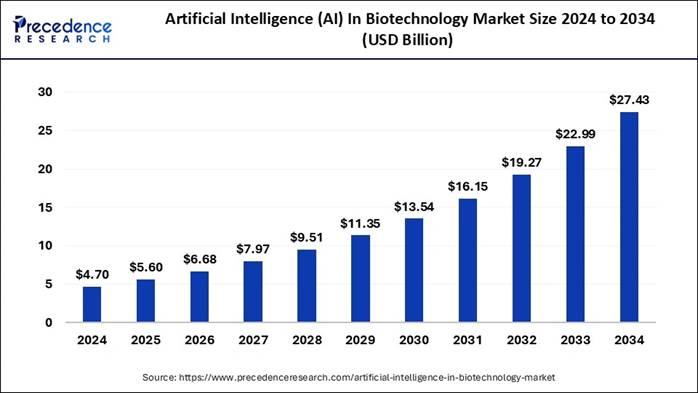
The Full Study is Readily
Available | Download the Sample Pages of this Report@ https://www.precedenceresearch.com/sample/2611
Value Chain Analysis of the Biotechnology Market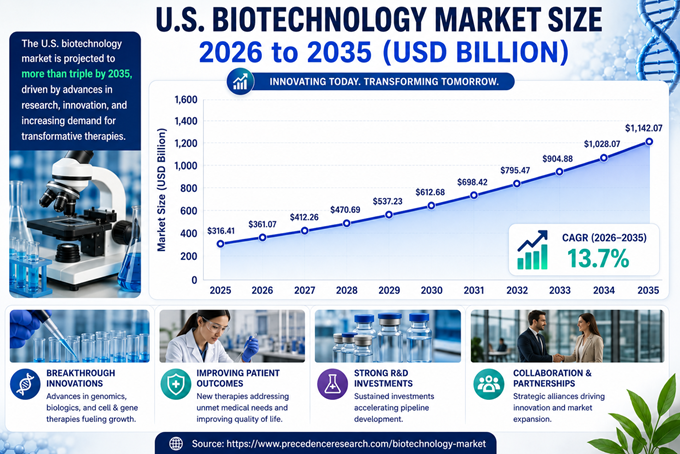
The U.S. is expected to maintain its dominance, powered by unparalleled NIH
funding, aggressive venture capital support for startups, and strong
intellectual property protections. Innovation centers like Boston, San
Francisco, and San Diego continue to accelerate breakthroughs in genomics,
CRISPR gene editing, and cell therapies.
📥 Download Sample Pages
for Informed Decision-Making 👉 https://www.precedenceresearch.com/sample/1450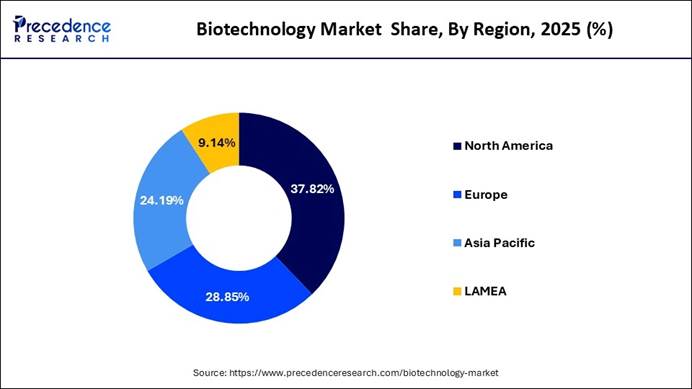
Asia Pacific is expected to experience the fastest growth during the
forecast period. This growth is mainly driven by policy convergence, high
R&D investment, and demographic needs. The aging populations in China and
Japan are increasing demand for precision medicine, personalized cancer
treatments, and chronic disease management tools. The region is excelling in
high-value areas, including antibody-drug conjugates and mRNA technologies.
Additionally, lab automation, AI-driven drug discovery, and bioinformatics are rapidly
being adopted.
The bio-pharmacy
segment dominated the market in 2025,
primarily due to the soaring demand for biologics to treat chronic diseases,
supported by significant investments in research and development. The trend
towards tailored therapies and targeted diagnostics is broadening the scope of
biopharma applications. 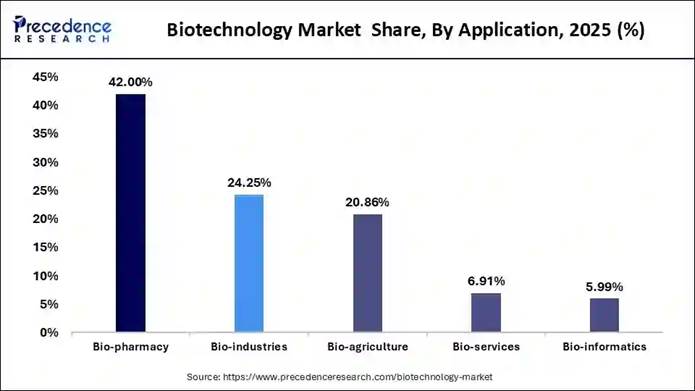
➡️ Biotechnology
Instruments Market: Explore how advanced analytical tools and laboratory
automation are accelerating precision research and biopharmaceutical
development


