
- The PharmaJet Tropis Intradermal (ID) Needle-free Injection System will be used to deliver approximately 1.4 million polio vaccine doses in a Nigerian campaign.
- To date, supplies for more than 20 million Tropis pediatric injections have been provided for polio vaccination campaigns and routine immunizations across Pakistan, Nigeria, Afghanistan, and Somalia.
- Using Tropis for polio vaccination campaigns has been demonstrated to improve coverage, acceptability and speed of administration, while providing cost savings.1,2,3,4
GOLDEN, Colo.--(BUSINESS WIRE)--PharmaJet, a global leader in needle-free injection technology, today announced that its WHO-prequalified Tropis ID Needle-free Injection System will be used to deliver approximately 1.4 million doses of fractional inactivated polio vaccine (fIPV) during upcoming polio immunization campaigns in Nigeria. PharmaJet is partnering with the African Field Epidemiology Network (AFENET), to deploy Tropis for fIPV delivery to children under 5 years of age in Sokoto, a state in northwestern Nigeria.
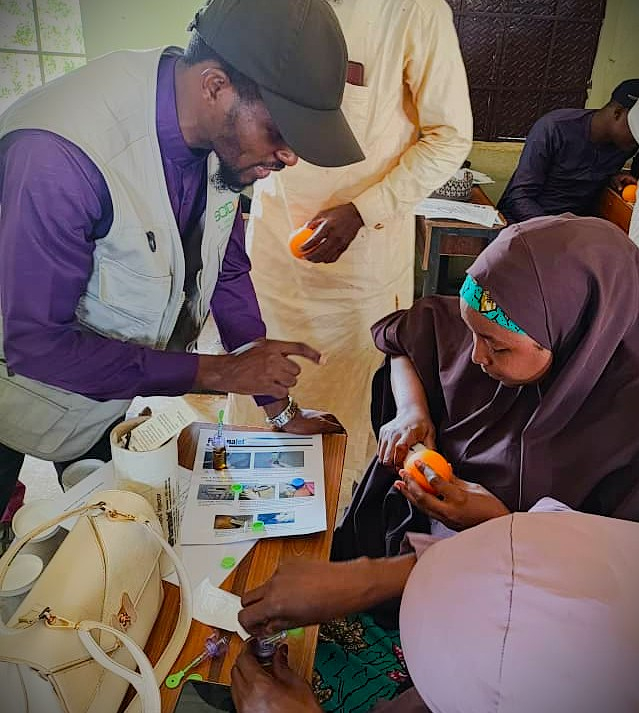
Nigeria remains free of wild poliovirus but continues to face outbreaks of circulating vaccine-derived poliovirus type 2 (cVDPV2). According to national surveillance data, 66 cases were reported in 2025. The country remains committed to halting all poliovirus transmission by 2030 by investing in surveillance, routine immunization, and supplementary immunization activities (SIAs). Polio vaccination has been integrated with broader health initiatives through campaigns and community outreach to immunize all eligible children.5 In this context, needle-free intradermal delivery of fractional-dose IPV enables broader vaccine coverage while reducing cost and logistical complexity.1,4
The large-scale use of Tropis needle-free delivery in Sokoto follows an extensive randomized controlled trial study of Tropis-delivered fIPV in routine immunization conducted with PATH, Jhpiego, the National Primary Health Care Development Agency (NPHCDA), and Sydani. The study, conducted in Nigeria and published in Vaccines4, highlighted that, when compared to the standard of care (full dose delivered with needles), Tropis delivery resulted in:
- 11.2% higher coverage of the second IPV dose (IPV2)
- Up to 47% reduction in total immunization cost
- 97% preference among healthcare workers
- Reduced administration time
In addition, Tropis improves vaccine access in austere, resource-limited settings where non-traditional healthcare workers can use a house-to-house strategy to optimize coverage.
“PharmaJet has supported polio vaccination campaigns in Pakistan since 2018, and we are encouraged to see expanded adoption in Afghanistan and now Nigeria,” said Dr. Wouter Latour, CEO, PharmaJet. “Needle-free delivery improves operational efficiency, reduces costs and enhances acceptability. With more than 20 million Tropis ID injections supplied globally, we are making important contributions to the Global Polio Eradication Initiative and accelerating progress towards eradication.”
Refer to Instructions for Use to ensure safe injections and to review risks.
1 | ||
2 | ||
3 | ||
4 | ||
5 | World Health Organization, Nigeria, WHO and Partners Reaffirm Commitment to end all forms of Polio by 2030, 06 Nov. 2025. |
About PharmaJet
The PharmaJet mission is to improve the performance and outcomes of injectables with our enabling technology that better activates the immune system. We are committed to helping our partners realize their research and commercialization goals while making an impact on public health. PharmaJet Precision Delivery Systems™ can improve vaccine effectiveness, allow for a preferred patient and caregiver experience, and offer a proven path to commercialization. They are also safe, fast, and easy-to-use. The Tropis® System has CE Mark and WHO PQS certification for intradermal injections and is commercially available for global immunization programs. For more information or if you are interested in partnering with PharmaJet visit https://pharmajet.com or contact PharmaJet here. Follow us on LinkedIn.
About AFENET
The African Field Epidemiology Network (AFENET) is a not-for-profit networking and service alliance of FE(L)TPs, and other applied epidemiology training programs in Africa. Established in 2005, we are dedicated to improving the health outcomes of communities through collaboration with ministries of health, national, regional and international partners. We strive to build strong, effective, sustainable programs and capacity to improve public health systems on the African continent and beyond, to ensure that they meet the requirements of the Integrated Disease Surveillance and Response (IDSR) strategy and the International Health Regulations (IHR).
With financial and technical support from U.S CDC, we collaborate with ministries to implement polio eradication initiatives (PEI) activities and broader Primary Health care (PHC) systems to eradicate all forms of polio viruses, reduce incidence of VPDs and strengthen PHC systems.
Contacts
Nancy Lillie
Nancy.Lillie@pharmajet.com
1-888-900-4321 Option 3


