
Exceptional safety was observed across 88 healthy volunteers. Phase 2 plans to test whether ENV-308 can help people maintain their weight after stopping GLP-1s.
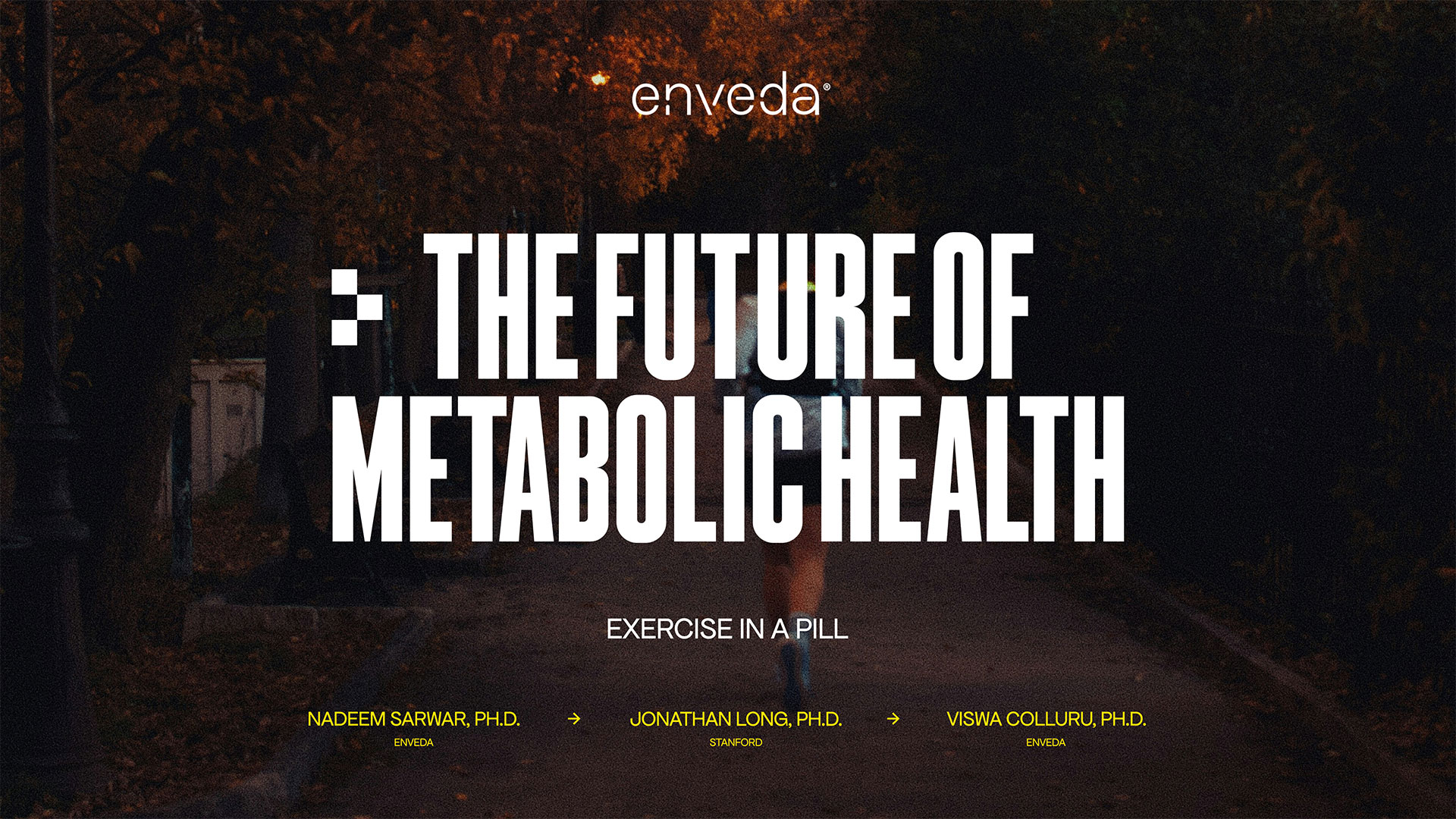

- ENV-308 is the first drug in human trials designed to mimic Lac-Phe, a pseudo dipeptide hormone released by the body in response to high-intensity exercise.
- In its first clinical trial, ENV-308 was extremely well tolerated across 88 healthy volunteers, including for gastrointestinal safety – the most common side effect that leads to people stopping GLP-1 medicines.
- The trial showed ENV-308 reduced circulating leptin, an exploratory signal that the drug reaches biology relevant to metabolic disease.
- In animal studies, ENV-308 preserved lean muscle during weight loss and prevented weight regain after weight-loss therapy was stopped.
- Enveda plans a series of future trials, including in people who discontinued or are planning to discontinue GLP-1 therapy, and is evaluating other conditions where the effects of exercise are known to be beneficial.
BOULDER, Colo.--(BUSINESS WIRE)--#AI--1 in 8 US adults are reported to use GLP-1 medications, but the majority of people who primarily take them for weight loss stop using them within one year of starting [1,2]. A recent meta-analysis by the University of Oxford estimated that any benefits on body weight and other metabolic health markers, such as HbA1c, are lost in the majority of people who stop GLP-1 medications, and that weight regain post-GLP-1 is faster than after non-drug weight management programs [3]. Further, the “yo-yo” weight-loss-rebound cycling of patients on and off GLP-1 therapy itself is being explored as a potential cardiometabolic risk factor [4].
The gap between losing weight, keeping it off, and maintaining metabolic health is the problem Enveda aims to solve with ENV-308, a daily oral pill that reported positive Phase 1 results today from its first human trial assessing safety, tolerability, and drug behavior in the body.
ENV-308 was discovered using PRISM, Enveda’s proprietary AI model for finding naturally occurring and biologically active molecules already present in our bodies or our environment. ENV-308 mimics a molecule called Lac-Phe, a hormone the body releases during both intense exercise and after meals. Lac-Phe was characterized in 2022 for its role in exercise by Stanford’s Jonathan Long and colleagues [5] and as an important nutrient sensor by PRISM. Lac-Phe suppresses appetite and reduces obesity in animals, helping explain how exercise can molecularly change metabolism. However, Lac-Phe itself does not have the properties required to behave like a drug: it is cleared too quickly to be useful as a medicine. Enveda engineered ENV-308 to reproduce the effects of Lac-Phe in an oral pill that can be taken every day.
“Many of the benefits of exercise can be traced back to chemical messengers that are released in the body. Until Lac-Phe was characterized, almost none of that chemistry was available to us as a potential path towards a viable medicine. ENV-308 is our attempt to put the chemistry of exercise into a daily tablet, and to offer a sustainable and convenient solution that synergizes with people’s daily habits and supports them on the path to long-term health,” said Viswa Colluru, Ph.D Founder and CEO of Enveda.
The Phase 1 trial has enrolled 88 healthy adult volunteers to date and was designed to assess safety, tolerability, and drug behavior in the body. Participants tolerated ENV-308 well across the full dose range, with an exceptional gastrointestinal safety profile — notable because nausea, vomiting, and other GI effects are among the most common side effects that lead people to discontinue GLP-1 therapy. Further, no serious adverse events, discontinuations, or dose interruptions were reported in the study.
“GLP1s helped me with my weight, my HbA1c. But they are not a long-term or sustainable solution for me. I have really struggled with nausea and vomiting, changes in my mood, and muscle loss. I've had to work hard to see the gains I have had on the GLP1s, including putting up with the side effects and changing my lifestyle, but I'm worried about what will happen when I stop taking them. A medicine that can lock in the weight-loss and other benefits of GLP1s over the long-term, without the side effects, would be a game-changer,” said Ken, an IT Engineer from Massachusetts in his early 50s, who has been prescribed different GLP1 medications for weight loss over the past two years.
The Phase 1 study also measured the impact of ENV-308 on leptin, a hormone released by fat cells to control appetite by telling the brain how much energy the body has stored. In obesity, leptin levels are usually chronically elevated, and the brain stops responding to it, a state called leptin resistance. In animal models, ENV-308 showed rapid reductions in leptin levels, potentially consistent with improved leptin responsiveness and sensitivity. In the Phase 1 trial, the effect on circulating leptin levels was confirmed, with the largest reductions observed in people who had the highest leptin levels relative to their sex at baseline. Additional clinical studies are now planned to further characterize the effects of ENV-308 on leptin biology and function.
“There is now compelling data in preclinical models indicating that Lac-Phe is involved in regulating several aspects of metabolic, brain, and inflammatory health. The possibility that ENV-308 may mimic these effects in a daily oral tablet in humans is an extremely exciting potential scientific breakthrough,” said Prof. Jonathan Long, PhD, Associate Professor of Pathology and Institute Scholar, Stanford ChEM-H, and leading researcher in exercise metabolism, and advisor to Enveda.
In animal studies, ENV-308 maintained weight loss after the weight-loss treatment was withdrawn, without any rebound. Furthermore, animal studies suggest ENV-308 may be additive to GLP-1 therapies, including by allowing them to be effective at reduced frequency, and potentially avoiding certain side effects frequently observed with GLP-1 medications when dosed together. These observations will now be tested in clinical studies.
“Unraveling the chemistry of exercise through the lens of AI presents a new frontier for the discovery of the next generation of metabolic medicines. The tolerability profile of ENV-308 observed in the Phase 1 trial, together with the observed effects on leptin, gives strong encouragement for further development of ENV-308 as a potential new class of medicine targeting long-term metabolic health: before, during and after the use of other interventions,” said Prof. Nadeem Sarwar, Global Head of Metabolic Strategy & Disease Prevention at Enveda.
Because the Phase 1 trial was conducted in healthy volunteers, it was not designed to detect changes in body weight or other metabolic endpoints. Changes in weight, body composition, and other metabolic health markers will now be assessed in upcoming clinical trials. In particular, given the unmet and growing need among people stopping GLP-1 medications, Enveda plans to test in a Phase 2 trial the ability of ENV-308 to maintain weight loss and other metabolic benefits.
“Recent breakthroughs in weight loss medicines have provided important new options for people living with obesity, but delivering durable, long-term protection from cardiometabolic diseases remains one of the most urgent unmet needs in global health. Patients and physicians need therapies that sustain metabolic benefit over time. ENV-308 represents a novel approach targeting this challenge, and it is encouraging to see early clinical data from a new mechanism of action supporting its progression into later-stage clinical trials,” said Prof. Naveed Sattar, Professor of Metabolic Medicine, University of Glasgow; Chair, UK Obesity Healthcare Goals Programme.
Enveda is also evaluating the potential of ENV-308 in other conditions where exercise may be beneficial, including migraine, inflammatory bowel disease, and polyendocrine metabolic ovarian syndrome (PMOS, formerly polycystic ovary syndrome).
About ENV-308
ENV-308 is an investigational, daily oral small molecule inspired by the chemistry and biology of exercise and is in development for metabolic and other diseases. The therapy was discovered using Enveda’s proprietary AI-enabled platform and engineered to mimic the therapeutic effects of Lac-Phe, a hormone released during intense exercise. In preclinical studies, ENV-308 demonstrated preservation of lean muscle mass during weight loss, durable weight maintenance, favorable gastrointestinal tolerability, improved GLP-1 dosing frequency and tolerability, and broad metabolic and other benefits. ENV-308 is being developed as a chronic therapy to support long-term metabolic health, including weight and metabolic maintenance following GLP-1 treatment.
About Enveda
Enveda is a biotechnology company that learns from life’s chemistry to create better medicines faster. Enveda uses AI-powered tools to identify and characterize a wide range of molecules produced by living organisms, the vast majority of which have never been explored by science, creating a database of chemical biodiversity: the library of life. By growing, organizing, translating, and searching this unique library, Enveda learns from life’s evolved solutions to address today’s most pressing medical needs. For more information, visit enveda.com.
Forward-looking statements
This press release contains forward-looking statements, including statements regarding the potential safety and therapeutic benefits of ENV-308 and the anticipated milestones for our clinical programs. These statements are based on management’s current expectations and are subject to substantial risks and uncertainties that could cause actual results to differ materially. These risks include the inherent uncertainties of clinical development, the risk that preclinical data may not predict clinical results, and regulatory review processes. ENV-308 is an investigational agent and is not approved for use by any regulatory authority. Enveda undertakes no obligation to update these statements.
References:
- E Harris, JAMA 2024, 332(1):8.
- Thomsen RW. EASD 2025, Sep 16, Vienna.
- S West et al. BMJ 2026; 392 e085304.
- A Ceriello et al. Nat Rev Endocrinol 2026; 10.1038.
- V Li, JZ Long et al. Nature 2022; 606: 785-90.
Contacts
Investors: Soumoditya Dey, VP, Corporate Development and Investor Relations, soumoditya.dey@enveda.com
Media: KKH Advisors Kimberly Ha kimberly.ha@kkhadvisors.com 917-291-5744


