
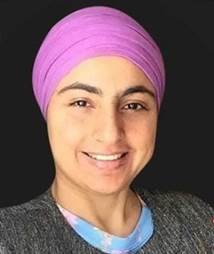
Ekta Grewal
Founder, Sikhs In Clinical Research
Ekta Grewal is the Founder of Sikhs in Clinical Research (SICR), driving health equity, education, and patient advocacy through awareness programs. With more than a decade of experience working with patients across various clinical research sites, including community hospitals, she is passionate about increasing awareness and understanding of clinical research within the underrepresented populations.
Sikhs in Clinical Research, a community organisation was established by her to increase the representation, trust, and access to clinical trials by meeting communities where they are and providing culturally relevant education. Through outreach events, translated resources, and patient-centered initiatives, the organization works to improve research literacy and empower individuals to make informed healthcare decisions. In the interview with her, Ekta reflects on the importance of representation in clinical research, the barriers that prevent participation, and why trust and community engagement are essential to achieving better health outcomes for all.
When asked about Sikhs in Clinical Research, Ekta said, “Sikhs in Clinical Research is a growing initiative dedicated to raising awareness of clinical research within the Sikh community. This role is extremely important to me, and I take it with great responsibility and passion. When I attend conferences, I’m often the only Sikh person in the room. I want that to change. Representation has a ripple effect, when one person enters the field, it empowers the next, and the next. I strongly believe that representation is not optional; it is fundamental for scientific rigor, safety, validity, and better health outcomes. Let’s take an example, in the case of carbamazepine, an epilepsy drug, which caused severe rashes in some Asian communities. If these populations had been better represented in early research, this could have been prevented. If communities aren’t part of research, treatments may not be safe or effective for them.”
Reflecting on why she founded SICR, Ekta shared, “Life is never planned, and sometimes we only understand issues when they impact us personally. Over the years, I experienced the loss of elderly family members who faced medical issues we are not having discussions about. And it is not very common to talk about health issues openly, and because of that silence, health disparities continue to rise. What if People are missing their doctors’ visits? What if People do not have health insurance or transportation? What if there are language and cultural barriers? What if people are not getting regular health screenings done simply because of a lack of education, and they are being diagnosed at a late stage when conditions are non-treatable? It’s a huge disconnection, and where do patients end up in this? And how can we make a difference and create value? I am deeply passionate about clinical research and health equity. I believe every person deserves equal access to healthcare and available opportunities. Health is one of the most important rights that we are born with. And we need to take hold of this right. As we all know, Healthcare is transforming, but trust is the biggest factor. I often ask my community members: How many of you have participated in a clinical trial? Or know someone who has? Most haven’t, and the truth is, most people are never even informed of or educated on clinical trials. Each individual action matters. As an immigrant, as a woman, and as a Sikh woman, a minority within a minority, I felt a responsibility to create change. That’s how there was an uplifting movement in 2021 when Sikhs in Clinical Research began. There are more than half a million Sikhs in the U.S.; however, due to a lack of awareness, our community representation is low in clinical research.” She continued, “The Sikh community has always been ahead in the humanitarian service to blood donation drives, when it comes to charity, contributing globally, and helping others, as the Sikh values we carry. Even during the pandemic, Sikhs have been ahead when serving free meals and Sikh medical professionals treating affected people. When disasters strike, Sikhs show up with hands ready to serve. One of the most beautiful traditions is the free meal to anyone who is in need. How can we be behind in research if we become aware that our contribution to research not only helps us but also many in the future? Increasing representation will lead to more equitable health outcomes and ensure treatments work for everyone. Clinical trials shouldn’t be viewed as a last resort; people should know their options early. This is where we come in as Sikhs in Clinical Research.”
Ekta added, “According to the American Cancer Society, there is a 1 in 8 chance that a woman will develop breast cancer in her lifetime. If we look at the statistics from the American Diabetes Association, Diabetes is among the top 10 leading causes of death in the United States, with more than 1.4 million new cases diagnosed each year. At this moment, we know there are people who feel they are out of options. At this moment, we know there are people who do not have access to clinical trials. At this moment, we know there are parents searching desperately for treatments for their children, and children searching for hope for their parents.” Highlighting SICR’s current initiatives, Ekta explained, “Community engagement is at the core of everything we do.
● We meet people where they are
● We set up educational booths and educate the community in their own language.
● We promote disease awareness and the importance of routine health screenings.
● We improve research literacy and help people navigate clinicaltrials.gov to find trials in their area
● We make sure people understand there are safeguards, for example, the consent form process and the IRB oversight.
So far, we have completed over 50 on-the-ground outreach events across multiple states in the US. We have reached more than 7,000 community members and distributed thousands of educational resources. Our efforts are still going on with an aim to reach more people. We also encourage community members to talk to their doctors and ask about clinical trial options. We are creating new ways for patients to gain information, awareness, and the opportunity to help them make the best choices in their journey. So, people know all of their options. We have to do a better job in making sure that we are informed and that we are asking how I can be part of a clinical trial. We also started a patient-focused perspective series, and I had the opportunity to speak with a couple of breast cancer survivors, and their words have stayed with me. One of them said, “You have to be your own advocate. It’s your body.” And I couldn’t agree more. It takes a lot to build trust. We are a trusted voice within the community. We want to make sure that information is available to every patient. We continue receiving feedback and testimonials from families who say these conversations add to their knowledge and understanding of clinical research. And something powerful that we hear often: “I would have participated in a clinical trial, if someone had given me the option.” This tells us how important it is to be a voice within the community and bridge that gap. We cannot sit back and allow our family members to not have access to the information simply because we are not talking about it. We need to know what the diseases are and how they are impacting us so we can make better health choices for ourselves. And at the same time, we expect that the healthcare professionals are also trained to give patients culturally competent care.”
She also highlighted the challenges Sikh community is facing. Ekta mentioned, “ With over 10 years of experience working with patients at various research sites, including community hospitals, my patients’ stories are very close to my heart. They inspire me every single day when it comes to the improved life expectancy and survival rate by participating in clinical research. At the same time, I’ve seen firsthand how little awareness there is in my own community regarding clinical trials.
Here are some barriers to participation in clinical research:
- The biggest one, Lack of awareness – many people simply do not know what clinical research is.
- Language barriers – especially among the elderly.
- Cultural barriers
- Demographic barriers
To address some of these, we created:
● Educational brochures, guides, and informational videos
● Translated materials into our native language- Punjabi
● The Sikh Patient Care Guide – for healthcare professionals to help them understand the Sikh faith, so they can give Sikh patients culturally competent care.
Even in my own work at community hospitals, where we serve diverse minority patient populations, I reflect on how important it is to expand access to interpreter and translation services, to address logistical barriers in low-resource settings, and to understand how health beliefs, cultural differences, patient education, and perception of clinical research influence clinical trials participation.”
Ekta
emphasized, “We have a future that we must build together. When we support one
another, we create a lasting change. I love seeing these conversations happen.
Let’s continue.
Let’s create trust. Research moves at the speed of trust. Let’s create a
future where everyone has equal access, opportunity, and representation in
healthcare and clinical research. Everyone deserves the best when it comes to
Accessibility, Affordability, and Availability. I hope that we bring a solution
to the table so it becomes a real practice. We need to be advocates for
ourselves, and this work is essential. People need to know that there are
clinical studies out there, and they give you hope.”
She concluded with a powerful reflection, “Compassion is the child of righteousness. So, to be compassionate. We must do the right thing.”


