
The pharmaceutical industry is increasingly being shaped by medicines that deliver strong clinical outcomes while addressing large and growing patient populations. Two drugs that clearly reflect this shift are Keytruda (pembrolizumab) from Merck and Zepbound (tirzepatide) from Eli Lilly.
Keytruda has become one of the leading medicines in oncology through its expanding use across multiple cancer types and treatment settings. Zepbound, meanwhile, has rapidly emerged as a major obesity treatment as demand for effective weight-management medicines continues to grow.
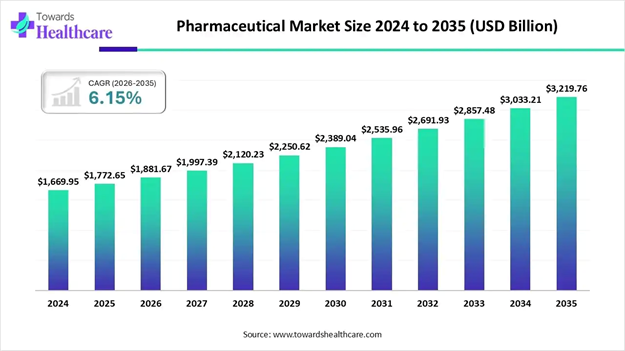
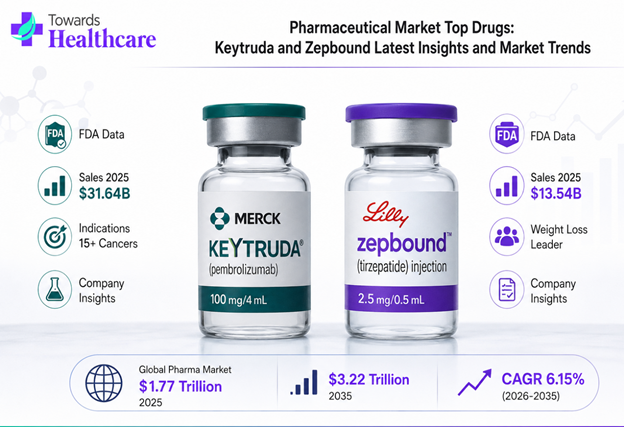
According to Towards Healthcare, the global pharmaceutical industry was valued at approximately $1.77 trillion in 2025 and is projected to reach around $3.22 trillion by 2035, expanding at a CAGR of 6.15% from 2026 to 2035. The market is estimated to reach approximately $1.88 trillion in 2026. Cancer treatments represent one of the largest areas of pharmaceutical demand, while metabolic and obesity therapies are creating a new wave of commercial growth.
We understand your goals, study the competitive landscape, uncover the right opportunities, and help you turn your next move into real growth.
Get a sample at: https://www.towardshealthcare.com/download-sample/5341
What is Keytruda?
Keytruda is an immunotherapy medicine developed by Merck and is based on the active ingredient pembrolizumab. It is a monoclonal antibody that works by blocking the PD-1 immune checkpoint, helping the body's immune system recognize and attack cancer cells.
Keytruda has become an important treatment across a wide range of cancers, including lung cancer, melanoma, head and neck cancer, urothelial cancer, renal cell carcinoma, cervical cancer, breast cancer and several other tumor types. Its U.S. prescribing information now covers a broad range of indications and treatment combinations.
Keytruda product details:
➢ Brand name: Keytruda; Keytruda Qlex
➢ Generic name: Pembrolizumab
➢ Dosage form: Single-dose vial containing 100 mg/4 mL for intravenous infusion
➢ Manufacturer: Merck & Co., Inc.
Keytruda Qlex is a subcutaneous formulation combining pembrolizumab with berahyaluronidase alfa-pmph, allowing pembrolizumab to be administered under the skin rather than through the traditional intravenous route.
What ingredients are used in Keytruda?
The main active ingredient in Keytruda is pembrolizumab, a humanized monoclonal antibody that targets the PD-1 receptor on immune cells.
Keytruda Qlex contains pembrolizumab and berahyaluronidase alfa-pmph. Berahyaluronidase alfa is an enzyme that temporarily modifies hyaluronan in the tissue, helping facilitate subcutaneous administration of the medicine.
How does Keytruda work?
Keytruda works by blocking the interaction between the PD-1 receptor on T cells and its ligands, PD-L1 and PD-L2. Cancer cells can use these immune-checkpoint pathways to reduce immune-system activity. By blocking PD-1, pembrolizumab can restore T-cell activity against cancer cells.
The effectiveness of Keytruda can also depend on biological characteristics of the tumor. Biomarkers such as PD-L1 expression, microsatellite instability-high (MSI-H) status and mismatch repair deficiency (dMMR) can influence treatment decisions in certain cancers.
What are the latest FDA approvals for Keytruda?
Keytruda continues to expand into new cancer treatment settings through additional FDA approvals.
On July 10, 2026, the FDA approved pembrolizumab or pembrolizumab with berahyaluronidase alfa-pmph in combination with enfortumab vedotin-ejfv for neoadjuvant and adjuvant treatment of muscle-invasive bladder cancer (MIBC) in adults who are candidates for cystectomy. The approval was supported by the KEYNOTE-B15/EV-304 study, which included 808 previously untreated patients with MIBC.
Earlier in 2026, the FDA also approved belzutifan in combination with pembrolizumab as an adjuvant treatment for certain adults with clear-cell renal cell carcinoma who have an intermediate-high or high risk of recurrence following surgery.
In February 2026, the FDA approved a pembrolizumab-based regimen with paclitaxel, with or without bevacizumab, for certain patients with PD-L1-positive platinum-resistant epithelial ovarian, fallopian tube or primary peritoneal cancer.
These approvals demonstrate how Keytruda is increasingly being used as a foundation for combination therapies rather than as a standalone immunotherapy.
How much does Keytruda cost?
In the United States, Merck lists Keytruda's wholesale acquisition cost at approximately $12,272 per indicated dose every three weeks, or approximately $24,544 every six weeks, before discounts, insurance coverage and patient assistance. Merck also notes that most patients do not pay the full list price.
The high cost of oncology medicines remains an important issue for healthcare systems, particularly in countries where reimbursement coverage and patient affordability can influence access to advanced cancer treatments.
In India, the listed price of a 100 mg Keytruda vial has been reported at more than ₹1.5 lakh, highlighting the significant difference in affordability between high-income and emerging healthcare systems.
How much revenue does Keytruda generate?
Keytruda has become one of the largest revenue-generating pharmaceutical products in the world.
Merck reported $31.64 billion in Keytruda sales in 2025, compared with $29.48 billion in 2024. Including Keytruda Qlex, the franchise generated approximately $31.68 billion, representing around 7% growth.
Merck's total worldwide revenue reached approximately $65.0 billion in 2025, meaning the Keytruda franchise alone represented close to half of the company's annual sales.
Your next growth opportunity could start with one conversation; schedule a meeting with our drugs industry experts:
https://www.towardshealthcare.com/schedule-meeting
What is Zepbound?
Zepbound is a prescription medicine developed by Eli Lilly that contains tirzepatide. It is a dual GIP and GLP-1 receptor agonist used primarily for chronic weight management in adults with obesity or certain adults who are overweight with weight-related health conditions.
Zepbound product details:
➢ Brand name: Zepbound; Mounjaro
➢ Generic name: Tirzepatide
➢ Dosage forms: Single-dose pen, single-dose vial, single-patient-use KwikPen or multi-dose vial
➢ Available strengths: 2.5 mg/0.5 mL, 5 mg/0.5 mL, 7.5 mg/0.5 mL, 10 mg/0.5 mL, 12.5 mg/0.5 mL and 15 mg/0.5 mL
➢ Manufacturer: Eli Lilly and Company
Although Zepbound and Mounjaro contain the same active ingredient, they have different primary FDA-approved uses. Zepbound is primarily positioned for chronic weight management and obesity-related treatment, while Mounjaro is approved for type 2 diabetes.
What ingredients are used in Zepbound?
The active ingredient in Zepbound is tirzepatide, a synthetic peptide designed to activate both GIP and GLP-1 receptors.
The inactive ingredients include sodium chloride, sodium phosphate dibasic heptahydrate and water for injection. Hydrochloric acid and/or sodium hydroxide may be used to adjust the formulation's pH. The product is preservative-free.
Tirzepatide also contains a fatty-acid component in its molecular structure that helps extend its duration of action, supporting once-weekly administration.
How well does Zepbound work for weight loss?
Clinical evidence has been a major factor behind Zepbound's rapid adoption.
In the SURMOUNT-1 trial, which included 2,539 adults with obesity or overweight, participants receiving tirzepatide achieved substantial weight reductions after 72 weeks. Those receiving the 15 mg dose experienced an average 20.9% reduction in body weight, compared with 3.1% with placebo. The 10 mg and 5 mg groups achieved average reductions of 19.5% and 15.0%, respectively.
The competitive significance of tirzepatide became even clearer in SURMOUNT-5. Among 751 adults with obesity without diabetes, tirzepatide produced an average 20.2% weight reduction at 72 weeks, compared with 13.7% for semaglutide.
These results have strengthened tirzepatide's position against semaglutide-based therapies and helped accelerate competition in the obesity-treatment segment.
Zepbound vs Mounjaro: What is the difference?
Zepbound and Mounjaro contain the same active ingredient, tirzepatide, and both work through GIP and GLP-1 receptor activation.
The main difference is their approved positioning. Zepbound is approved for chronic weight management in eligible adults and for adults with obesity and moderate-to-severe obstructive sleep apnea (OSA), while Mounjaro is primarily used for glycemic control in adults with type 2 diabetes.
Therefore, the products are closely related pharmacologically but serve different treatment markets.
What are the latest FDA-approved uses of Zepbound?
The FDA first approved Zepbound in November 2023 for chronic weight management in adults with obesity or adults who are overweight and have at least one weight-related health condition. The treatment is used alongside a reduced-calorie diet and increased physical activity.
In December 2024, the FDA expanded Zepbound's use to adults with obesity and moderate-to-severe obstructive sleep apnea, making it the first drug specifically approved as a treatment option for certain patients with OSA and obesity. The approval was supported by two randomized, placebo-controlled studies involving 469 adults without type 2 diabetes.
The expansion reflects a broader shift in obesity medicine, where treatments are increasingly evaluated not only for weight reduction but also for their impact on conditions associated with excess weight.
How much does Zepbound cost?
Zepbound pricing varies depending on dosage, insurance coverage and whether patients use Lilly's self-pay programs.
Lilly's self-pay pricing has included approximately $299 per month for the 2.5 mg dose, $399 for 5 mg, $499 for 7.5 mg, and $699 for 10 mg, 12.5 mg and 15 mg under its regular self-pay pricing. Eligible patients may access lower promotional or program prices subject to Lilly's terms and conditions.
Because obesity medicines are generally used over an extended period, long-term affordability and insurance reimbursement are becoming increasingly important factors in patient access.
How much revenue does Zepbound generate?
Zepbound has quickly become one of Eli Lilly's most important growth products.
Lilly reported $13.54 billion in Zepbound revenue in 2025, compared with $4.93 billion in 2024, representing approximately 175% growth. Almost all of the reported revenue came from the United States, with U.S. sales of approximately $13.48 billion.
Mounjaro generated an additional $22.97 billion in 2025, up from $11.54 billion in 2024. Together, Mounjaro and Zepbound generated approximately $36.5 billion in annual revenue, demonstrating the enormous commercial importance of tirzepatide to Lilly.
Lilly also reported approximately $19.8 billion in revenue during the first quarter of 2026, up 56% year over year, with Mounjaro and Zepbound among the major contributors to growth.
Who are Keytruda's main competitors?
Keytruda operates in an increasingly competitive immuno-oncology environment.
One of its major competitors is Opdivo (nivolumab) from Bristol Myers Squibb. Other checkpoint inhibitors, targeted therapies, antibody-drug conjugates and combination regimens are also competing for treatment positions across different cancer types.
The competitive environment is shifting from simply comparing individual drugs to evaluating which combinations deliver the strongest outcomes for specific patient populations. Keytruda's future growth will therefore depend heavily on continued indication expansion, combination strategies and biomarker-guided treatment.
Who are Zepbound's main competitors?
The obesity-treatment market is developing even faster.
Wegovy and other semaglutide-based products from Novo Nordisk remain major competitors. Novo Nordisk reported that its obesity-care portfolio reached approximately 3.6 million people worldwide in 2025, while Wegovy was available in 52 countries. The company's obesity-care sales increased by 31% at constant exchange rates during the year.
Competition is also expanding beyond today's leading products. Companies including Roche, Amgen, Viking Therapeutics and Structure Therapeutics are developing next-generation obesity medicines, while Eli Lilly is advancing retatrutide, a triple agonist targeting GIP, GLP-1 and glucagon pathways.
In a recent pivotal obesity study, the highest 12 mg dose of retatrutide produced an average 28.3% weight loss at 80 weeks, with 45.3% of participants achieving at least 30% weight loss. This indicates how quickly the efficacy benchmark in obesity treatment is continuing to rise.
What do Keytruda and Zepbound mean for pharma?
Keytruda and Zepbound highlight two major pharmaceutical growth models. Keytruda’s expanding cancer uses and more than $31 billion in annual revenue show the value of long-term oncology innovation. Zepbound reflects the rapid growth of obesity treatment, supported by strong weight-loss results, new indications and rising patient demand.
According to Towards Healthcare, North America accounted for approximately 36% of the global pharmaceutical industry in 2025, while the Asia-Pacific region is emerging as an important growth engine. The APAC pharmaceutical industry was valued at approximately $464.82 billion in 2025 and is projected to expand at a CAGR of 7.02%.
Visit Our Website: https://www.towardshealthcare.com/
“Exclusive Opportunity for Pharma Leaders”
With 15+ years of expertise behind us, we create drug dashboards customized to the exact data and insights you want to track.
Designed for pharma leaders, investors, biotech companies, and healthcare strategists.
What’s Included in the Dashboard?
➛ Competitive Intelligence
➛ Drug Pipeline Tracking
➛ Clinical Trial Insights
➛ FDA & Regulatory Alerts
➛ Drug Sales & Revenue
➛ Pricing & Access Intelligence
➛ Company Performance
➛ Product Benchmarking
➛ Market Growth Signals
➛ Emerging Drug Trends
➛ Patent & Exclusivity Insights
➛ Future Opportunity Mapping
Access the Dashboard: https://www.towardshealthcare.com/access-dashboard
About Us
Towards Healthcare Research & Consulting is a leading global provider of technological solutions, clinical research services, and advanced analytics, with a strong emphasis on life science research. Dedicated to advancing innovation in the life sciences sector, we build strategic partnerships that generate actionable insights and transformative breakthroughs. As a global strategy consulting firm, we empower life science leaders to gain a competitive edge, drive research excellence, and accelerate sustainable growth.
You can place an order or ask any questions, please feel free to contact us at sales@towardshealthcare.com
Europe Region: +44 778 256 0738
North America Region: +1 8044 4193 44
APAC Region: +91 9356 9282 04
Web: https://www.towardshealthcare.com
Our Trusted Data Partners
Precedence Research | Towards Packaging | Towards Food and Beverages | Towards Chemical and Materials | Towards Dental | Towards EV Solutions | Healthcare Webwire
Find us on social platforms: LinkedIn | Twitter | Instagram | Medium | Pinterest
Media Support
Sanskruti Sathe: sanskruti.s@towardshealthcare.com
General Enquiry: sales@towardshealthcare.com

