
Segments Covered in the Report: (By Antibiotic Class: Beta-Lactams, Penicillins, Cephalosporins, Carbapenems, Macrolides, Fluoroquinolones, Tetracyclines, Aminoglycosides, Glycopeptides, Oxazolidinones, Others; By Route of Administration: Oral Antibiotics, Parenteral/Injectable Antibiotics, Inhalation/Nebulized Antibiotics; By Indication/Infection Type: Community-Acquired Pneumonia (CAP), Hospital-Acquired Pneumonia (HAP) & Ventilator-Associated Pneumonia (VAP), Acute Bronchitis, Sinusitis, Otitis Media, Pharyngitis & Tonsillitis, Other Lower & Upper Respiratory Infections, By Healthcare Setting: Hospitals (Inpatient Care), Emergency Care, Outpatient Clinics, Community Healthcare/Retail Settings; By Region: North America, South America, Europe, Asia Pacific, MEA) Global Analysis, Size, Trends, Leading Companies, Regional Outlook and Forecast 2026 to 2035.
The Respiratory Infections Antibiotics Market: Highlights
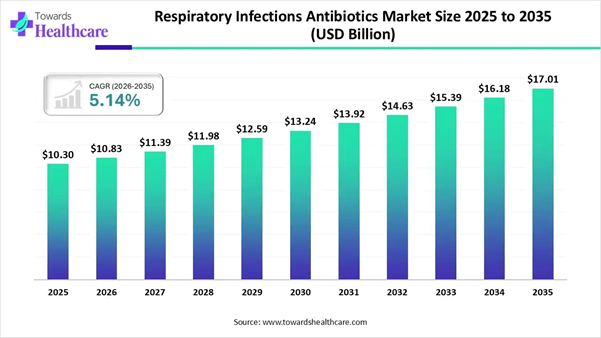
• Respiratory infections antibiotics sector pushed the market to USD 10.83 billion by 2026.
• Long-term projections show USD 17.01 billion valuation by 2035.
• Growth is expected at a steady CAGR of 5.14% in between 2026 to 2035.
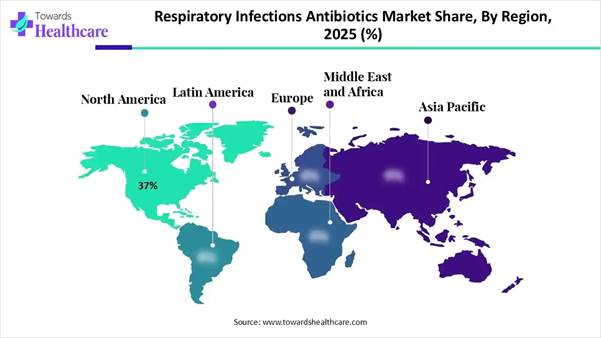
• North America held the major revenue share of approximately 37% in the global respiratory infections antibiotics market in 2025.
• Asia Pacific is expected to grow at the fastest CAGR of approximately 10% during the forecast period.
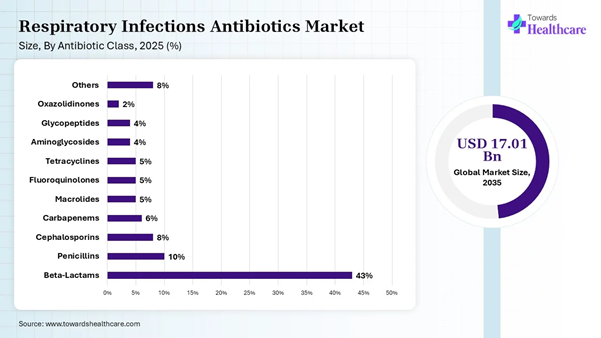
• By antibiotic class type, the beta-lactams segment held an approximate 43% share in the market in 2025.
• By antibiotic class type, the oxazolidinones segment is expected to grow at the fastest CAGR of approximately 10% during the forecast period.
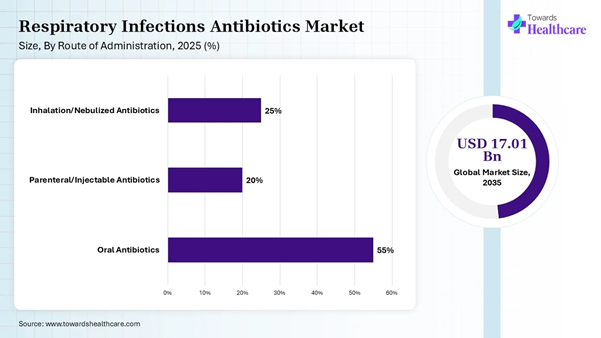
• By route of administration type, the oral antibiotics segment held an approximate 55% share in the market in 2025.
• By route of administration type, the inhalation/nebulized antibiotics segment is expected to grow at the fastest CAGR of approximately 12% during the forecast period.
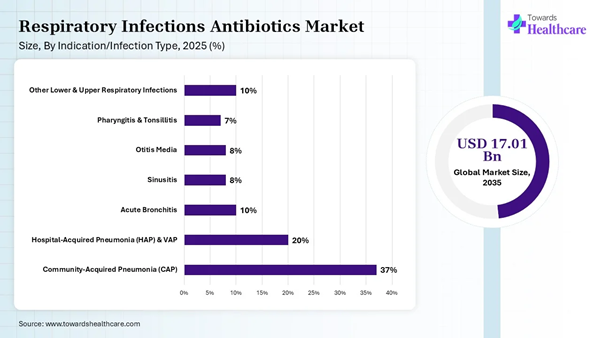
• By indication/infection type, the community-acquired pneumonia (CAP) segment held an approximate 37% share in the market in 2025.
• By indication/infection type, the hospital-acquired pneumonia (HAP) & ventilator-associated pneumonia (VAP) segment is expected to grow at the fastest CAGR of approximately 11% during the forecast period.
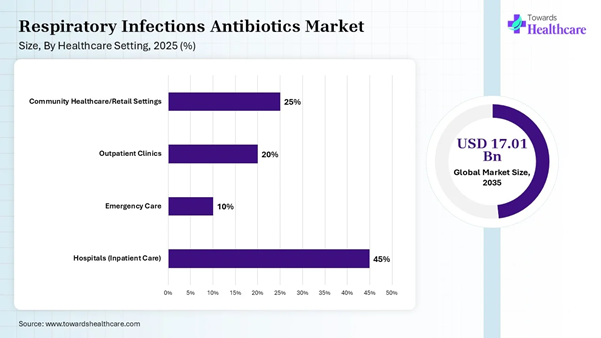
• By healthcare setting type, the hospitals (inpatient care) segment held an approximate 45% share in the market in 2025.
• By healthcare setting type, the outpatient clinics segment is expected to grow at the fastest CAGR of approximately 10% during the forecast period.
Market Sizing and Forecast:
The global respiratory infection antibiotics market was valued at USD 10.3 billion in 2025, forecast to grow from USD 10.83 billion in 2026, reaching an estimated USD 17.01 billion by 2035, reflecting a compound annual growth rate (CAGR) of 5.14% from 2026 to 2035.
The Complete Study is Now Available for Immediate Access | Download the Free Sample Pages of this Report @ https://www.towardshealthcare.com/download-sample/6563
The rising incidence of upper or lower respiratory tract infections, including upper tract infections like pharyngitis/tonsillitis, laryngitis, common cold, acute rhinosinusitis, acute rhinitis, and acute otitis media, has raised the need for antibiotic medications. The lower respiratory tract infections include pneumonia, bronchiolitis, acute bronchitis, and tracheitis. Accordingly, antibiotics play a pivotal role in treating respiratory tract infections in children and adults in delivering primary care. Penicillin VK, amoxicillin, penicillin benzathine, cefadroxil, erythromycin, cefaclor, cefuroxime, ceftriaxone, and azithromycin are some of the antibiotics used in group A streptococcal infection.
You can place an order or ask any questions, please feel free to contact us at sales@towardshealthcare.com
Market Overview
Improved Clinical Care for the Global Population
The respiratory infections antibiotics market is growing and expanding due to antibiotic prescribing guidelines, which create standards of care and improve the quality of clinical care. Research suggests that over-the-counter medications provide relief from symptoms but cannot shorten the duration of illness. The adults need an appropriate antibiotic prescription when they are seeking care for common infections in outpatient settings. According to the Centers for Disease Control and Prevention (CDC), more than 450,000 people regularly receive hemodialysis treatment in about 6,800 facilities across the U.S. Research focuses on strategies to improve the use of antibiotics in outpatient hemodialysis facilities. They are important to prevent adverse events associated with antibiotic use and optimize treatment outcomes.
The Respiratory Infections Antibiotics Market: Regional Analysis
|
Region |
Shares 2025 (%) |
|
North America |
37% |
|
Latin America |
10% |
|
Europe |
20% |
|
Asia Pacific |
25% |
|
MEA (Middle East & Africa) |
8% |
North America dominated the market share by 37% in 2025 surpassing USD 3.81 billion in 2025, owing to innovation in next-generation therapies, supportive regulatory and funding frameworks, and diagnostic advancements. The CDC has introduced antibiotic stewardship as a framework for clinics and clinicians to improve antibiotic prescribing in outpatient settings. Several government programs and initiatives target antibiotic use and respiratory infections, which further boost drug approvals and expand vaccination strategies. The U.S. Health and Human Services (HHS), the Environmental Protection Agency (EPA), and the U.S. Department of Agriculture (USDA) have set a framework and focused on preserving the effectiveness of human respiratory drugs.
U.S. Market Analysis
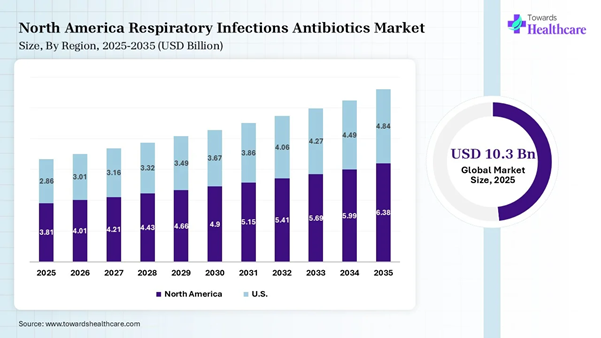
The respiratory infections antibiotics market in the U.S. to reach USD 4.84 billion by 2035, witnessing strategic R&D and funding, advanced healthcare infrastructure, innovations in antimicrobial resistance, and the rising trend of combination therapies. The Centers for Disease Control and Prevention (CDC) reported on the antibiotic stewardship efforts in the U.S., which showcase the prescribing and use of antibiotics only after ensuring their health benefits. The CDC also proclaimed that improving the use of antibiotics is a major strategy to improve patient safety and fight against antimicrobial resistance in the U.S.
Asia Pacific is expected to grow at the fastest rate in the market during the forecast period due to the expansion of pharmaceutical production capacity, high disease burden and prevalence, and strategic R&D initiatives. Certain areas from the World Health Organization (WHO) South East Asia and Western Pacific regions are committed to working together to tackle antimicrobial resistance. These efforts are supported by the government of Japan and about 30 countries from the Asia Pacific region, including Bhutan, Cambodia, Australia, Bangladesh, India, Indonesia, Japan, and many more. The world leaders are accelerating international cooperation and leadership to address and resolve challenges associated with antimicrobial resistance.
India Market Trends
The respiratory infections antibiotics market in India experiences air pollution crisis, strategic pharmaceutical innovations, high incidence of infectious diseases, and unexpected environmental conditions. In October 2025, Dr Jitendra Singh, the Union Science and Technology Minister, announced that India had completed the development of the first indigenous antibiotic named Nafithromycin, which marked a significant success of the pharmaceutical and biotechnology sectors. This antibiotic was effective in treating resistant respiratory infections, which was beneficial for cancer patients and people with poorly controlled diabetes.
Get the latest insights on life science industry segmentation with our Annual Membership: https://www.towardshealthcare.com/get-an-annual-membership
The Respiratory Infections Antibiotics Market: Segmentation Analysis
Antibiotic Class Type Insights
|
Segments |
Shares 2025 (%) |
|
Beta-Lactams |
43% |
|
Penicillins |
10% |
|
Cephalosporins |
8% |
|
Carbapenems |
6% |
|
Macrolides |
5% |
|
Fluoroquinolones |
5% |
|
Tetracyclines |
5% |
|
Aminoglycosides |
4% |
|
Glycopeptides |
4% |
|
Oxazolidinones |
2% |
|
Others |
8% |
The beta-lactams segment dominated the market share by 43% in 2025, owing to their clinical applications in treating upper and lower respiratory tract infections, skin and soft tissue infections, serious systemic infections, and surgical prophylaxis. The major subclasses are penicillins, cephalosporins, monobactams, and carbapenems, which are specific in their mechanism of action. They are essential due to their antimicrobial activity and are the most widely prescribed antibiotics across the world.
The oxazolidinones segment is expected to grow at the fastest rate in the respiratory infections antibiotics market during the forecast period due to their wide use in treating serious infections caused by multidrug-resistant Gram-positive bacteria. They have a unique mechanism through which they can inhibit bacterial protein synthesis at an early stage. They prevent cross-resistance with other antibiotics like tetracyclines or macrolides.
Route of Administration Type Insights
|
Segments |
Shares 2025 (%) |
|
Oral Antibiotics |
55% |
|
Parenteral/Injectable Antibiotics |
20% |
|
Inhalation/Nebulized Antibiotics |
25% |
The oral antibiotics segment dominated the market share by 55% in 2025, owing to their integral functions in treating bacterial infections, preventing infections, and enabling early hospital discharge. They reduce complications, bring cost effectiveness, and ensure patient convenience. Oral therapy is the preferred choice over intravenous treatment for many infections due to its lower costs, efficacy, and reduced risk of complications.
The inhalation/nebulized antibiotics segment is expected to grow at the fastest rate in the respiratory infections antibiotics market during the forecast period due to their preferred choice for treating severe or chronic lower respiratory tract infections. They are clinically applicable in treating cystic fibrosis, non-CF bronchiectasis, ventilator-associated pneumonia, and prophylaxis. They lower risk of nephrotoxicity, and side effects are local rather than systemic.
Indication/Infection Type Insights
|
Segments |
Shares 2025 (%) |
|
Community-Acquired Pneumonia (CAP) |
37% |
|
Hospital-Acquired Pneumonia (HAP) & VAP |
20% |
|
Acute Bronchitis |
10% |
|
Sinusitis |
8% |
|
Otitis Media |
8% |
|
Pharyngitis & Tonsillitis |
7% |
|
Other Lower & Upper Respiratory Infections |
10% |
The community-acquired pneumonia segment led the market share by 37% in 2025, owing to its position as a leading cause of death globally and its significant impact on public health. It is driving a large number of hospitalisations and emergency department visits. It is the rising incidence in the U.S., and it is the eighth leading cause of death across the world.
The hospital-acquired pneumonia and ventilator-associated pneumonia segment is expected to grow rapidly in the respiratory infections antibiotics market during the forecast period due to heavy reliance on diagnosis and clinical management. They show the second most common hospital infection, which develops at least 48 hours after hospital admission. They carry the highest mortality rate among all infections.
Healthcare Setting Type Insights
|
Segments |
Shares 2025 (%) |
|
Hospitals (Inpatient Care) |
45% |
|
Emergency Care |
10% |
|
Outpatient Clinics |
20% |
|
Community Healthcare/Retail Settings |
25% |
The hospitals segment dominated the market share by 45% in 2025, owing to their important role in controlling communicable diseases, sanitation, maternal and child health, public health education, health planning, and the reduction of health hazards. Hospitals contribute to public health services by promoting health, preventing disease, early diagnosing and treating, and providing rehabilitation. They promote health through good health practices and provide adequate support in exercise, nutrition, rest, and personal hygiene.
The outpatient clinics segment is expected to grow at a rapid rate in the respiratory infections antibiotics market during the forecast period due to their convenient access, freedom for doctors, and specialized treatments. They do not require hospital admissions or overnight care. They provide medical care such as diagnosis, consultation, treatment, and recovery follow-ups all under one roof.
Become a valued research partner with us - https://www.towardshealthcare.com/schedule-meeting
The Respiratory Infections Antibiotics Market Companies
• GSK Plc
• Pfizer Inc.
• Bayer AG
• Merck & Co.
• Novartis AG
• Sanofi S.A.
• Cipla Limited
• Johnson & Johnson
• AbbVie Inc.
• AstraZeneca Plc
Access our comprehensive healthcare dashboard for detailed market insights, segment breakdowns, regional performance, and company profiles: https://www.towardshealthcare.com/access-dashboard
Segments Covered in the Report
By Antibiotic Class
• Beta-Lactams
• Penicillins
• Cephalosporins
• Carbapenems
• Macrolides
• Fluoroquinolones
• Tetracyclines
• Aminoglycosides
• Glycopeptides
• Oxazolidinones
• Others
By Route of Administration
• Oral Antibiotics
• Parenteral/Injectable Antibiotics
• Inhalation/Nebulized Antibiotics
By Indication/Infection Type
• Community-Acquired Pneumonia (CAP)
• Hospital-Acquired Pneumonia (HAP) & Ventilator-Associated Pneumonia (VAP)
• Acute Bronchitis
• Sinusitis
• Otitis Media
• Pharyngitis & Tonsillitis
• Other Lower & Upper Respiratory Infections
By Healthcare Setting
• Hospitals (Inpatient Care)
• Emergency Care
• Outpatient Clinics
• Community Healthcare/Retail Settings
By Region
• North America
• South America
• Europe
• Asia Pacific
• MEA
Immediate Delivery Available | Buy This Research Report Now @ https://www.towardshealthcare.com/checkout/6563
About Us
Towards Healthcare is a leading global provider of technological solutions, clinical research services, and advanced analytics, with a strong emphasis on life science research. Dedicated to advancing innovation in the life sciences sector, we build strategic partnerships that generate actionable insights and transformative breakthroughs. As a global strategy consulting firm, we empower life science leaders to gain a competitive edge, drive research excellence, and accelerate sustainable growth.
You can place an order or ask any questions, please feel free to contact us at sales@towardshealthcare.com
Europe Region: +44 778 256 0738
North America Region: +1 8044 4193 44
APAC Region: +91 9356 9282 04
Web: https://www.towardshealthcare.com
Our Trusted Data Partners
Precedence Research | Towards Packaging | Towards Food and Beverages | Towards Chemical and Materials | Towards Dental | Towards EV Solutions | Healthcare Webwire
Find us on social platforms: LinkedIn | Twitter | Instagram | Medium | Pinterest
Browse More Insights of Towards Healthcare:
The global market for respiratory disease vaccines is expected to grow from USD 65.72 billion in 2025 to USD 68.43 billion in 2026. It is forecasted to reach approximately USD 98.41 billion by 2035, expanding at a compound annual growth rate (CAGR) of 4.12% between 2026 and 2035.
Similarly, the respiratory drugs market is projected to increase at a CAGR of 5.8%, growing from USD 18.55 billion in 2025 to USD 30.81 billion by 2034.
The global respiratory active pharmaceutical ingredient (API) market is anticipated to rise from USD 20.78 billion in 2025 to USD 39.9 billion by 2035, at a CAGR of 6.74% from 2026 to 2035.
The respiratory devices market is also poised for significant growth, with an increase from USD 26.57 billion in 2025 to USD 61.41 billion by 2035. This market is expected to expand at a CAGR of 8.74% between 2026 and 2035.
In the respiratory health supplements sector, the market is predicted to grow from USD 8.78 billion in 2025 to USD 9.46 billion in 2026, reaching around USD 18.52 billion by 2035, with a CAGR of 7.75% between 2026 and 2035.
The inhaler solution market is projected to rise from USD 31.45 billion in 2025 to USD 33.32 billion in 2026, reaching approximately USD 56 billion by 2035, expanding at a CAGR of 5.94% from 2026 to 2035.
The market for inhaled therapy in respiratory disease is estimated to grow from USD 11.58 billion in 2024 to USD 11.98 billion in 2025, reaching around USD 16.22 billion by 2034, expanding at a CAGR of 3.44% between 2025 and 2034.
The asthma and chronic obstructive pulmonary disease (COPD) drugs market is expected to grow from USD 43.10 billion in 2025 to USD 45.26 billion in 2026, ultimately reaching USD 70.27 billion by 2035, expanding at a CAGR of 5.01% from 2026 to 2035.
The acute respiratory distress syndrome market is projected to increase from USD 6.29 billion in 2025 to USD 6.71 billion in 2026, ultimately reaching approximately USD 11.98 billion by 2035, with a CAGR of 6.65% between 2026 and 2035.
Lastly, the global home respiratory monitor market is expected to grow from USD 2.55 billion in 2025 to USD 2.78 billion in 2026, reaching around USD 6.12 billion by 2035, expanding at a CAGR of 9.15% from 2026 to 2035.

